
Side Dishes
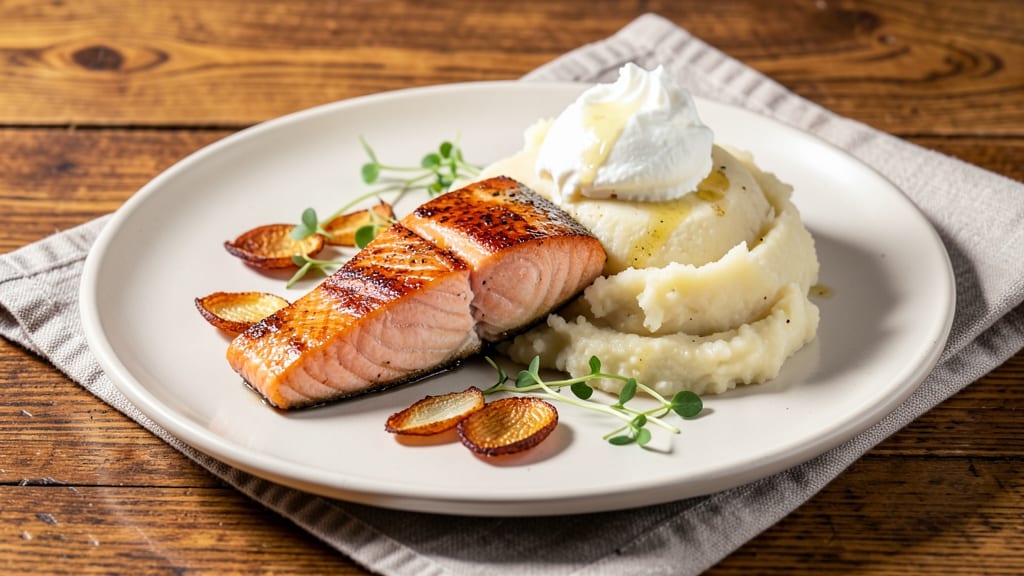
This salmon with creamy mashed potatoes recipe delivers restaurant-quality results with pan-seared salmon and velvety spuds that melt in your mouth. The secret lies in crispy salmon skin and perfectly fluffy potatoes—no shortcuts, just precise techniques that elevate a classic pairing.
I’ve perfected this combination over years of testing, ensuring every bite balances rich, buttery flavors with tender textures.
The salmon starts with a simple seasoning of salt, pepper, and lemon zest, then sears in a hot pan until golden and flaky inside. Meanwhile, the mashed potatoes use roasted Yukon Golds for natural sweetness and a blend of butter and warm milk for that signature creamy consistency.
The key? Never overmixing—just enough to achieve that silky, lump-free texture. Together, they create a dish that’s both comforting and refined.
What you’ll end up with is a plate that looks as impressive as it tastes: pan-seared salmon with crisp edges and tender flesh, served alongside smooth, golden mashed potatoes that cling to every bite.
A squeeze of fresh lemon and a sprinkle of parsley add a bright finish, tying the dish together. This is the kind of meal that feels like a hug on a plate—elegant enough for company but simple enough for a weeknight.
Whether you prefer skin-on salmon for extra crispiness or skinless fillets for ease, this recipe adapts seamlessly. The mashed potatoes can be made stovetop or in the oven, depending on your preference.
Serve with a side salad or steamed vegetables for a complete, balanced dinner. Let’s get cooking—this dish is worth every minute of effort.
Ingredients for salmon and mashed potatoes
Sixteen ingredients to create restaurant-quality salmon with velvety mashed potatoes that melt in your mouth.
| Ingredient | Amount | Notes |
|---|---|---|
| Skin-On Salmon Fillets 🐟 | 2 whole | Center-cut, 6-8 oz each |
| Yukon Gold Potatoes 🥔 | 2 lbs | Medium, unpeeled, uniform size |
| Unsalted Butter 🧈 | ¾ cup | Cold, cut into pats |
| Heavy Cream 🥛 | ½ cup | Full-fat for richness |
| Whole Milk 🥛 | ½ cup | Warm before using |
| Diamond Crystal Kosher Salt 🧂 | 1 ½ tsp | For seasoning, adjust to taste |
| Freshly Ground Black Pepper 🌶️ | ½ tsp | Coarse grind preferred |
| Lemon Zest 🍋 | 1 tbsp | From 1 organic lemon |
| Fresh Parsley 🌿 | ¼ cup | Chopped, for garnish |
| Extra-Virgin Olive Oil 🫒 | 1 tbsp | For pan-searing salmon |
| Granulated Garlic 🧄 | 1 tsp | For potato seasoning |
| Freshly Squeezed Lemon Juice 🍋 | 1 tbsp | For finishing salmon |
The salmon makes or breaks this dish. Center-cut fillets with skin are non-negotiable—they hold their shape and crisp beautifully. Whole Foods or your local fishmonger will have the freshest cuts, but even the supermarket seafood case works if you check for vibrant color and no fishy odor. For the potatoes, Yukon Golds are ideal—their natural sweetness balances the richness of the butter. If you can't find them, Russets work in a pinch but need extra salt. Roasting the potatoes first (instead of boiling) intensifies their flavor—don't skip this step. The butter should be cold and unsalted—European-style brands like Plugrá or Kerrygold elevate the dish.
No skin-on salmon? Skinless fillets work too, but skip the crispy skin—just sear the flesh side down. Running out of Yukon Golds? Red potatoes add texture, but Yukons are the only ones that stay creamy. The heavy cream can be swapped for half-and-half if you're watching calories, but trust me on the full-fat version. Fresh lemon zest is best, but bottled zest works in a pinch—just measure carefully. For the parsley, fresh is ideal, but dried parsley at one-third the amount gets you close. The olive oil matters here—low-acid, fruity varieties like Colavita or Bertolli prevent bitterness.
Salmon stays best for 1 day in the fridge—use it immediately for crispy skin. The mashed potatoes reheat beautifully—just warm with extra butter and milk. Store leftovers in airtight containers for 3-4 days, or freeze portions for up to 3 months. I always make extra potatoes—they reheat perfectly for lunches. For the salmon, cook it just before serving. The crispy skin loses its magic if reheated.
Why You'll Love This Recipe
- Two-Pan Magic: I swear by this combo—salmon roasts while the potatoes boil. No flipping between stovetop and oven chaos. Just set timers, let the butter and cream do their thing, and boom. Done.
- Crispy-Creamy Obsession: That skin-on salmon? Gold. Crispy enough to shatter, but the inside stays so tender it melts. Pair it with the velvety Yukon Gold mash—honestly, the first bite feels like a hug.
- Weeknight to Dinner Party: Same recipe, different vibes. Serve it with a simple green salad for a Tuesday night, or add a drizzle of lemon and fresh dill for a fancy dinner. The potatoes alone make it feel special.
- Leftovers That Don’t Suck: Cold salmon and mash the next day? Still a win. Reheat the potatoes with a splash of milk to keep them creamy, and the salmon reheats beautifully in a pan. Budget-friendly, too—no sad, dry leftovers here.
Step-by-step instructions for pan-seared salmon with creamy mashed potatoes
Here's how to achieve perfectly crisp salmon skin and velvety mashed potatoes that complement each other beautifully.
Prepare the Yukon Gold Potatoes for Creamy Perfection
Begin by peeling the 2 lbs of Yukon Gold potatoes and cutting them into even 1-inch chunks. Place them in a large pot and cover with cold water by about 2 inches. Add 1 tsp of the diamond crystal kosher salt to the water and bring to a boil over medium-high heat. Once boiling, reduce to a gentle simmer and cook for 15-18 minutes until the potatoes are fork-tender and pierce easily with a knife.
While cooking, I like to test the potatoes every few minutes after the 12-minute mark. They should be soft enough that a fork slides in smoothly but not falling apart. Drain the potatoes thoroughly in a colander and return them to the pot. This prevents the mashed potatoes from becoming watery later.
Create the Rich Mashed Potato Base
To the warm potatoes, add the 0.75 cup of cold unsalted butter cut into pats and the 0.5 cup of warm whole milk. Using a potato masher or ricer, work the butter and milk into the potatoes until completely smooth. I prefer a ricer for ultra-silky texture, but a masher works perfectly fine too.
Season generously with the remaining 0.5 tsp diamond crystal kosher salt and 0.5 tsp freshly ground black pepper. The potatoes should taste rich and flavorful at this stage. Cover the pot and keep warm over low heat while you prepare the salmon, stirring occasionally to prevent drying out.
Pan-Sear the Salmon to Golden Perfection
Pat the 2 whole skin-on salmon fillets completely dry with paper towels. Season both sides generously with the remaining 0.5 tsp diamond crystal kosher salt and 0.5 tsp freshly ground black pepper. Heat 1 tbsp of extra-virgin olive oil in a large skillet over medium-high heat until shimmering.
Place the salmon skin-side down in the skillet. Press down gently on the fillets during the first minute to prevent curling and ensure even contact with the pan. Cook for 4-5 minutes until the skin is crispy and golden brown and the flesh is opaque throughout. Flip carefully and cook for another 2-3 minutes until just cooked through.
Finish with Bright, Zesty Flavors
Remove the salmon from the skillet and transfer to a warm plate. In the same skillet, reduce heat to medium and add 1 tsp of granulated garlic. Cook for 30 seconds until fragrant, then pour in 1 tbsp of freshly squeezed lemon juice. Stir and cook for 1 minute to create a quick pan sauce.
Return the salmon to the skillet, spooning the lemon-garlic sauce over the top. Sprinkle with 1 tbsp of lemon zest and 0.25 cup of chopped fresh parsley. The bright citrus and fresh herbs will cut through the richness of the salmon beautifully, creating a perfect balance of flavors.
Serve with Velvety Mashed Potatoes
To finish the mashed potatoes, stir in the 0.5 cup of heavy cream until completely incorporated and smooth. The cream adds luxurious richness that pairs perfectly with the salmon. Taste and adjust seasoning if needed, adding more salt or pepper as necessary.
Divide the creamy mashed potatoes among serving plates and top each portion with a perfectly seared salmon fillet. The contrast between the crispy salmon skin and velvety potatoes creates an unforgettable dining experience. Garnish with additional parsley if desired and serve immediately while hot.
Pro Tips For Making Salmon And Mashed Potatoes
- CRISP THE SKIN FIRST: Flip the salmon skin-side down in a cold, dry pan—no oil—and cook on medium-low for 4-5 minutes until the skin turns golden and crisp. I used to skip this and ended up with sad, rubbery skin that stuck to the plate. The secret’s in the patience: let it render its own fat before adding butter.
- PARCHMENT TRAP FOR POTATOES: Wrap the cut Yukon Golds in parchment paper before boiling—yes, even with the skin on. This keeps them from turning gluey and lets you toss them straight from the pot into the mashed cream. I learned this the hard way after mashing potatoes that fell apart like wet cardboard.
- DON’T OVERWORK THE MASH: Once the potatoes hit the hot cream, mash just until the lumps are mostly gone—then stop. Overmixing turns them gummy, and no one wants that. A quick fork press or potato masher leaves them light and fluffy. (Your future self will thank you.)
- SALMON’S LAST REST: After pulling the salmon from the pan, tent it with foil and let it sit for 5-10 minutes—skin-side up—before slicing. This locks in juices that’d otherwise pool on the plate. I was skeptical until I tried it: the flesh stays moist, and the skin stays crisp. Worth the wait.
Common mistakes when making great salmon and mashed potatoes
Overcooked Salmon
Salmon is done when it reaches an internal temperature of 145°F, but many people overcook it by checking with a fork or relying on guesswork. Overcooked salmon becomes dry and flaky, losing its delicate texture.
I recommend using a meat thermometer—insert it horizontally into the thickest part of the fillet. Pull the salmon from heat immediately when it hits 145°F and let it rest for 5 minutes before serving. 🌡️
Underseasoned Potatoes
The mashed potatoes are the backbone of this dish, and underseasoning them is a common mistake. Many recipes call for minimal salt, but I find 1.5 tsp total (divided between cooking and finishing) is ideal for balancing the richness.
Taste as you go—potatoes should be seasoned like a well-made soup. Don’t forget the black pepper and a pinch of granulated garlic for depth. The cream and butter add richness, so seasoning needs to match.
Skipping the Rest
Both the salmon and mashed potatoes need rest time to redistribute juices. Skipping this step means dry, crumbly potatoes and tough salmon. Let the salmon rest for 5 minutes after cooking, and keep the mashed potatoes warm (but not simmering) while you finish the salmon.
I often tent the potatoes with foil to maintain moisture. This patience ensures every bite is juicy and flavorful. ⏰
Wrong Potato Texture
Overmixing mashed potatoes creates a gummy, gluey texture that’s unappetizing. The key is to mash just until smooth—stop when small lumps remain. I use a potato ricer for ultra-silky results, but a masher works if you’re gentle.
Avoid using a food processor, which can overwork the starches and turn your potatoes into paste. The goal is creamy, not mushy.
Ignoring Skin Prep
For crispy salmon skin, dry it thoroughly before cooking—even a little moisture prevents proper browning. Pat the skin with paper towels until completely dry. Also, avoid moving the fillet during the first 4-5 minutes of cooking.
Pressing down gently with a spatula ensures even contact with the pan. If the skin sticks, it’s not crispy enough—let it cook undisturbed. 🔥
Rushing the Cooking
Rushing the salmon by cranking the heat too high leads to uneven cooking and burnt skin before the inside is done. Use medium-high heat and let the salmon sear slowly. If the skin isn’t golden in 4-5 minutes, your pan isn’t hot enough—adjust the heat and try again.
Patience here makes all the difference between a perfect fillet and a sad, dry one.
Nutrition facts
Frequently asked questions
Can I substitute skinless salmon in this recipe?
Use skinless fillets, but skip the crispy skin step. Sear the flesh side first for 3-4 minutes until golden, then flip and cook for 2-3 minutes until just opaque. The texture will be tender without the crunch.
How do I make the mashed potatoes extra creamy?
Use a potato ricer instead of a masher for silky texture. Add 1 tbsp sour cream or 1 tbsp crème fraîche to the finished potatoes for extra richness. Warm the milk before mixing—cold milk makes gummy potatoes.
Can I bake the salmon instead of pan-searing?
Yes! Preheat oven to 400°F and bake salmon on a parchment-lined tray for 12-15 minutes (skin-side down first). Brush with 1 tbsp melted butter halfway through. The skin won't be as crispy, but the flavor stays excellent.
What sides pair well with this dish?
Try roasted asparagus with lemon zest or a simple green salad> with a mustard vinaigrette. For extra heartiness, add sautéed mushrooms or a side of steamed broccoli. The bright acidity balances the richness perfectly.
How far ahead can I prep the mashed potatoes?
Make them 1 day ahead—store in an airtight container at room temperature. Reheat gently with 1 tbsp extra butter and 1 tbsp warm milk per serving. For longer storage, freeze portions for up to 3 months. Thaw overnight in the fridge.