
Side Dishes
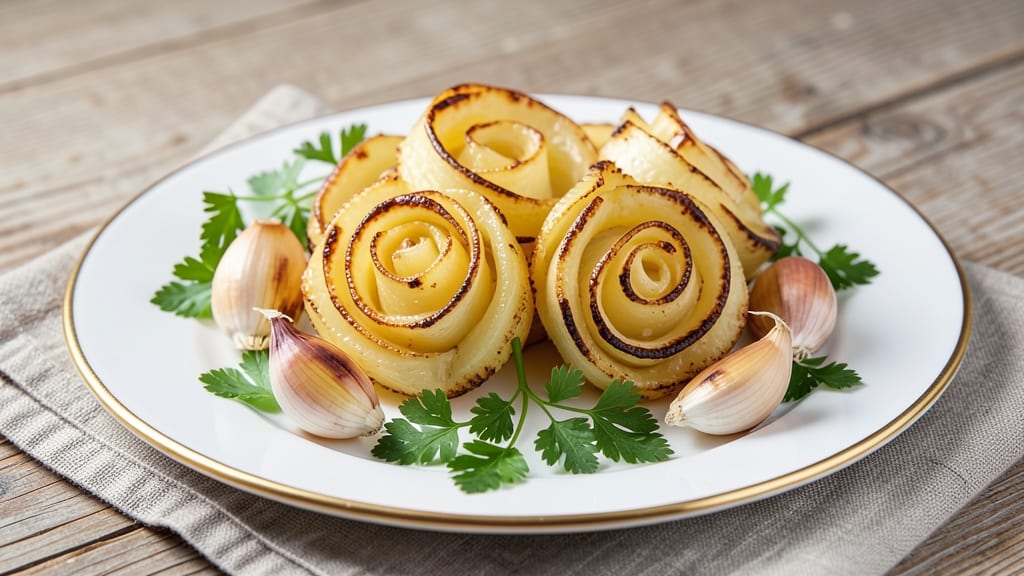
Discover how to craft delicate potato roses recipe—where humble spuds bloom into stunning edible flowers that’ll dazzle your guests. This potato roses recipe delivers restaurant-worthy presentation in just 15 minutes, proving that stunning sides don't require complicated techniques.
The secret lies in precise slicing and careful arrangement—thin, even layers that twist into delicate floral shapes while maintaining their structure.
What makes these roses truly special is their versatility. You can serve them as a showstopping side dish alongside roasted meats or fish, or use them as decorative garnishes for soups and salads.
The parboiling step ensures they stay tender while holding their shape, and optional seasonings like garlic butter or herb-infused oil add depth without overpowering the natural potato flavor.
By the time you've arranged your final rose, you'll have created a dish that's both beautiful and delicious—golden petals with crisp edges that contrast perfectly with the tender centers. The presentation alone makes this worth trying, but the satisfying texture and subtle flavor will have everyone asking for seconds.
Perfect for special occasions or when you want to impress without extra effort, these potato roses prove that presentation matters just as much as taste. Let's get started on creating your edible floral masterpiece that will make any meal feel like a celebration.
Ingredients for potato roses
Twelve simple ingredients transform humble potatoes into stunning edible floral masterpieces.
| Ingredient | Amount | Notes |
|---|---|---|
| Russet Potatoes 🥔 | 2 large | Peeled, cut into 1/8-inch slices |
| Unsalted Butter 🧈 | ½ cup | Melted, for brushing |
| Garlic Cloves 🧄 | 4 cloves | Minced, for garlic butter |
| Fresh Parsley 🌿 | ¼ cup | Chopped, for garnish |
| Salt 🧂 | 1 tsp | Kosher or sea salt |
| Black Pepper 🌶️ | ½ tsp | Freshly ground preferred |
| Olive Oil 🫒 | 2 tbsp | For brushing petals |
| Lemon Juice 🍋 | 1 tbsp | Freshly squeezed |
| All-Purpose Flour 🌾 | 1 tbsp | For dusting |
| Paprika 🌶️ | ½ tsp | Smoked, optional for color |
| Water 💧 | 4 cups | For parboiling |
Russet potatoes are your secret weapon here—their high starch content makes them ideal for holding shape while staying tender. Grab the largest russets you can find at Whole Foods or Trader Joe's; they're less watery and slice more evenly. If you can't find russets, Yukon Golds work too, but they'll be slightly creamier. Peel them first—no need for thick skins—then slice them paper-thin with a mandoline (or carefully with a sharp knife). The thinner the slices, the more delicate your roses will look. I like to soak the slices in cold water for 10 minutes before parboiling to remove excess starch, which helps them crisp up beautifully when brushed with butter later.
No mandoline? A sharp chef's knife works fine—just take your time and keep your fingers curled under for safety. Running out of butter? Olive oil or melted ghee works just as well for brushing. The garlic butter can be pre-made and stored in the fridge for up to 1 week, so you're not scrambling last-minute. Fresh parsley is ideal for garnish, but dried parsley at half the amount works in a pinch. Want extra color? Add a pinch of smoked paprika to the butter before brushing. The lemon juice isn't just for flavor—it helps keep the potatoes from browning too quickly while you're arranging them. And if you're short on time, skip the lemon juice entirely; the butter and salt will still give you great results.
These roses reheat beautifully—just brush with extra butter and broil for 2-3 minutes to crisp up the edges again. Store them in a single layer on a parchment-lined tray in the fridge for up to 3 days, separated by parchment so they don't stick. For longer storage, freeze them on a tray first, then transfer to a bag—they'll keep for up to 2 months. I always make extra because they disappear fast at parties (and look amazing in photos). The key to presentation? Arrange them on a bed of fresh greens or a white plate to make the golden color really pop.
Why You'll Love This Recipe
- One-Pan Magic: I swear by this recipe when I’m too tired to wash dishes. Slice those Russets, toss them in butter and garlic, and let the oven do the work—no flipping, no fuss. The only cleanup? One sheet pan and a spatula.
- Crispy-Creamy Obsession: That golden, paper-thin crust with a buttery center? It’s the kind of texture that makes you pause mid-bite. The parsley brightens it up just enough to feel fancy, but honestly? The garlic butter does all the heavy lifting.
- Weeknight to Dinner Party: Make a big batch on Sunday—it reheats like a dream for lunches or salads. Or impress guests by arranging them on a platter with a drizzle of extra garlic butter. (Yes, even on a Tuesday night.)
- Budget Bargain: Russets are cheap, butter is stretchable, and a few cloves of garlic last forever. I’ve fed four people for under $5 with this, and they’ll still ask for seconds. Practical? Absolutely. Delicious? Ridiculously so.
Step-by-step instructions for potato roses recipe
Here's how to transform simple potato slices into elegant, golden potato roses with crispy edges.
Parboil the Potato Slices
Fill a large pot with the 4 cups of water and bring to a rolling boil over high heat. While waiting, peel the 2 large Russet Potatoes and cut them into 1/8-inch thick slices—this even thickness ensures consistent cooking. Once the water boils, add the potato slices and cook for exactly 3 minutes. You'll know they're ready when they're just barely tender but still hold their shape when pierced with a fork.
Drain the potatoes immediately in a colander and rinse them under cold water for 30 seconds to stop the cooking process. This parboiling step prevents the roses from turning mushy when baked later. Pat them completely dry with paper towels—any moisture left behind will steam instead of crisp up.
Create the Garlic Butter Mixture
In a small bowl, melt the 0.5 cup unsalted butter in the microwave for 20-second intervals, stirring between each, until completely liquid. Add the 4 cloves minced garlic cloves, 1 tablespoon lemon juice, 1 teaspoon salt, 0.5 teaspoon black pepper, and 0.5 teaspoon paprika, stirring until fully combined. This garlic butter will infuse the potato roses with rich flavor while keeping them moist.
For extra color, you can add a pinch of smoked paprika here if you prefer a deeper hue. The lemon juice brightens the flavor and prevents the butter from turning rancid during baking. Keep this mixture warm but not hot—you'll use it to brush the roses later.
Shape and Bake the Potato Roses
Preheat your oven to 425°F and line a baking sheet with parchment paper. Dust a clean work surface with 1 tablespoon all-purpose flour—this prevents sticking when shaping. Take one potato slice and place it on your floured surface. Using your fingers, gently press down on the center to create a slight depression, then twist the edges toward the center to form a rose shape.
Place each rose on the prepared baking sheet, leaving 1 inch of space between them. Brush each rose generously with the garlic butter mixture, making sure to get into all the crevices. Bake for 12-15 minutes until the roses are deep golden brown and crispy around the edges. The centers should still feel slightly soft when pressed gently.
Finish and Garnish
Remove the potato roses from the oven and let them cool for 2-3 minutes on the baking sheet. This brief resting period helps them set and become even crispier. While still warm, transfer them to a serving platter and sprinkle with the 0.25 cup chopped fresh parsley for a pop of color and freshness.
For an extra touch, drizzle any remaining garlic butter from the pan over the top. Serve immediately while still warm and crisp. These potato roses make an impressive appetizer or side dish—each bite delivers a perfect balance of crispy exterior and creamy, garlicky interior.
Pro Tips For Making Potato Roses
- BOIL POTATOES UNTIL SOFT: Russets should collapse like butter when pierced with a fork—no resistance, no bouncing back. I learned this the hard way after serving undercooked roses that fell apart in your hands. A 15-20 minute boil (skin-on) in salted water is non-negotiable; cold water or rushing this step ruins the texture.
- PEEL WHILE STILL WARM: Let boiled potatoes sit in the hot water for 2-3 minutes after turning off the heat—this makes peeling effortless. Cold potatoes cling to the knife like glue, and you’ll end up with more skin than potato. A damp paper towel under your cutting board keeps things from sliding.
- USE COLD BUTTER: Chill the butter for 10 minutes before mixing—it prevents the garlic from frying into oblivion. Warm butter burns faster than you can say "potato disaster," and you’ll taste the difference. A quick spin in the freezer does the trick.
- STACK ROSES WHILE STILL DRY: Shape and stack your roses immediately after boiling, while the surfaces are still dry. Any moisture = gluey, sad roses that won’t hold their shape. A clean kitchen towel nearby for quick pats saves more than just your patience.
Serving suggestions for this dish
Elegant Plating
Arrange your potato roses on a white or dark slate platter to make their golden color stand out dramatically. I like to create a loose cluster of 5-7 roses in the center, leaving space around them for garnishes.
For a restaurant-worthy touch, scatter edible flowers like nasturtiums or microgreens between the roses. The contrast between the crispy potato petals and delicate greens creates visual harmony. 🌸
Pairing with Proteins
These roses shine as a side for grilled steak or roasted chicken. The crispy texture contrasts beautifully with tender meats. For a lighter option, pair them with seared scallops or pan-seared salmon.
I often serve them with a lemon-dill sauce on the side—just mix 2 tbsp Greek yogurt, 1 tbsp lemon juice, and 1 tbsp chopped dill. The acidity cuts through the richness of the butter. 🍽️
Salad Garnishes
Use potato roses to elevate green salads or warm grain bowls. Tuck them into arugula salads with shaved Parmigiano-Reggiano or quinoa bowls with roasted vegetables. Their golden hue adds visual appeal while providing a satisfying crunch.
For extra flair, drizzle the salad with balsamic glaze before adding the roses. The sweet-tangy flavor complements the garlicky potatoes perfectly.
Soup Toppers
Add a touch of elegance to creamy soups like butternut squash or potato-leek by floating potato roses on top. Their crisp edges contrast wonderfully with velvety soups. I like to serve them with roasted beet soup—the earthy flavors pair beautifully with the garlicky potatoes.
For a lighter option, try them with tomato basil soup and a sprinkle of fresh basil. 🍲
Dessert Twist
For a sweet surprise, dust the roses with powdered sugar and serve with vanilla ice cream or whipped cream. The contrast of crispy potato with creamy dessert is unexpected but delicious.
I've also seen them used as decorative garnishes on chocolate lava cakes—the golden color looks stunning against dark chocolate. For a boozy touch, drizzle with caramel sauce and a sprinkle of sea salt. 🍰
Party Presentation
Create a centerpiece by arranging roses in a glass bowl with a candle in the center for a cozy dinner party. For buffet-style gatherings, place them on a wooden board with fresh herbs scattered around.
The golden color makes them perfect for holiday tables—they look festive without being overly Christmas-themed. I always make extra to use as garnishes for appetizers like bruschetta or stuffed mushrooms. 🎉
Nutrition facts
Frequently asked questions
Can I make potato roses with sweet potatoes instead?
Sweet potatoes work but require adjustments. Their natural sweetness and moisture content means you'll need to parboil for 4 minutes instead of 3 and pat them extra dry. Brush with honey-infused butter (mix 1 tbsp honey into the garlic butter) to balance the flavors. The texture will be slightly denser than russet roses.
Why are my potato roses falling apart?
Overcooking during parboiling or baking is the most common cause. Stick to exactly 3 minutes in boiling water and 12-15 minutes in the oven at 425°F. Also ensure your slices are completely dry before shaping—any moisture causes them to steam instead of crisp. Use a mandoline for even thickness if your knife isn't perfectly sharp.
How do I make these vegan?
Swap the butter for vegan butter or olive oil and use vegan parmesan for garnish. The garlic butter can be made with vegan butter + 1 tbsp nutritional yeast for a cheesy flavor. Keep all other steps identical—they'll still hold their shape beautifully. For extra crispiness, brush with melted coconut oil before baking.
Can I make potato roses ahead of time?
Shape and bake them up to 2 days ahead and store in an airtight container at room temperature. Reheat by brushing with extra butter and broiling for 2-3 minutes to restore crispiness. For longer storage, freeze shaped (unbaked) roses on a tray first, then transfer to a bag. Bake straight from frozen, adding 2-3 extra minutes to the baking time.