
Side Dishes
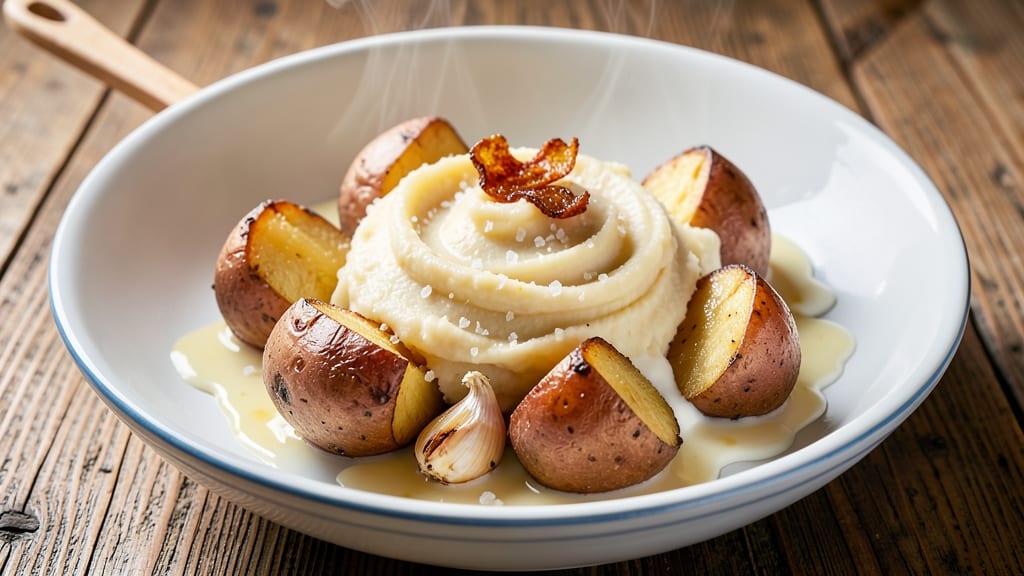
Creating Blue Apron-style mashed potatoes at home delivers that signature velvety texture and rich, buttery flavor that restaurant-quality sides achieve. The secret lies in precise cooking techniques and careful seasoning—no shortcuts here.
I’ve refined this method to ensure every bite is as smooth as silk with deep, roast-infused richness that pairs perfectly with any main dish.
This recipe starts with the right potatoes—Russets yield the fluffiest results when boiled just until tender, never mushy. The magic happens when you work in cold butter and heavy cream gradually, ensuring a creamy consistency without lumps.
Seasoning is key: a balance of salt, pepper, and a touch of roasted garlic depth elevates these from ordinary to extraordinary.
What you’ll end up with is a batch of mashed potatoes so velvety and flavorful, it’ll fool even the most discerning diners. The texture is impossibly smooth, with just enough body to hold its shape, while the buttery aroma and roasted undertones make every spoonful irresistible.
This is the kind of side dish that turns a simple meal into something memorable.
Whether you’re serving a holiday feast or a weeknight dinner, these mashed potatoes will steal the show. The method is straightforward, but the results are restaurant-quality—proof that even classic sides can be transformed with the right technique. Let’s get started on creating the perfect batch.
Ingredients for blue apron mashed potatoes
Nine core ingredients transform ordinary potatoes into restaurant-style velvet perfection.
| Ingredient | Amount | Notes |
|---|---|---|
| Russet Potatoes 🥔 | 3 lb | Medium-sized, peeled and quartered |
| Unsalted Butter 🧈 | 1 cup | Cold, cut into small cubes |
| Heavy Cream 🥛 | ¾ cup | Full-fat for creaminess |
| Whole Milk 🥛 | ¼ cup | Warmed for smooth texture |
| Garlic Cloves 🧄 | 4 cloves | Roasted until caramelized |
| Sea Salt 🧂 | 1 ½ tsp | Adjust to taste |
| Freshly Ground Black Pepper 🌶️ | ½ tsp | Cracked, not powdered |
| Granulated Sugar 🍚 | 1 tbsp | Balances acidity |
| Fresh Rosemary 🌿 | 1 tbsp | Finely chopped, optional |
Russets are non-negotiable here—their high starch content creates that signature fluffiness. Red potatoes or Yukon Golds won't yield the same texture. Buy them a few days ahead and store at room temperature for optimal starch conversion. For the roasted garlic, peel and char whole cloves in their skins at 400°F for 20 minutes—this intensifies their sweetness dramatically. Whole Foods or Trader Joe's carry pre-peeled Russets in the frozen section if fresh ones aren't available, but they'll need thawing overnight. The butter should be cold when added—this prevents lumps and ensures proper emulsification.
No heavy cream? Half-and-half plus an extra tablespoon of butter works in a pinch, though the texture won't be quite as velvety. Substitute full-fat Greek yogurt for milk if you're avoiding dairy, but reduce by 2 tablespoons to account for moisture. For the roasted garlic, garlic powder at one-third the amount is an emergency backup, though fresh is always superior. The sugar balances any acidity from the milk and enhances the roasted garlic's caramelized notes. Penzeys or Spicewalla carry high-quality rosemary if you want to splurge, but the grocery store variety works fine too—just make sure it's fresh and fragrant.
Potatoes should be boiled in salted water until a knife slides in easily—about 15-20 minutes. Drain immediately and return to the pot to steam-dry for 2 minutes. This step is critical for preventing watery mashed potatoes. The finished mash keeps beautifully for 4-5 days in the fridge, though it's best enjoyed within 24 hours. For make-ahead meals, portion into airtight containers with a layer of plastic wrap pressed directly on the surface to prevent a skin from forming. Reheat gently with a splash of milk to restore creaminess.
Why You'll Love This Recipe
- No Peel Required: I swear by Russets for this—just scrub the skins, no peeling. That saves me 10 minutes and the mess of peeling potatoes while my kids argue over homework. The skins stay on, and honestly? You barely notice.
- Garlic Butter Magic: That roasted garlic clove tucked into the butter? Everything. It melts into the potatoes, giving you this deep, savory richness without tasting like you’re eating a restaurant dish. (Between us, I’ve added extra just to see if anyone notices.)
- Leftovers That Shine: Cold mashed potatoes are a thing—creamy, buttery, and perfect for next-day sandwiches or as a base for loaded potato bowls. I make a double batch Sunday nights and never regret it. (Yes, even on a Tuesday night.)
- Budget-Friendly Luxury: Russets are cheap, butter is the star, and a splash of heavy cream makes it feel fancy without breaking the bank. This is the kind of recipe where you’re paying for quality, not gimmicks—every bite tastes like you spent hours, but you didn’t.
Step-by-step instructions for Blue Apron-inspired mashed potatoes
Here's the method for restaurant-quality mashed potatoes with rich, velvety texture and perfect seasoning.
Roast the Potatoes and Garlic for Deep Flavor
Preheat your oven to 400°F. Toss the 3 lb russet potatoes (peeled and quartered) with 1 tablespoon granulated sugar, 1 teaspoon sea salt, and 1 tablespoon finely chopped fresh rosemary on a baking sheet. Spread them out in a single layer so they roast evenly.
Place 4 garlic cloves (peeled) directly on the baking sheet with the potatoes. Roast for 45-50 minutes until the potatoes are tender when pierced with a fork and the garlic is golden brown and caramelized. The sugar will create a subtle caramelization that enhances the natural sweetness of the potatoes.
Boil the Roasted Potatoes for Maximum Creaminess
Transfer the roasted potatoes and garlic to a large pot and cover with cold water by about 2 inches. Bring to a boil, then reduce heat to medium-low and simmer for 10-12 minutes until the potatoes are fork-tender and all the starch has released into the water.
Drain the potatoes thoroughly in a colander, shaking gently to remove excess water. The residual heat will help evaporate any remaining moisture, which is crucial for light, fluffy mashed potatoes. While still hot, return the potatoes to the pot and mash them roughly with a potato masher or ricer.
Create the Creamy Base with Butter and Dairy
Add the 1 cup unsalted butter (cold, cut into small cubes) to the mashed potatoes. Using a wooden spoon or electric mixer, beat the butter into the potatoes until fully incorporated and the mixture is smooth. This step is where the magic happens—the butter creates that luxurious, velvety texture.
Gradually add the 0.75 cup heavy cream and 0.25 cup warmed whole milk while continuing to beat. The warm milk helps emulsify the mixture for a silky consistency. Taste and adjust seasoning with additional sea salt and freshly ground black pepper as needed. The roasted garlic can be lightly pressed or minced and stirred in at this stage for extra depth of flavor.
Finish with Perfect Texture and Presentation
For the smoothest texture, press the mashed potatoes through a fine-mesh sieve to eliminate any lumps. Return the mixture to the pot and stir in the caramelized roasted garlic (squeezed from its cloves). The garlic should add a sweet, nutty depth that complements the buttery richness.
Serve immediately while hot, garnished with additional chopped fresh rosemary and a sprinkle of freshly ground black pepper. The potatoes should be light enough to coat the back of a spoon, with a velvety texture that melts in your mouth. Each bite should deliver that perfect balance of buttery richness, creamy smoothness, and subtle herbal notes.
Pro Tips For Making Blue Apron Mashed Potatoes
- Boil in Salty Water: The recipe calls for boiling the potatoes, but trust me—this isn’t just any water. Use a big pot with at least 4 quarts of water and add 2 tablespoons of salt (or more if you’re like me and like it aggressive). Cold water, too—start with ice cubes if you’re impatient. This keeps the potatoes from turning gluey and guarantees a fluffy finish.
- Roast the Garlic First: That minced garlic in the recipe? It’s better when it’s sweet and mellow, not sharp and raw. Wrap the whole cloves in foil, drizzle with olive oil, and roast at 400°F for 15 minutes before mincing. The flavor sings instead of fighting for attention.
- Drain, Don’t Rinse: After boiling, never rinse the potatoes—this washes away the starch that makes mashed potatoes creamy. Instead, drain them in a colander for 30 seconds, then shake them off the last bit of water. The recipe’s heavy cream and butter will handle the rest.
- Warm the Dairy: Cold heavy cream and milk will turn your potatoes grainy. Heat them in a small saucepan over low heat until just warm (not hot—you’re not making custard). Stir in the butter first, then the warm dairy, and let it melt into the potatoes. Smooth every time.
Troubleshooting this recipe
Lumpy Texture Fix
If your mashed potatoes turn out lumpy, it’s usually from adding dairy too quickly or not incorporating the butter properly. First, press the mixture through a fine-mesh sieve to remove any obvious lumps.
For stubborn clumps, use a hand mixer or immersion blender on low speed to break them down while adding 1-2 tablespoons warm milk to help emulsify. I’ve found that cold butter is key—it melts more evenly than softened butter, preventing clumps from forming. 💡
Watery Mashed Potatoes
Watery texture happens when potatoes aren’t drained thoroughly or steam is trapped during mashing. After boiling, transfer potatoes to a colander and shake vigorously for 30 seconds to remove excess water. Then, return them to the pot and let them steam-dry uncovered for 2 minutes before mashing.
For extra insurance, use a potato ricer instead of a masher—it releases starch more efficiently. If already watery, simmer gently for 3-5 minutes to evaporate excess moisture. ❄️
Underseasoned Flavor
If your mashed potatoes taste bland, it’s likely because the seasoning was added too late or not enough. Always taste before serving and adjust with sea salt and freshly ground black pepper—I recommend ½ teaspoon salt per cup of butter as a starting point.
For depth, add 1 teaspoon roasted garlic paste or a pinch of white pepper (it’s milder and adds warmth). A splash of lemon juice brightens the flavor if the dish feels flat. 🌶️
Overcooked Potatoes
Mushy potatoes usually mean they were boiled too long or not peeled properly. Stick to Russet potatoes (their thick skins protect them from overcooking) and cut them into even 1-inch chunks for uniform cooking.
Test doneness with a fork—it should slide in easily but not fall apart. If they’re already overcooked, mash them with 1 extra tablespoon butter and 2 tablespoons flour to absorb excess moisture. 🥔
Dairy Separation
If your mashed potatoes look curdled or greasy, the dairy separated due to temperature shock. Always warm the milk and cream to 100°F before adding, and add them gradually while mixing vigorously. For a quick fix, stir in 1 tablespoon cold butter and 1 tablespoon flour to stabilize the emulsion.
If the issue persists, blend the mixture briefly with an immersion blender to re-emulsify. 🔥
Uneven Cooking
Potatoes cooking unevenly often means they weren’t cut uniformly or the water wasn’t hot enough. Cut all potatoes to the same size (1-inch chunks) and start boiling in cold, salted water—this ensures even cooking.
If some pieces are undercooked, mash them separately and mix back in at the end. For a foolproof method, use a steamer basket over boiling water to cook potatoes evenly without direct contact. 💫
Nutrition facts
Frequently asked questions
Why do Blue Apron-style mashed potatoes need roasting first?
Roasting caramelizes the natural sugars in the potatoes, creating a deeper, slightly sweet flavor that mimics restaurant-quality sides. The process also breaks down the starches more evenly, resulting in a creamier texture when mashed. This step is what gives them that signature buttery richness and velvety consistency.
Can I use Yukon Gold potatoes instead of Russets?
While Yukon Golds will work, they won't yield the same light, fluffy texture as Russets. Russets have a higher starch content, which is essential for that signature velvety finish. If you must use Yukon Golds, boil them slightly longer and add an extra 1 tablespoon butter to compensate for their waxier texture.
How do I prevent my mashed potatoes from getting gluey?
Gluey texture happens when potatoes aren't drained well or steam is trapped during mashing. Always shake potatoes vigorously in a colander after boiling, then let them steam-dry in the pot for 2 minutes before mashing. Using a potato ricer instead of a masher also helps release starch more efficiently. For extra insurance, press the finished mash through a fine-mesh sieve.
What's the best way to reheat leftover mashed potatoes?
Reheat gently in a saucepan over low heat with a splash of milk or cream to restore moisture. Stir constantly to prevent drying out. Microwaving works too, but add 15-second intervals with stirring between each. For best results, cover the bowl loosely with a damp paper towel to trap steam. Never reheat to a boil—this will make them watery.
Can I make these mashed potatoes ahead of time?
Yes! Prepare them up to 2 days ahead and store in an airtight container. Press plastic wrap directly on the surface to prevent a skin from forming. Reheat gently with a splash of milk or cream to restore creaminess. For make-ahead meals, portion into individual containers and freeze for up to 3 months—thaw overnight in the fridge before reheating.