
Side Dishes
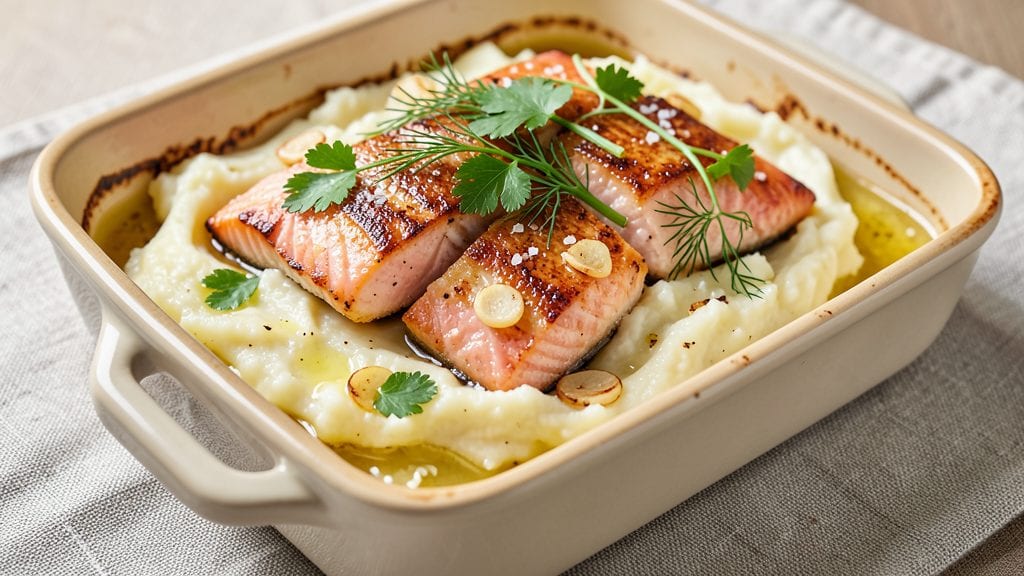
This salmon potato bake recipe delivers the perfect harmony of crispy golden edges and fluffy, tender centers—all in one pan with minimal effort.
The secret lies in layering thinly sliced potatoes at the bottom, followed by seasoned salmon fillets, then baking until the potatoes are perfectly cooked while the salmon stays moist and flavorful.
I developed this method after years of struggling with overcooked potatoes or dry salmon, and it finally cracked the code for restaurant-quality results at home.
The beauty of this dish is its simplicity: just a few key ingredients—potatoes, salmon, butter, and herbs—work together to create a meal that feels indulgent yet requires only 30 minutes of active prep.
The potatoes absorb the rich salmon juices as they bake, creating a naturally creamy sauce that eliminates the need for additional gravy. This makes it ideal for weeknight dinners when you want something impressive without the fuss.
What you'll end up with is a dish that looks as good as it tastes—crispy potato edges that give way to fluffy centers, topped with perfectly cooked salmon that flakes easily.
The aroma alone will have everyone gathering at the table, and the presentation is elegant enough for company but simple enough for a regular night in. The salmon stays moist thanks to a precise baking technique, while the potatoes develop that coveted crispy texture without turning to mush.
Serve this bake with a simple side salad or steamed green vegetables to complete the meal. The leftovers reheat beautifully, making it perfect for meal prep. Here's how to create this foolproof, one-pan wonder that will become a staple in your dinner rotation.
Ingredients for salmon potato bake
Four salmon fillets and two pounds of potatoes—just enough to feed four with crispy edges and fluffy centers.
| Ingredient | Amount | Notes |
|---|---|---|
| Russet Potatoes 🥔 | 2 lbs | Thinly sliced, peeled preferred |
| Salmon Fillets 🐟 | 4 whole | Skin-on, 6-8 oz each |
| Unsalted Butter 🧈 | ½ cup | Cold, cubed for crispiness |
| Fresh Dill 🌿 | ¼ cup | Chopped, stems removed |
| Fresh Parsley 🌿 | ⅛ cup | Chopped, for garnish |
| Garlic Cloves 🧄 | 4 cloves | Minced, for seasoning |
| Lemon Juice 🍋 | 2 tbsp | Freshly squeezed |
| Sea Salt 🧂 | 1 ½ tsp | Kosher preferred |
| Ground Black Pepper 🌶️ | ½ tsp | Freshly ground |
| Olive Oil 🫒 | 2 tbsp | For greasing pan |
| Heavy Cream 🥛 | ¼ cup | Full-fat for richness |
| Dijon Mustard 🍯 | 1 tsp | For salmon seasoning |
| Fresh Thyme 🌿 | ⅛ cup | Leaves only, chopped |
The potatoes are the foundation here. Russet potatoes are ideal—they hold their shape and develop that perfect crispy crust. Look for firm, unblemished potatoes at Whole Foods or local farmers markets; they'll stay fresh longer and taste better. If you can't find Russets, Yukon Golds work too, though they'll be slightly less crispy. Peel them first for even cooking—thin slices (about 1/8-inch thick) ensure crispy edges without turning mushy. The salmon should be fresh, center-cut fillets with skin on; Trader Joe's or local fishmongers carry excellent options. Always check for vibrant color and a mild ocean scent—never fishy or overly strong.
No fresh dill? Dried dill at half the amount will work, but fresh is ideal for that bright flavor. Short on thyme? Fresh rosemary or marjoram adds a nice twist. The heavy cream can be swapped for half-and-half for a lighter version, but full-fat gives the best texture. For the salmon, if you can't find skin-on fillets, boneless, skinless works too, though the skin helps keep it moist. The Dijon mustard is key for that tangy depth—substitute with 1/2 tsp lemon zest if you're out. Always measure the salt carefully; kosher salt is less dense than table salt, so use the full amount for accurate seasoning. The olive oil should be light or extra-light for greasing—it won't overpower the dish.
This bake reheats beautifully—just cover with foil and warm at 350°F for 10-15 minutes. Store leftovers in an airtight container for up to 3 days in the fridge, though it's best enjoyed fresh. For meal prep, portion into individual containers before baking—this way, you can reheat single servings without drying out the rest. The potatoes and salmon can be prepped ahead: slice the potatoes and store in cold water in the fridge for up to 24 hours, and season the salmon up to 4 hours before baking. The butter and cream should be at room temperature for even distribution.
Why You'll Love This Recipe
- Same recipe, different vibes: toss it together for a lazy Tuesday or impress guests with a fancy-looking casserole. The salmon holds up, so leftovers? Always a win.
- One-Pan Magic: I swear by this for nights when I’d rather scroll than scrub. Just slice potatoes, layer salmon, dot with butter, and let the oven do the work—no chopping boards left to soak.
- Buttery, Herby Bliss: That crispy potato edge with flaky salmon? The butter and fresh dill make it taste like a restaurant dish, but I’m the one who made it. (Honestly, my picky husband doesn’t even notice the parsley.)
- Weeknight to Sunday Table: Same recipe, different vibes: toss it together for a lazy Tuesday or impress guests with a fancy-looking casserole. The salmon holds up, so leftovers? Always a win.
Step-by-step instructions for salmon and potato bake
Here's how to achieve that perfect balance of crispy potato tops and fluffy centers with perfectly cooked salmon.
Prepare the Potatoes for Maximum Crispiness
Preheat your oven to 425°F while you prepare the potatoes. Peel and thinly slice the 2 lbs russet potatoes into ¼-inch thick rounds using a mandoline or sharp knife. You'll want about 6-8 slices per potato. Soak the slices in cold water for 5 minutes to remove excess starch, which helps create that crispy texture we're after.
Drain well and pat thoroughly dry with paper towels. The drier the potatoes, the crispier they'll become. Arrange the slices in a single layer on two rimmed baking sheets, making sure they don't overlap. This initial drying step is crucial—it prevents steaming and ensures those beautiful golden-brown tops.
Season and Layer the Potatoes
In a small bowl, combine 1.5 tsp sea salt, 0.5 tsp ground black pepper, 2 tbsp lemon juice, 1 tsp Dijon mustard, 4 cloves minced garlic cloves, and 0.125 cup chopped fresh thyme. Toss this mixture with the potato slices until they're evenly coated. The acidity from the lemon juice will help tenderize the potatoes while the garlic and thyme add depth of flavor.
Transfer the seasoned potatoes to a 9x13-inch baking dish, arranging them in an even layer. Press down gently to create a compact base. This layering technique ensures even cooking and prevents the potatoes from falling apart as they bake. The baking dish should be large enough to accommodate the salmon fillets on top without crowding.
Prepare the Salmon for Perfect Cooking
While the oven preheats, prepare the salmon. Pat the 4 whole salmon fillets dry with paper towels—this helps the skin crisp up nicely. In a small bowl, mix 0.25 cup chopped fresh dill, 0.125 cup chopped fresh parsley, and 0.5 cup cold cubed unsalted butter. Spoon this herb butter mixture onto each fillet, dividing it evenly.
Place the salmon fillets on top of the potato layer in the baking dish, skin-side down. The butter will melt and baste the salmon as it bakes, keeping it moist and flavorful. The skin will crisp up beautifully while the fillets cook through. Make sure the fillets are evenly spaced to allow for even cooking and prevent steaming.
Bake to Golden Perfection
Carefully transfer the baking dish to the preheated oven. Bake for 30 minutes uncovered. After 30 minutes, remove the dish from the oven and spoon 0.25 cup heavy cream evenly over the potatoes and salmon. This step adds richness and helps create a silky sauce that coats everything.
Return the dish to the oven and bake for another 15-20 minutes until the potatoes are tender when pierced with a fork and the salmon flakes easily with a fork. The top layer should be deep golden brown and crispy, while the potatoes underneath remain fluffy. The salmon should reach an internal temperature of 145°F—use an instant-read thermometer to check the thickest part of each fillet.
Rest and Serve
Remove the dish from the oven and let it rest for 5 minutes before serving. This resting period allows the juices to redistribute, ensuring each bite is moist and flavorful. The potatoes should be fork-tender with crispy edges, and the salmon should be perfectly cooked through with a crispy skin.
Garnish with additional chopped fresh dill and chopped fresh parsley before serving. The combination of crispy potato tops, fluffy centers, and perfectly cooked salmon makes this dish a showstopper. Serve immediately while everything is hot and the flavors are at their peak.
Pro Tips For Making Salmon Potato Bake
- PARBOIL POTATOES FIRST: I learned this the hard way—skipping the parboil means your potatoes will either turn to mush or stay rock-hard. Cut them into even ½-inch slices, boil for exactly 5 minutes, then drain. This guarantees they’ll finish tender without falling apart when you add the salmon on top.
- SALT THE POTATOES WHILE COOKING: Don’t wait until the end to season. Toss those parboiled potato slices with a pinch of salt (about ½ teaspoon per pound) while they’re still warm. The salt draws out moisture, which crisps up beautifully when baked, and it keeps them from tasting bland under the butter and herbs.
- DON’T OVERBAKE THE SALMON: Salmon goes from perfect to dry in seconds. Once the edges curl and the center hits 125°F (it’ll rise to 130°F while resting), pull it out. Cover the dish with foil for the last 5 minutes if you’re worried—this keeps the salmon juicy while the potatoes finish baking.
- USE COLD BUTTER FOR CRISPY TOPS: Sounds weird, but it works: spread a thin layer of cold unsalted butter over the potatoes before baking. It melts just enough to create a golden crust without turning greasy. Skip the warm butter—it’ll pool and make your dish soggy. (Trust me, I’ve done it both ways.)
Regional styles of this recipe
Nordic Creamy Style
In Scandinavian kitchens, this bake transforms into a rich graatling (Swedish potato casserole) by adding a ½ cup sour cream mixed with the heavy cream before baking. The acidity from the sour cream cuts through the richness, while fresh chives replace dill for a milder herb profile.
Serve with lingonberry jam for that classic Nordic touch—its tartness balances the creamy potatoes beautifully. 🌿
Southern Lemon-Pepper Twist
Down South, this dish gets a zesty kick with 1 tbsp hot sauce (like Crystal or Tabasco) mixed into the lemon juice marinade. Add ½ tsp smoked paprika to the potato seasoning for depth, and top with crumbled feta cheese during the final 5 minutes of baking.
The contrast of creamy potatoes and salty feta with the peppery salmon creates a Southern favorite that’s light yet satisfying. 🌶️
Mediterranean Herb Version
For a coastal Mediterranean flair, swap the dill for 1 tbsp dried oregano and 1 tsp lemon zest, then add ¼ cup kalamata olives (pitted and halved) around the salmon fillets before baking.
A drizzle of extra-virgin olive oil and crushed red pepper flakes after baking elevates the dish to Greek taverna style. The olives add briny contrast to the rich salmon and potatoes. 🫒
Cajun Spicy Kick
Louisiana brings heat with 1 tsp Cajun seasoning (like Tony Chachere’s) mixed into the potato seasoning and ½ tsp cayenne pepper in the salmon herb butter. Serve with a side of cornbread and a cool remoulade sauce for dipping.
The spicy kick pairs perfectly with the creamy potatoes, creating a bold, flavorful one-pan meal that’s perfect for game day. 🔥
British Mustard Sauce
Across the pond, this bake often includes a Dijon mustard cream sauce—mix 2 tbsp Dijon mustard with ¼ cup heavy cream and pour over the dish in the final 10 minutes of baking.
Garnish with watercress or baby spinach for a fresh, peppery finish. The tangy sauce adds a sophisticated twist that’s popular in British pubs. 🥗
Japanese Miso-Glaze Option
For a fusion twist, brush the salmon fillets with a miso glaze (mix 1 tbsp white miso paste with 1 tbsp honey and 1 tsp rice vinegar) before baking. Add ½ tsp grated ginger to the potato seasoning and top with sesame seeds after baking.
The umami-rich miso glaze pairs beautifully with the creamy potatoes, creating a unique Japanese-inspired dish. 🌟
Nutrition facts
Frequently asked questions
Can I use frozen salmon for this recipe?
Fresh salmon works best for this bake, but you can use frozen if thawed properly. Place frozen fillets in a sealed bag and submerge in cold water for 30 minutes, changing the water every 10 minutes. Pat completely dry before using—any moisture will prevent the skin from crisping. Never thaw at room temperature, as it promotes bacterial growth.
Why do my potatoes turn out mushy instead of crispy?
Mushy potatoes usually mean excess moisture or uneven baking. First, ensure you pat the slices thoroughly dry after soaking. Second, don't overcrowd the baking dish—leave ½-inch gaps between fillets. Finally, bake uncovered until the top is deep golden brown (about 45-50 minutes total). The cream should be added only after the initial 30 minutes of baking.
How can I make this dish ahead of time?
Prep the potatoes and season the salmon up to 24 hours ahead, but don't bake yet. Store potato slices in cold water in the fridge, and keep salmon in an airtight container. When ready to bake, drain and dry the potatoes completely, then proceed with the recipe. For leftovers, reheat covered at 350°F for 10-15 minutes—the potatoes may lose some crispiness but stay tender.
What's the best way to reheat this bake?
For best results, cover the dish tightly with foil and reheat at 350°F for 10-15 minutes. The foil prevents drying, while the lower temperature keeps the salmon moist. If using a microwave, cover with a damp paper towel and heat in 30-second intervals until warmed through. The potatoes will soften slightly but remain flavorful.
Can I substitute sweet potatoes for regular potatoes?
Sweet potatoes work but require adjustment—slice them ⅛-inch thick and bake for 5-10 minutes longer (they're denser). Reduce the baking time to 40 minutes before adding cream, as sweet potatoes cook faster. Their natural sweetness pairs beautifully with the salmon's richness, but expect a slightly different texture.