
Side Dishes
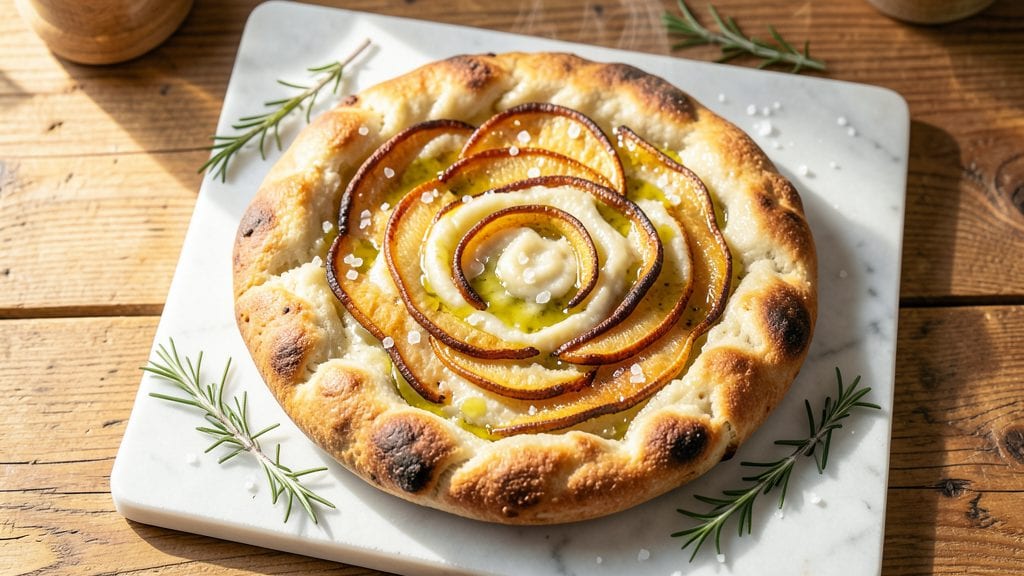
This potato focaccia recipe transforms humble potatoes into a golden, olive oil-drenched masterpiece with a crispy crust and fluffy interior. After years of perfecting focaccia, I discovered that poaching diced potatoes in olive oil before baking creates that signature texture—crispy edges that give way to tender, airy centers.
The secret lies in the dough's slow fermentation and the precise moment when the potatoes release their starch into the oil.
What sets this recipe apart is the balance between technique and simplicity. You'll work with a traditional yeast-based dough, but the process is streamlined for home bakers—no kneading required, just stretching and folding.
The potatoes absorb the olive oil while baking, creating a flavorful crust that's both savory and slightly sweet. This isn't just a side dish; it's a showstopper that elevates any meal.
The result is a focaccia with a caramelized, shatteringly crisp exterior and a moist, potato-infused interior that melts in your mouth. Every bite delivers layers of flavor from the olive oil, herbs, and potatoes, making it impossible to resist tearing off another piece.
Perfect for pairing with soups, salads, or serving alongside grilled meats, this focaccia brings restaurant-quality texture to your dinner table.
Whether you're hosting a dinner party or simply craving something hearty, this recipe delivers professional results with just a few key techniques. The dough proofing, potato preparation, and baking times are all designed to ensure success—even for those new to focaccia. Let's get started on creating this Italian-inspired centerpiece.
Ingredients for potato focaccia
Transform humble potatoes into a restaurant-worthy focaccia with these quality ingredients and precise techniques.
| Ingredient | Amount | Notes |
|---|---|---|
| All-Purpose Flour 🌾 | 4 cups | Unbleached preferred for texture |
| Active Dry Yeast 🍞 | ¼ oz | Or 2.5g for accuracy |
| Granulated Sugar 🍚 | 1 tbsp | For yeast activation |
| Diamond Crystal Kosher Salt 🧂 | 1 ½ tsp | Adjust to taste |
| Extra-Virgin Olive Oil 🫒 | 1 ½ cups | High-quality, fruity variety |
| Russet Potatoes 🥔 | 2 lbs | Waxy potatoes preferred |
| Fresh Rosemary 🌿 | ¼ cup | Finely chopped, stems removed |
| Fresh Thyme 🌿 | ¼ cup | Leaves only, finely chopped |
| Garlic Cloves 🧄 | 4 cloves | Minced for dough |
| Large Eggs 🥚 | 2 whole | Room temperature |
| Flaky Sea Salt 🧂 | ½ cup | For final sprinkle |
| Coarse Black Pepper 🌶️ | ½ tsp | Freshly cracked |
| Water 💧 | 1 ¼ cups | Lukewarm for yeast |
The flour sets the foundation—King Arthur or Caputo Tipo 00 deliver the best texture, but all-purpose works in a pinch. For the yeast, always check the expiration date—Saf-Instant is my go-to for reliability. The olive oil is non-negotiable; California Avocado's extra-virgin variety has the perfect balance of peppery bite and fruity depth. Russet potatoes are ideal for their starch content, but Yukon Golds add natural sweetness. Fresh herbs like rosemary and thyme should be vibrant and fragrant—Whole Foods' bulk section often carries the best quality. The garlic should be firm and free of sprouts, with a rich aroma when peeled. For the egg, room temperature ensures even incorporation into the dough.
No flaky sea salt? Diamond Crystal kosher salt works for the dough, but Maldon is ideal for the final sprinkle. Running short on rosemary? Fresh sage at half the amount delivers a similar earthy note. The potatoes can be pre-cooked by boiling instead of poaching, though the olive oil bath creates superior texture. Olive oil substitutes like avocado oil maintain moisture, but lack the authentic flavor. For the yeast, if your kitchen is cold, warm the water to 105°F—never hotter than 110°F to avoid killing the yeast. The flour can be swapped for whole wheat at 25% of the total, though texture will differ slightly.
Store the yeast in the freezer for up to 3 months to preserve freshness. Fresh herbs last 5-7 days wrapped in damp paper towels in the fridge. The dough can be refrigerated for 24 hours before shaping, or frozen for 3 months—thaw completely before proceeding. Poached potatoes keep their texture best when refrigerated for 2 days before baking. The finished focaccia reheats beautifully at 350°F for 5-10 minutes to restore crispiness. For meal prep, slice and freeze portions before baking—reheat directly from frozen at 375°F for 10-12 minutes.
Why You'll Love This Recipe
- No-Knead Magic: I swear by this dough—just mix, let it rise, and forget it. The yeast does all the work while you sip coffee or scroll through memes. Honestly, my lazy Sunday mornings now include a warm focaccia waiting for me.
- Crispy-Creamy Potato Dream: That first bite? Flaky crust with tender, buttery potatoes baked right in. The olive oil soaks into the dough like a dream, and the salt? It makes every bite taste like a little flavor explosion. (Yes, even on a Tuesday night.)
- Leftovers That Save Me: Slice the next day for sandwiches or toast it straight from the fridge for a lazy breakfast. I’ve even packed it for lunch—still delicious cold, and way cheaper than buying bread. My wallet thanks me weekly.
- Pantry Staple Power: Five ingredients, zero specialty items. If you’ve got flour, yeast, and olive oil, you’re golden. I made this last week using what was already in my cupboards, and it still tasted like I’d spent hours baking. (Spoiler: I didn’t.)
Step-by-step instructions for potato focaccia recipe
This method delivers a perfectly balanced focaccia with a crisp olive oil crust and fluffy potato-infused heart.
Prepare the Potato Purée and Infuse the Dough
Begin by boiling the 2 lbs russet potatoes until fork-tender, about 20 minutes. Drain thoroughly and mash until completely smooth, with no lumps remaining. This purée will become the soul of your focaccia, adding moisture and a delicate potato flavor throughout.
In a separate bowl, dissolve the 0.25 oz active dry yeast in the 1.25 cups lukewarm water along with the 1 tbsp granulated sugar. Let it sit for 5-10 minutes until frothy. This activation step ensures your yeast will work properly and create that signature airy texture. While waiting, combine the 4 cups all-purpose flour and 1.5 tsp diamond crystal kosher salt in a large mixing bowl.
Once the yeast is active, add the potato purée, minced 4 cloves garlic, finely chopped 0.25 cup fresh rosemary, and 0.25 cup fresh thyme to the flour mixture. Make a well in the center and pour in the yeast mixture. Gradually incorporate the 1.5 cups extra-virgin olive oil while mixing until a shaggy dough forms. This high-fat content creates that signature focaccia texture.
Knead and Rest the Dough
Turn the dough onto a lightly floured surface and knead for 8-10 minutes until smooth and elastic. You'll know it's ready when it springs back slowly when poked. The dough should be soft but not sticky—if it's too wet, add a little more flour, 1 tablespoon at a time.
Transfer the dough to a lightly oiled bowl, cover with plastic wrap, and let it rise in a warm place for 1-2 hours, or until doubled in size. This resting period allows the gluten to relax and the flavors to meld. I like to place my bowl in a slightly warmed oven with a cup of hot water to create a perfect rising environment.
After the initial rise, punch down the dough to release any air pockets. Divide it into two equal portions and shape each into a 12x16-inch rectangle on parchment-lined baking sheets. Cover loosely and let rest for 30 minutes before baking. This final shaping step ensures an even thickness and prevents cracking during baking.
Create the Olive Oil Poach and Bake
Preheat your oven to 425°F. Using your fingers, dimple the dough all over, pressing down gently to create pockets for the olive oil. Then, generously drizzle the 1.5 cups extra-virgin olive oil over the surface, pressing it into the dimples with your fingertips. This creates the signature olive oil-poached crust that becomes crispy and golden.
Bake for 20-25 minutes until the edges are golden brown and the top is puffed. The center should still feel slightly soft to the touch—this ensures a tender interior. Rotate the pans halfway through baking for even browning. The aroma at this stage is unbeatable, with fresh rosemary and thyme mingling with the roasted potato notes.
Finish with Seasoning and Rest
Remove the focaccia from the oven and immediately sprinkle with the 0.5 cup flaky sea salt and 0.5 tsp coarse black pepper. Let it cool for 5 minutes before slicing—this resting period allows the flavors to settle and the crust to firm up slightly for easier cutting.
The final focaccia should have a crisp, golden crust that gives way to a tender, fluffy interior infused with potato flavor. Each slice should be moist but not soggy, with pockets of olive oil that add richness. Serve warm with a simple balsamic reduction or as part of a charcuterie board for the ultimate Italian experience.
Pro Tips For Making Potato Focaccia
- Dissolve the Yeast: DESCRIPTION: Toss that yeast packet into warm water first—not the flour. I learned this the hard way when my focaccia came out dense because the yeast hid in dry flour pockets. Let it sit for 5 minutes until frothy before mixing in anything else.
- Salt the Potatoes Right: DESCRIPTION: Generously salt the boiled potatoes while they’re still hot—about 1 teaspoon per pound. This draws out moisture, making them crispier when folded into the dough. (And yes, even if you’re impatient like me, wait 10 minutes before draining.)
- Poke the Dough: DESCRIPTION: After shaping, use your fingertips to dimple the focaccia top deeply—about 1/2 inch apart. This isn’t just for looks; it lets steam escape, preventing a gummy center. (Your future self will thank you.)
- Oil the Pan Early: DESCRIPTION: Brush the baking pan with extra olive oil—especially the sides—before adding the dough. I used to skip this, and the edges always stuck. A light coat means easy release and that coveted crispy bottom crust. (No, you can’t just use spray oil.)
Regional styles of these flavors
Italian Rustic Version
In Tuscany, focaccia is often made with simple ingredients and a rustic touch. For a traditional Italian take, replace the potato purée with 1 cup mashed cannellini beans and use 1 tbsp dried oregano instead of fresh rosemary.
Add 1 minced anchovy fillet to the dough for umami depth, and top with cherry tomatoes and shaved Parmigiano-Reggiano before baking. This variation keeps the olive oil focus but adds Mediterranean flair. 🌿
French Herb & Gruyère
In Provence, focaccia often incorporates French herbs and melted cheese. Swap the rosemary and thyme for 1 tbsp fresh tarragon and 1 tbsp fresh chives, then fold 1 cup shredded Gruyère cheese into the dough before shaping.
After baking, sprinkle with 1 tbsp chopped black truffle for an elegant touch. The Gruyère adds a nutty richness that pairs beautifully with the potato base. 🧀
Spanish Patatas Bravas Style
For a bold Spanish twist, dice 1 lb potatoes into ½-inch cubes and parboil them until tender. Toss the potatoes in 2 tbsp smoked paprika and 1 tsp cayenne pepper before baking them directly on top of the focaccia dough.
After baking, serve with a side of spicy tomato sauce and aioli for dipping. This version turns your focaccia into a hearty tapas-style dish. 🌶️
American BBQ Potato
In the American South, focaccia meets barbecue flavors. Replace the rosemary and thyme with 1 tbsp smoked paprika and 1 tsp onion powder. After baking, brush the focaccia with ½ cup BBQ sauce (like Starkist or Sweet Baby Ray's) and top with ½ cup shredded cheddar cheese.
Add ¼ cup chopped green onions and a sprinkle of crushed red pepper flakes for heat. This version is perfect for game day or as a side to pulled pork. 🔥
Mediterranean Sun-Dried Tomato
For a bright, tangy variation, fold ½ cup chopped sun-dried tomatoes (oil-packed) into the dough along with the potato purée. After baking, drizzle with 2 tbsp balsamic glaze and sprinkle with ¼ cup crumbled feta cheese.
The sun-dried tomatoes add a sweet-savory contrast that complements the potatoes beautifully. This version shines as a brunch centerpiece. 🍅
Nutrition facts
Frequently asked questions
Can I make this potato focaccia without yeast?
Yes! For a quick version, replace the yeast with 1 tbsp baking powder and 1 tsp baking soda. Skip the rising time and bake immediately at 400°F for 15-18 minutes. The texture will be denser but still delicious—perfect for when you're short on time.
Why does my focaccia turn out dense instead of fluffy?
Dense focaccia usually means the yeast didn't activate properly or the dough didn't rise enough. Always use lukewarm water (105°F-110°F) for the yeast and let it foam for 5-10 minutes before mixing. Also, ensure the dough doubles in size during rising—if your kitchen is cold, place the bowl near a warm oven with a cup of hot water.
How do I store leftovers to keep them crispy?
Wrap cooled focaccia tightly in plastic wrap and store at room temperature for 2 days to maintain crispiness. For longer storage, freeze slices in a single layer before transferring to a bag. To revive, reheat at 350°F for 5-10 minutes until golden and crisp again.
Can I use sweet potatoes instead of russets?
Sweet potatoes work but will change the flavor profile. Their natural sweetness pairs well with savory toppings like rosemary and thyme. For best results, roast them first to concentrate their flavor before mashing into the dough. Expect a slightly sweeter, nuttier focaccia.
What's the best way to reheat focaccia?
For maximum crispiness, reheat slices in a 400°F oven for 3-5 minutes until golden. Alternatively, use an air fryer at 375°F for 2 minutes. Avoid microwaving—it makes the crust soggy. The olive oil in the crust needs dry heat to re-crisp properly.