
Side Dishes
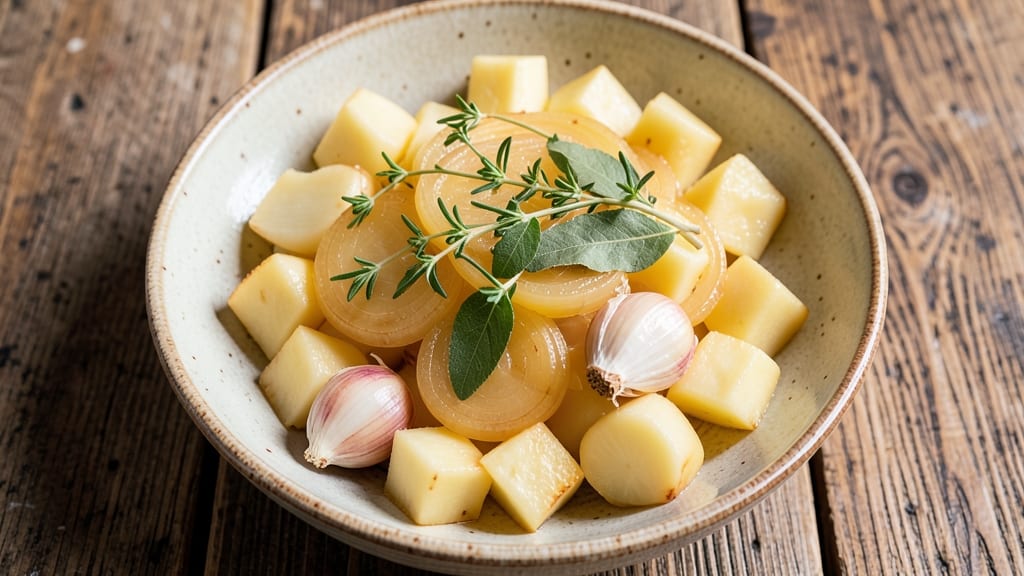
This one-pot boiled potatoes and onions recipe transforms basic ingredients into a savory, herb-infused side dish that elevates any meal. The secret lies in infusing the boiling water with aromatic herbs and garlic, creating layers of flavor without extra effort.
I developed this method after realizing how often simple sides get overlooked—until now.
With just five ingredients and 20 minutes of active time, you'll achieve tender potatoes and sweet, caramelized onions in one pot. The herb-infused water not only seasons the vegetables but also creates a subtle broth-like quality that makes this dish feel restaurant-quality.
Perfect for weeknight dinners or holiday tables, this recipe delivers consistent results every time.
By the end, you'll have fluffy, fork-tender potatoes and golden onions infused with savory herbs, ready to be served as-is or paired with proteins like roasted chicken, grilled steak, or baked fish.
The simplicity of this method makes it ideal for beginners, while the customizable seasoning options allow for endless variations.
Whether you're feeding a family or prepping for a meal ahead, this one-pot approach ensures minimal cleanup and maximum flavor. The key is patience—letting the potatoes cook low and slow while the onions caramelize naturally.
Let's get started on this foolproof side dish that will become a staple in your kitchen.
Ingredients for boiled potatoes and onions
Five core ingredients plus aromatic herbs transform simple boiled potatoes and onions into restaurant-quality side dishes.
| Ingredient | Amount | Notes |
|---|---|---|
| Yukon Gold Potatoes 🥔 | 1 ½ lb | Cut into even 1-inch chunks |
| Yellow Onions 🧅 | 2 whole | Sliced into 1/4-inch rounds |
| Fresh Garlic Cloves 🧄 | 4 cloves | Lightly smashed, not minced |
| Fresh Thyme Sprigs 🌿 | 4 sprigs | Stems attached for infusion |
| Fresh Bay Leaves 🍃 | 2 whole | Standard dried bay leaves work |
| Diamond Crystal Kosher Salt 🧂 | 1 ½ tsp | Adjust to taste at end |
| Unsalted Butter 🧈 | 2 tbsp | Cold, for finishing |
| Extra-Virgin Olive Oil 🫒 | 1 tbsp | For drizzling at serving |
| Fresh Parsley Leaves 🌿 | ¼ cup | Chopped for garnish |
The potatoes and onions form the foundation—Yukon Gold potatoes deliver creamy texture while yellow onions caramelize beautifully. For the best results, source Yukon Golds from Whole Foods or your local market's produce section, where they're typically sold pre-washed. The onions should be firm with vibrant color; avoid any with sprouting or soft spots. Garlic cloves should be plump and free of sprouts—Costco's organic garlic is my go-to for consistent quality. Fresh herbs are non-negotiable here: thyme sprigs and bay leaves create the aromatic infusion that elevates this dish from basic to extraordinary. Penzeys Spices carries excellent fresh herb bundles if you prefer convenience without sacrificing quality.
No fresh thyme? Dried thyme at one-third the amount works in a pinch, though the flavor will be more concentrated. Substitute shallots for onions if you prefer milder sweetness, but increase to 3 whole shallots for equivalent volume. Garlic powder can replace fresh at half the amount, though it lacks the depth of real garlic. For the butter, European-style cultured butter adds more complexity, while margarine should be avoided entirely—it doesn't brown properly. Olive oil should be fruity and peppery—California Olive Ranch or Colavita brands excel here. The parsley is purely decorative but brightens the dish; flat-leaf parsley has more robust flavor than curly.
This dish reheats beautifully—cover with foil and warm in a 350°F oven for 10 minutes to restore moisture. Store in the fridge for up to 5 days in an airtight container with a splash of water to maintain tenderness. For meal prep, portion into individual containers with a drizzle of olive oil to prevent drying. The herb-infused water can be saved as flavorful broth—simmer it down by half for a quick aromatic base. Freeze portions for up to 3 months if you prefer, though texture may slightly degrade. Always season with kosher salt at the end—it's easier to adjust than remove.
Why You'll Love This Recipe
- One-Pot Magic: I swear by this—just toss peeled Yukon Golds, sliced onions, and a splash of water in one pot. The thyme and bay leaves infuse everything while you’re chopping veggies for the rest of dinner. No extra pans, no stress.
- Garlic-Onion Love Bomb: Between us, the caramelized onions and minced garlic in this dish are ridiculously good. The Yukon Golds soak up that flavor like a sponge, giving you that creamy, savory bite that makes every forkful worth it.
- Weeknight Workhorse: This is my go-to when I’m feeding a crowd or just too tired to fuss. Double the batch for leftovers—toss them into salads, mash them, or reheat with a fried egg on top. It’s that adaptable.
- Budget-Friendly Staple: Fresh garlic, onions, and potatoes? Check. Herbs? A few sprigs go a long way. I’ve made this for under $5 per serving, and it still feels like a special meal. Practical doesn’t mean boring—it means smart.
Step-by-step instructions for herb-infused boiled potatoes and onions
Master this one-pot technique for perfectly tender potatoes and onions infused with aromatic herbs.
Prepare the Potatoes and Onions for Even Cooking
Begin by peeling the 1.5 lb Yukon Gold potatoes and cutting them into even 1-inch chunks. Uniform size ensures they cook simultaneously without some pieces becoming mushy while others remain underdone. Place the potato chunks in a large bowl and add the 2 whole yellow onions, sliced into ¼-inch rounds. This preparation creates maximum surface area for even heat penetration throughout the cooking process.
Lightly smash the 4 cloves fresh garlic cloves with the flat side of your knife to release their aromatic oils without mincing them into tiny pieces. This technique preserves their flavor while allowing gentle infusion into the cooking liquid. Add the garlic cloves, 4 sprigs fresh thyme with stems attached, and 2 whole fresh bay leaves to the bowl. The stems on thyme sprigs will infuse subtle herbal notes into the water as it simmers.
Build Flavor in the One-Pot
In a large, deep pot with a lid that fits snugly, combine all prepared ingredients with 6 cups of cold water. The water should completely cover the potatoes by at least 1 inch. Add the 1.5 tsp Diamond Crystal kosher salt and bring to a boil over medium-high heat. Once boiling vigorously, reduce heat to maintain a gentle simmer at 180-190°F—this temperature range prevents the potatoes from breaking apart while ensuring even cooking.
Cover the pot and let the mixture simmer for 20 minutes. The potatoes should be tender when pierced with a fork but still hold their shape. You'll notice the water takes on a subtle golden hue from the thyme and bay leaves, and the aroma will fill your kitchen with earthy, herbal notes. This infusion transforms simple boiled potatoes into a flavorful side dish worthy of any main course.
Finish with Rich Butter and Herbal Garnish
Once the potatoes are perfectly tender, drain them thoroughly in a colander, shaking gently to remove excess water. Return the drained potatoes and onions to the same pot (now empty) and place over low heat. Add the 2 tbsp cold unsalted butter and toss gently with a wooden spoon, allowing the butter to melt and coat each piece. The residual heat from the hot potatoes will create a delicate butter sauce that clings beautifully to each bite.
Remove from heat and immediately stir in the 0.25 cup chopped fresh parsley leaves. The parsley adds a bright finish that cuts through the richness of the butter while maintaining the herbaceous theme. For serving, drizzle each portion with the 1 tbsp extra-virgin olive oil, which enhances the natural flavors and adds a touch of elegance to the presentation.
Rest and Serve for Optimal Texture
Let the potatoes rest in the pot for 5 minutes before serving. This brief resting period allows the flavors to meld and the textures to settle—preventing any potential mushiness from over-handling. The potatoes should be fork-tender with a slight resistance when pierced, indicating perfect doneness. The onions should be translucent with a slight caramelization at the edges from their time in the simmering liquid.
Serve immediately while still warm, as the butter coating will begin to solidify as they cool. This herb-infused one-pot method delivers restaurant-quality results with minimal effort, making it perfect for busy weeknights or elegant dinner parties. The aromatic herbs elevate simple boiled potatoes into a sophisticated side dish that pairs beautifully with grilled meats, roasted vegetables, or fresh seafood.
Pro Tips For Making Boiled Potatoes And Onions
- START HOT, THEN SIMMER: I used to let the water creep up to a boil with the potatoes, and they’d turn out mealy instead of fluffy. Get the pot roaring first—then add the potatoes and onions. Once it’s back to a rolling boil, drop the heat to medium-low and let them cook uncovered. This keeps the water from getting sluggish and ensures even cooking without a mushy center.
- PEEL AFTER COOKING: Yukon Golds have that buttery skin that’s actually worth keeping. Peel them raw, and you’ll lose flavor and texture. Instead, boil them whole, then peel under running water once cooled enough to handle—about 5 minutes out of the pot. The skin slides off easier, and the potatoes stay creamier.
- CHOP ONIONS UNIFORM: I learned this the hard way—uneven onion slices mean some get mushy while others stay crunchy. Cut them into ½-inch chunks before adding to the pot, and they’ll cook at the same rate as the potatoes. No one wants a bite with a rubbery onion center.
- SALT THE WATER LIKE THE OCEAN: Skip the light touch—this isn’t a delicate flower. Use 2 tablespoons of salt per gallon of water (or 1 tablespoon per liter). The potatoes absorb flavor as they cook, and bland water means bland potatoes. Taste the water after adding salt—it should taste like the sea, not a sad soup.
Dietary considerations for boiled potatoes and onions
Gluten-Free Adaptations
This recipe is naturally gluten-free since it relies on potatoes, onions, and herbs without any wheat-based ingredients. The key is ensuring all added components—like butter and olive oil—are certified gluten-free. I always check butter labels since some brands process in facilities with wheat products.
For extra safety, use Earth Balance vegan butter, which guarantees gluten-free certification and adds a neutral flavor that won't overpower the dish. 🌾
Low-Carb/Keto Options
To make this keto-friendly, replace the potatoes with cauliflower florets (about 2 cups) and reduce the onions to 1 medium. The cooking time remains similar, but check for doneness after 15 minutes.
Cauliflower absorbs flavors differently, so increase the thyme to 6 sprigs and bay leaves to 3 for deeper infusion. Finish with 1 tbsp olive oil instead of butter to keep it dairy-free. The texture will be slightly different but still satisfying.
Allergen-Free Considerations
For nut allergies, this recipe is already safe, but always verify butter brands for cross-contamination warnings. If avoiding dairy entirely, substitute butter with olive oil and use nutritional yeast (about 1 tsp) for a cheesy flavor.
For egg allergies, no modifications are needed—this dish contains no eggs. When serving to guests with allergies, I recommend labeling the dish with its modifications to ensure safety and transparency.
Vegetarian and Vegan Adjustments
This recipe is naturally vegetarian, but for vegan versions, replace the butter with vegan butter or olive oil. I prefer Miyoko's Creamery vegan butter for its rich texture. For extra flavor, add 1 tsp smoked paprika to the simmering water.
The dish remains equally satisfying while accommodating plant-based diets. The herb-infused water can also be saved as a vegan broth base for soups or stews.
Dairy-Free Alternatives
Skip the butter entirely and finish the potatoes with 2 tbsp olive oil instead. The olive oil adds richness while keeping the dish dairy-free. For extra depth, stir in 1 tbsp nutritional yeast after cooking—it provides a cheesy flavor without dairy.
This approach works especially well when serving alongside grilled vegetables or plant-based proteins. The olive oil also enhances the natural sweetness of the caramelized onions.
Protein Boost Modifications
Add ½ cup cooked white beans (like cannellini) to the pot during the final 5 minutes of simmering. The beans absorb the herb-infused flavors beautifully. For extra protein, stir in 2 tbsp crumbled feta cheese (or vegan feta) after cooking.
This modification turns the dish into a heartier side that pairs well with salads or as a standalone meal. The beans also add a satisfying texture contrast to the tender potatoes and onions. 💪
Nutrition facts
Frequently asked questions
Why do you recommend Yukon Gold potatoes for this recipe?
Yukon Gold potatoes hold their shape beautifully while absorbing flavors, making them perfect for this herb-infused method. Their creamy texture contrasts nicely with the caramelized onions, and they're less likely to turn mushy than other varieties. For a budget-friendly swap, try red potatoes—just reduce cooking time by 3-5 minutes since they cook faster.
Can I make this recipe without fresh herbs?
Use 1/2 teaspoon dried thyme and 1/2 teaspoon dried bay leaves instead of fresh. Crush the dried herbs between your palms before adding to release their oils. For extra depth, add 1/2 teaspoon dried parsley at the end. The flavor won't be identical, but it'll still be delicious.
How do I know when the potatoes are perfectly cooked?
The potatoes should be fork-tender with a slight resistance when pierced—like a soft cloud with a tiny bit of bite. If they fall apart easily, they've overcooked. For best results, start checking after 18 minutes of simmering. The onions should be translucent with just a hint of caramelization at the edges.
Can I use this herb-infused water for something else?
Yes! Strain the herb-infused water and reduce it by half to make a light aromatic broth. Use it as a base for soups, stews, or even rice dishes. For extra richness, stir in 1 tablespoon butter or 1 tablespoon olive oil at the end. The herbs add subtle depth that works beautifully in sauces too.
What's the best way to reheat leftovers?
Gently reheat in a skillet over medium-low heat with a splash of water or broth to maintain moisture. Cover for 3-4 minutes until warmed through. Avoid microwaving as it can make the potatoes gummy. For extra flavor, toss with a little fresh parsley and a pat of butter before serving.