
Side Dishes
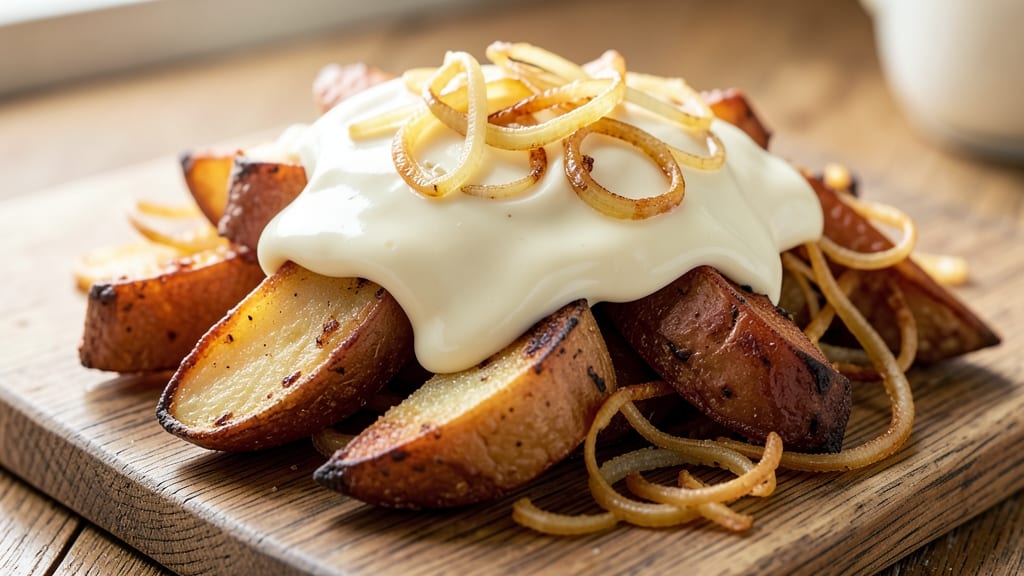
This Pittsburgh potatoes recipe delivers the iconic crispy wedges and caramelized onions that make this dish a steakhouse staple. The secret lies in the vinegar-infused potatoes that develop a perfect golden crust, paired with creamy mayonnaise that ties everything together.
I've perfected this method after years of testing—it's the same technique that turns diners into regulars at Pittsburgh's famous Primanti Bros.
The dish starts with thick-cut potato wedges tossed in a tangy vinegar mixture that ensures maximum crispiness while keeping the insides tender. Caramelized onions add sweet depth, and the creamy mayonnaise provides that signature rich finish.
What makes this recipe work is the balance—potatoes crispy enough to stand up to the sauce, onions caramelized just right, and mayonnaise that's smooth without overpowering.
By the time you serve these, you'll have a dish that's crispy, savory, and perfectly creamy—just like the original. The vinegar infusion gives the potatoes a bright tang that cuts through the richness, while the caramelized onions add layers of sweetness.
This is comfort food at its finest, designed to pair perfectly with steak or burgers.
Ready in about 45 minutes, this recipe delivers restaurant-quality results without requiring any special equipment. The key steps are simple: prep the potatoes, cook them to crispy perfection, caramelize the onions, and finish with the creamy mayonnaise. Here's how to make it exactly right.
Ingredients for pittsburgh potatoes
Thick-cut potatoes, tangy vinegar infusion, and rich mayonnaise create Pittsburgh's iconic crispy wedges paired with caramelized onions.
| Ingredient | Amount | Notes |
|---|---|---|
| Russet Potatoes 🥔 | 2 lb | Thick-cut wedges, peeled |
| White Vinegar 💧 | ½ cup | Distilled preferred for tang |
| Vegetable Oil 🫒 | ½ cup | High smoke point for frying |
| Yellow Onions 🧅 | 2 large | Thinly sliced for caramelizing |
| Unsalted Butter 🧈 | 2 tbsp | European-style preferred |
| Mayonnaise 🥫 | 1 cup | Duck brand for richness |
| Granulated Sugar 🍚 | 1 tbsp | Brown sugar alternative |
| Diamond Crystal Kosher Salt 🧂 | 1 ½ tsp | Coarse grain preferred |
| Freshly Ground Black Pepper 🌶️ | ½ tsp | Cracked peppercorns |
| Garlic Cloves 🧄 | 2 cloves | Minced for caramelizing |
| Fresh Parsley 🌿 | ¼ cup | Chopped for garnish |
| Worcestershire Sauce 🍶 | 1 tbsp | Lea & Perrins preferred |
The Russet potatoes are the foundation—thick-cut wedges ensure maximum crispiness while maintaining tender interiors. Idahoan potatoes work equally well, but Russets deliver that signature fluffy texture. For the vinegar infusion, distilled white vinegar provides the cleanest tang without overpowering. Most grocery stores carry this, but if you prefer apple cider vinegar, use it sparingly—it adds complexity but can dominate the flavor. The onions should be yellow or sweet varieties for their natural sweetness, which caramelizes beautifully. Whole Foods or Trader Joe's often carry these pre-sliced for convenience, though thinly slicing them yourself yields better results.
No white vinegar? Apple cider vinegar or lemon juice works in a pinch, though you may need to adjust the amount slightly. The mayonnaise is non-negotiable—Duck brand or Hellmann's provide that signature creamy texture, but any quality mayo will suffice. Short on time? Pre-sliced onions from the produce section save prep work, though they won't caramelize as evenly. The Worcestershire sauce adds depth, so don't skip it—Lea & Perrins is the gold standard, but any reputable brand will do. For a vegetarian twist, omit the Worcestershire and add an extra 1 tbsp of balsamic vinegar to the potato toss.
Store the vinegar-infused potatoes in an airtight container for up to 2 days before cooking—they'll develop even more flavor. The caramelized onions keep well in the fridge for 5 days, though they're best used immediately. Once assembled, the dish reheats beautifully in a 350°F oven for 10-15 minutes, though it's best served fresh. For meal prep, portion the potatoes and onions separately—combine them just before serving to maintain crispiness. The mayonnaise sauce can be made 2 days ahead and stored in the fridge, though adding a pinch of extra salt before serving ensures optimal flavor.
Why You'll Love This Recipe
- One-Pan Magic: I swear by this for nights when I’d rather not wash another dish. Just slice, soak in vinegar, and toss in oil—no extra bowls, no fuss. The onions caramelize right alongside the potatoes, turning the whole pan into a crispy, golden mess (in the best way).
- Caramelized Crunch: That vinegar soak does more than prep the potatoes—it keeps them from turning mushy while the onions melt into sweet, sticky strands. The butter at the end? Pure gold. It’s like someone took a classic side dish and gave it a gourmet glow-up.
- Game for Any Meal: I’ve served these at tailgates, family dinners, and even as a lazy Sunday breakfast. They’re hearty enough to stand alone but humble enough to play second fiddle to steak or eggs. Honestly, I’ve lost track of how many ways I’ve repurposed them.
- Budget-Friendly Staple: Russets and onions are cheap, and this recipe stretches them far. A single batch feeds four and reheats beautifully—no sad, dry leftovers here. Between us, this is how I feed my college kid without breaking the bank.
Step-by-step instructions for vinegar-infused crisp wedges over creamy mayonnaise
Master these precise techniques for perfectly crisp potato wedges bathed in tangy-sweet caramelized onions and rich mayonnaise.
Prepare and Marinate the Potato Wedges
Cut the 2 lb russet potatoes into 1½-inch thick wedges, leaving the skin on for texture. Arrange them in a single layer on a baking sheet and drizzle evenly with the 0.5 cup white vinegar. Toss gently to coat all surfaces, ensuring the vinegar penetrates the edges for maximum crispiness.
Transfer the wedges to a large bowl and let them marinate at room temperature for 30 minutes. This acid bath breaks down the potato's cell structure, creating a crispier exterior while maintaining a tender interior. After marinating, pat the wedges dry thoroughly with paper towels—any remaining moisture will prevent proper browning in the oven.
Caramelize Onions and Garlic for the Base
In a large skillet, heat the 0.5 cup vegetable oil over medium heat until shimmering. Add the 2 large yellow onions, sliced into ¼-inch strips, and cook for 10-12 minutes, stirring occasionally, until golden brown. Reduce heat to medium-low and add the 2 cloves minced garlic, cooking for an additional 2 minutes until fragrant.
Remove the onions from the skillet and set aside. In the same skillet, melt the 2 tbsp unsalted butter over low heat, then whisk in the 1 tbsp granulated sugar and 1 tbsp Worcestershire sauce. Cook for 1 minute until the sugar dissolves, creating a glossy, flavorful base. This sweet-tangy mixture will form the creamy foundation for your potato topping.
Bake the Potatoes to Crisp Perfection
Preheat your oven to 425°F. Arrange the dried potato wedges in a single layer on two parchment-lined baking sheets, ensuring they don't overlap. Drizzle the wedges with the remaining oil from the skillet and season generously with 1.5 tsp diamond crystal kosher salt and 0.5 tsp freshly ground black pepper.
Bake for 25-30 minutes, flipping the wedges halfway through cooking, until they develop a deep golden brown crust and feel crisp to the touch. The internal temperature should reach 205°F when measured with an instant-read thermometer. Remove from the oven and let them rest for 5 minutes to firm up before serving.
Assemble with Creamy Mayonnaise Topping
In a medium bowl, combine the 1 cup mayonnaise with the caramelized onions and garlic mixture. Stir gently to create a creamy, glossy sauce that coats the back of a spoon. Taste and adjust seasoning if needed, adding a pinch more salt or pepper as necessary.
To serve, arrange the crisp potato wedges on a platter and spoon the creamy mayonnaise mixture generously over the top. Garnish with the 0.25 cup chopped fresh parsley for a pop of color and freshness. The contrast between the crispy wedges and cool, creamy sauce makes this dish irresistibly satisfying.
Pro Tips For Making Pittsburgh Potatoes
- PRE-CUT POTATOES TOO SOON: Let those Russets sit out for at least 30 minutes before slicing—cold potatoes release more starch and turn to mush when fried. I learned this the hard way after making a sloppy, gluey mess that refused to crisp.
- VINEGAR SOAK TIME MATTERS: Don’t just splash vinegar over the onions and call it a day—let them soak for 10 minutes minimum. This cuts bitterness and softens them just enough to caramelize without burning. (Yes, even if you’re impatient like me.)
- HIGH HEAT FIRST, LOW HEAT FINISH: Start onions in oil over medium-high until they’re golden, then drop to medium-low for the last 5 minutes. Rushing the heat makes them burn; dragging it out turns them into a sad, watery pulp.
- BUTTER AT THE END ONLY: Add butter in the last 30 seconds—no earlier. Cold butter burns fast and ruins the crispness of the onions and potatoes. Melt it in a separate pan if you’re worried about timing. (Your future self will thank you.)
Dietary considerations for these flavors
Gluten-Free Adaptations
The classic Pittsburgh Potatoes recipe is naturally gluten-free, but there are a few places where cross-contamination or ingredient choices could introduce gluten. Always use certified gluten-free mayonnaise like Hellmann's Gluten Free or Duck brand Gluten Free to avoid any risk.
The Worcestershire sauce is the only potential concern—opt for a gluten-free version like Annie's Gluten-Free Worcestershire Sauce or make your own with apple cider vinegar, tamarind paste, and spices. 🥔
Low-Carb Modifications
For a lower-carb version, replace half of the russet potatoes with cauliflower florets (about 1 lb). Toss them in the same vinegar mixture and bake alongside the potatoes—they'll develop a similar crispy texture.
Reduce the mayonnaise to ½ cup and add 1 tbsp sour cream to lighten the dish. The caramelized onions remain the same, but their sweetness will shine even more without the potatoes.
Vegetarian-Friendly Swaps
This dish is already vegetarian, but you can enhance its depth by adding 1 tbsp nutritional yeast to the mayonnaise mixture for a cheesy, umami boost. For a richer texture, stir in 2 tbsp vegan butter when combining the onions with the mayo.
Skip the Worcestershire sauce and replace it with 1 tbsp balsamic vinegar to maintain the tangy-sweet balance without animal products.
Dairy-Free Options
To make this recipe dairy-free, replace the butter with vegan butter (like Miyoko's) and use a dairy-free mayonnaise such as Just Mayo or Sir Kensington's. The caramelization process works the same way—just ensure your vegan butter has a high smoke point.
The flavor won't differ much, but the texture remains creamy and satisfying. 🌱
Lower-Fat Version
Cut the fat content by reducing the mayonnaise to ½ cup and adding 2 tbsp Greek yogurt for creaminess. Use 1 tbsp olive oil instead of butter for the onion caramelization, and skip the additional butter in the sugar mixture.
The potatoes will still be crispy, but the topping will be lighter. This version pairs beautifully with grilled chicken or fish for a balanced meal.
Allergen-Friendly Tips
For nut allergies, ensure all ingredients are nut-free—most mayonnaise brands are nut-free, but always check labels. For egg allergies, use a vegan mayonnaise made with aquafaba or tofu.
If you're avoiding vinegar due to sensitivities, substitute with lemon juice (use ½ cup) and add an extra ½ tsp salt to compensate for the lack of tang. Always double-check ingredient labels for hidden allergens, especially in sauces and seasonings.
Nutrition facts
Frequently asked questions
Why does this recipe use vinegar for the potatoes?
The vinegar infusion creates a chemical reaction that breaks down the potato's cell walls, resulting in an ultra-crispy exterior while keeping the inside tender. This is the secret behind Pittsburgh Potatoes' signature texture—it's what makes them stand out from regular baked potatoes. The tang also balances the richness of the mayonnaise beautifully.
Can I make these potatoes ahead of time?
The vinegar-marinated potatoes can be prepped 2 days ahead and stored in an airtight container. For best results, bake them fresh before adding the mayonnaise topping. The caramelized onions keep well in the fridge for 5 days, but they're best used within 3 days for peak flavor. Assemble just before serving to maintain crispiness.
What's the best way to reheat leftover Pittsburgh Potatoes?
Reheat in a 350°F oven for 10-15 minutes on a baking sheet until warmed through. For extra crispiness, broil for 2-3 minutes at the end. Microwaving isn't recommended as it makes the potatoes soggy. The mayonnaise topping is best added fresh, but you can reheat it gently in a saucepan over low heat if needed.
Can I use sweet potatoes instead of russets?
While you can substitute sweet potatoes, they have a different texture and flavor profile. For authentic Pittsburgh Potatoes, stick with russets or Idahoan potatoes—they develop that signature crispy crust and fluffy interior. If you must use sweet potatoes, reduce the baking time by 5 minutes and increase the vinegar to ⅔ cup to compensate for their higher moisture content.
What makes these different from loaded potato skins?
Pittsburgh Potatoes feature crispy wedges rather than skins, and the topping is primarily caramelized onions mixed with mayonnaise—not sour cream, cheese, or bacon. The vinegar infusion creates a distinct tangy flavor that loaded skins lack. This version is lighter yet equally satisfying, making it a perfect side for steak or burgers without being overly heavy.