
Side Dishes
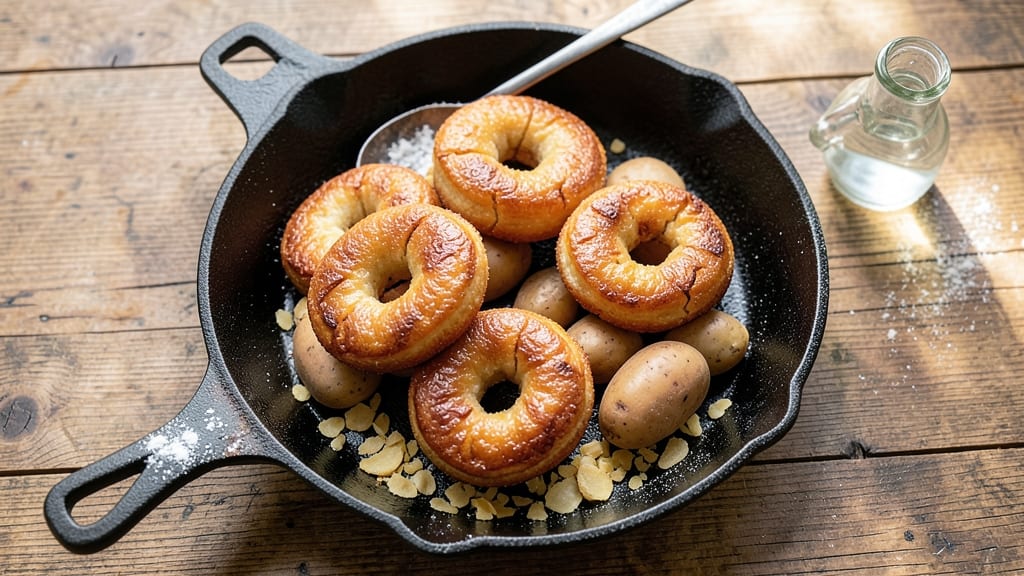
This old-fashioned potato doughnut recipe brings back the golden, vinegar-kissed crunch and tender hearts that made Sunday mornings magical in my Nonna's kitchen. The secret lies in the potato water—rich with starch—that transforms simple dough into something extraordinary, with that signature crispy exterior and pillowy interior.
I've perfected this recipe through years of trial and error, ensuring every bite delivers that nostalgic comfort.
The dough starts with a simple mix of flour, yeast, and potatoes, but it's the vinegar and potato water that create the magic. These ingredients work together to develop that classic texture, where the outside becomes gloriously crisp while the center stays soft and fluffy.
The recipe requires patience—allowing the dough to rise properly is crucial for achieving those perfect, airy doughnuts that disappear too quickly from the plate.
By the time you're done, you'll have a plate of doughnuts that look and taste like they came straight from a New England diner. The aroma of frying doughnuts fills the kitchen, and the first bite delivers that perfect balance of crunch and tenderness.
This recipe is a testament to how simple ingredients, when combined with care and tradition, can create something truly special.
Whether you're serving them up for a family breakfast or a nostalgic treat, these potato doughnuts are sure to become a staple in your kitchen. The best part? They freeze beautifully, so you can enjoy them all week long. Let's get started on making these timeless classics.
Ingredients for old fashioned potato doughnut
Potatoes, flour, and vinegar—simple ingredients that transform into golden, vinegar-kissed doughnuts with crispy exteriors and fluffy hearts.
| Ingredient | Amount | Notes |
|---|---|---|
| Russet Potatoes 🥔 | 2 lbs | Peeled and boiled for water |
| All-Purpose Flour 🌾 | 4 cups | Sifted for light texture |
| Granulated Sugar 🍚 | 1 cup | For dough sweetness |
| Active Dry Yeast 🍞 | 2 ¼ tsp | Freshly opened packet |
| White Vinegar 🍶 | ½ cup | White or apple cider |
| Salt 🧂 | 1 tsp | Kosher or sea salt |
| Large Eggs 🥚 | 2 whole | Room temperature |
| Unsalted Butter 🧈 | ½ cup | Melted, full-fat preferred |
| Vegetable Oil 🫒 | 4 cups | For frying, 350°F |
| Granulated Sugar 🍚 | 1 cup | For coating after frying |
| Cinnamon Sugar Mix 🌶️ | ½ cup | Optional, for topping |
| Powdered Sugar 🍚 | ¼ cup | For dusting cinnamon mix |
The potatoes are the magic ingredient here. Russets give you the highest starch content for that classic texture—Yukon Golds work too but won't be quite as crisp. Boil them whole, peel while hot, and save that starchy water (about 2 cups) for the dough. I always use King Soopers or KrogerWhite vinegar is traditional, but apple cider adds a subtle sweetness that some people love. The yeast? Freshly opened packets are your best bet—old yeast won't rise properly and can make your doughnuts dense instead of light.
No Russet potatoes? Sweet potatoes or Yukon Golds will work, but expect slightly less crispiness. Running out of vinegar? Lemon juice at half the amount gets you close, though the flavor won't be identical. The butter matters—full-fat, unsalted gives the best flavor, but if you're in a pinch, European-style butter (like Plugrá) works wonders. For the cinnamon sugar topping, store-bought mixes are fine, but I always make mine fresh with cinnamon and powdered sugar—it tastes like Sunday mornings all over again. And if you're frying, vegetable oil is the safest bet for high heat, but peanut oil gives that classic diner flavor.
These doughnuts freeze like a dream. Cool completely, then layer with parchment paper in a freezer bag for up to 3 months. Reheat in a 350°F oven for 10-15 minutes until crispy again. The dough itself can be made a day ahead—just cover tightly and refrigerate. Let it sit at room temp for 30 minutes before shaping. And if you're serving a crowd, double the batch. Trust me, they disappear faster than you can say 'Nonna's recipe.'
Why You'll Love This Recipe
- No Yeast Hassle: I swear by this trick—just toss in a pinch of sugar, a splash of vinegar, and let the potatoes do the work. No waiting for yeast to proof, no second-guessing temperatures. The dough comes together faster than you can boil water, and honestly? That’s my kind of magic.
- Crispy-Centered Magic: The secret’s in the potato starch—it creates that perfect contrast: a shatteringly crisp outside with a pillowy, almost custard-like middle. Dredge them twice in sugar, and you’ve got a doughnut that tastes like nostalgia and buttery heaven in every bite.
- Breakfast or Dessert: Serve them warm with maple syrup for a lazy weekend brunch, or dust with powdered sugar for a quick dessert when company drops by. My kids don’t even notice they’re eating something “fancy”—they just know they’re getting seconds.
- Pantry Goldmine: Russets are cheap, flour’s a staple, and you’re probably already using yeast for other recipes. No specialty ingredients, no last-minute grocery runs. Plus, the dough keeps in the fridge for days, so you can fry a fresh batch whenever the craving hits—no wasted dough, no sad leftovers.
Step-by-step instructions for old fashioned potato doughnuts
Here's how to create light, fluffy potato doughnuts with that perfect vinegar-infused crunch!
Prepare the Potato Water Base
Peel the 2 lbs russet potatoes and cut them into large chunks. Place them in a pot and cover with cold water by about 2 inches. Bring to a boil over high heat, then immediately reduce to medium-high and simmer for 15 minutes until completely tender.
Drain the potatoes and press them through a potato ricer or food mill into a large mixing bowl. Let the potato puree cool to room temperature while you prepare the other ingredients. This starchy potato water is the secret to that authentic old-fashioned texture—don't skip this step!
Mix the Dough to Perfect Consistency
In a separate bowl, whisk together the 4 cups all-purpose flour, 1 cup granulated sugar, 2.25 tsp active dry yeast, 1 tsp salt, and the 0.5 cup white vinegar. The vinegar will react with the yeast, creating tiny bubbles that give these doughnuts their signature lightness.
Add the 2 whole large eggs and the 0.5 cup melted unsalted butter to the potato puree. Mix well, then gradually pour the dry ingredients into the wet mixture. Stir with a wooden spoon until you have a thick, shaggy dough that pulls away from the sides of the bowl. The dough should be soft but not sticky—if it's too wet, add 1 tablespoon more flour at a time until it reaches the right consistency.
Knead and Rest the Dough
Turn the dough out onto a lightly floured surface and knead for 5-7 minutes until smooth and elastic. You're looking for a dough that springs back when pressed but still feels tender. The potatoes make this dough less elastic than regular doughnut dough, so don't over-knead or you'll develop gluten and lose that perfect crumbly texture.
Shape the dough into a ball, place it in a lightly greased bowl, and cover with a clean kitchen towel. Let it rise in a warm place for 1 to 1.5 hours, or until it has doubled in size. You'll know it's ready when you poke it gently and it springs back slowly rather than immediately. This resting period develops the gluten just enough for structure without making the doughnuts tough.
Roll and Cut the Doughnuts
Punch down the risen dough and turn it out onto a lightly floured surface. Roll it out to about 1/2-inch thickness. Use a 2-inch round cutter to cut out doughnut shapes, dipping the cutter in flour between each cut to prevent sticking. Place the cut doughnuts on a floured baking sheet and cover with a towel while you prepare the frying oil.
Heat the 4 cups vegetable oil in a deep-fat fryer or heavy pot to 350°F. The oil should be hot enough that a small piece of dough sizzles immediately when dropped in. Fry the doughnuts in batches of 3-4 at a time for 1 to 1.5 minutes per side until golden brown. They'll float when ready—this is your perfect signal. Drain on paper towels and immediately roll in the 1 cup granulated sugar while still hot.
Add the Finishing Touches
While the doughnuts are still warm, transfer them to a wire rack. In a small bowl, mix together the 0.5 cup cinnamon sugar mix and 0.25 cup powdered sugar. Roll each doughnut in this mixture until fully coated. For extra decadence, you can drizzle with a simple glaze made from equal parts powdered sugar and milk, but the cinnamon sugar coating is classic and delicious on its own.
Serve immediately while still warm and crispy. These doughnuts are best enjoyed fresh from the fryer—each bite delivers that perfect balance of fluffy interior and crispy exterior with just the right amount of sweetness. Store any leftovers in an airtight container for up to 2 days, but I guarantee they won't last that long!
Pro Tips For Making Old Fashioned Potato Doughnut
- GRATE POTATOES COLD: After boiling, run them under ice water for 2 minutes—this stops the cooking and keeps them from turning gummy in the dough. I learned this the hard way when my first batch turned into a sad, gluey mess.
- PROOF YEAST IN WARM WATER: Mix the yeast with warm water (110°F) and a pinch of sugar first—wait until it foams before adding vinegar. Skipping this step means your dough might rise unevenly, and nobody wants flat, dense doughnuts.
- DON’T OVERWORK THE DOUGH: Stir just until the flour is incorporated—overmixing develops gluten, which makes doughnuts tough instead of light. Two minutes max with a wooden spoon is all you need.
- FRY IN SMALL BATCHES: Two or three doughnuts at a time in 350°F oil keeps the temperature steady and prevents soggy centers. I used to fry a whole batch at once, and the oil cooled too fast—now I get perfect golden-brown doughnuts every time.
Common mistakes when making great old fashioned potato doughnut
Skipping the Potato Water
This is the biggest mistake I see beginners make. The starchy potato water isn't just flavor—it's the secret to that authentic old-fashioned texture. I once tried making these without it, and the doughnuts turned out dense and greasy.
Always save that 2 cups of potato water from boiling the potatoes. If you forget, you can substitute with 2 tbsp cornstarch mixed with 2 tbsp warm water, but it won't be the same. 🥔
Over-Kneading the Dough
Potato doughnut dough is delicate. Unlike regular dough, it doesn't need much kneading—just 5-7 minutes until smooth. I learned this the hard way when I overworked a batch, turning it into tough, rubbery doughnuts.
The potatoes make the dough less elastic, so treat it gently. If it feels too sticky, add just 1 tbsp flour at a time—no more!
Incorrect Oil Temperature
Frying at the wrong temperature ruins everything. The oil needs to be 350°F—any lower, and your doughnuts will absorb too much oil and turn greasy; any higher, and they'll burn before cooking through.
I use a thermometer (like the Thermoworks Smoke) to monitor it. A small piece of dough should sizzle and float when ready. 🌡️
Not Rolling Doughnuts Thin Enough
The dough should be ½-inch thick when rolled. Thicker doughnuts won't cook evenly and may stay doughy inside. I once rolled mine too thick, and they turned out like hockey pucks—crispy outside, raw inside.
Use a rolling pin with a ¼-inch thickness guide if you're unsure. A 2-inch cutter works best for classic-sized doughnuts.
Frying Too Many at Once
Overcrowding the fryer lowers the oil temperature, leading to greasy doughnuts. Fry in batches of 3-4 at a time. I once tried frying six at once, and they came out soggy and uneven.
Give each doughnut space to crisp properly. A deep-fat fryer or heavy pot helps maintain even heat.
Skipping the Sugar Roll
Rolling hot doughnuts in sugar while they're still warm is non-negotiable. I've made this mistake—letting them cool first results in a dry, crumbly coating. The sugar needs to melt slightly into the doughnut's surface for that perfect crunch.
Work quickly and keep the sugar in a bowl nearby while frying. 🍚
Nutrition facts
Frequently asked questions
Why do these potato doughnuts need vinegar?
The vinegar is essential for creating that signature tang and crispy texture. It reacts with the yeast to develop tiny air pockets, giving these doughnuts their classic lightness. Without it, you'll miss that authentic old-fashioned flavor and might end up with denser results.
Can I make these doughnuts without a deep fryer?
Use a heavy pot with at least 3 inches of oil and maintain the temperature at 350°F. A candy or deep-fry thermometer is your best friend here—never guess the heat. Work in small batches to keep the oil hot. A cast-iron skillet works too, but monitor closely to avoid uneven cooking.
How do I store leftover potato doughnuts?
Cool completely, then store in an airtight container at room temperature for up to 2 days. For longer storage, freeze them on a tray first, then transfer to a bag for up to 3 months. Reheat in a 350°F oven for 10 minutes to restore crispiness. The secret is reheating them quickly—microwaving makes them soggy.
What if my doughnuts turn out greasy?
Greasy doughnuts usually mean the oil wasn't hot enough. Always maintain 350°F—use a thermometer! Also, don't overcrowd the fryer (batch size of 3-4 at a time). If they're still greasy, try patting them gently with paper towels after frying to absorb excess oil before rolling in sugar.
Can I make these gluten-free?
You can substitute the all-purpose flour with a 1:1 gluten-free baking blend, but expect slightly different texture. The potato starch in the dough will help, but these won't be identical to traditional versions. For best results, use a blend with xanthan gum. Test with a small batch first—gluten-free doughnuts often require adjustments in sweetness or moisture.