
Side Dishes
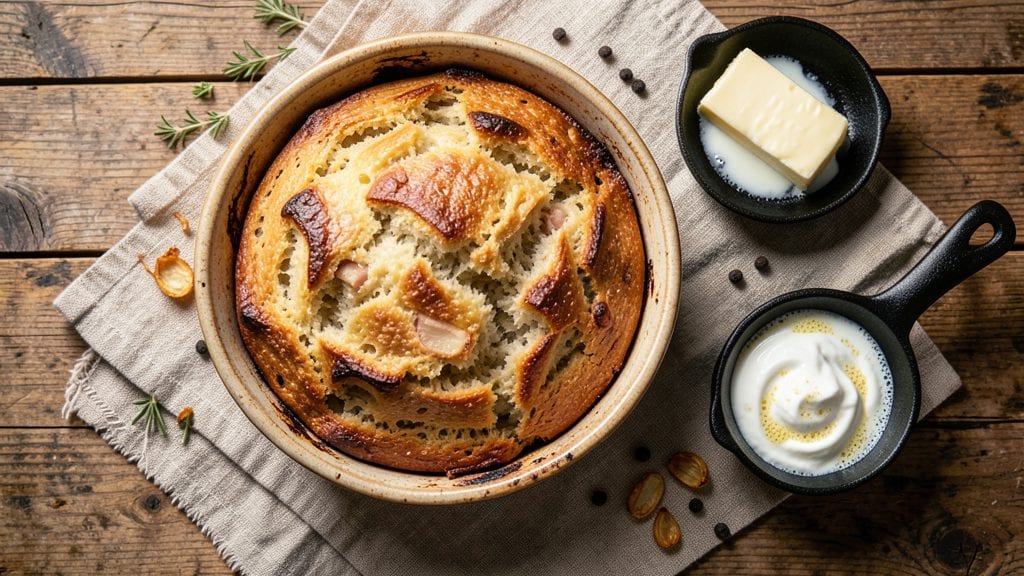
This old-fashioned potato bread recipe delivers the kind of moist, pull-apart magic that makes every meal feel like a celebration. The secret lies in the sour cream swirl—it keeps the bread tender while giving each bite that signature flaky, layered texture.
I've perfected this technique over years of baking, and it never fails to impress, whether served alongside roasted meats or as a comforting side dish on its own.
The beauty of this recipe is its simplicity: just a few pantry staples and a little patience for rising time. You'll work with a classic dough enriched with grated potatoes and a swirl of tangy sour cream that creates those irresistible layers.
The bread develops a golden crust while staying soft inside, thanks to the moisture-retaining properties of the potatoes and sour cream.
By the time it emerges from the oven, you'll have a loaf with a crisp exterior and a tender, moist interior that practically melts in your mouth. The swirls of sour cream add a subtle tang that balances the bread's richness, making each bite satisfying.
This is the kind of bread that disappears quickly—perfect for family dinners or holiday gatherings.
Whether you're shaping it into a single loaf or dividing it into rolls, this recipe delivers consistent, professional-quality results every time. The traditional techniques ensure an authentic flavor and texture that store-bought bread simply can't match. Let's get started on creating your own pull-apart masterpiece.
Ingredients for old fashioned potato bread
Pantry staples plus a few key ingredients create this legendary pull-apart potato bread.
| Ingredient | Amount | Notes |
|---|---|---|
| All-Purpose Flour 🌾 | 4 cups | Sifted for light texture |
| Russet Potatoes 🥔 | 2 medium | Peeled, grated fine |
| Sour Cream 🥛 | ½ cup | Full-fat for best flavor |
| Active Dry Yeast 🍞 | 0.03 oz | 1 packet, warm water |
| Granulated Sugar 🍚 | 0.03 cup | For yeast activation |
| Unsalted Butter 🧈 | ½ cup | Softened, not melted |
| Large Eggs 🥚 | 1 whole | Room temperature |
| Milk 🥛 | ½ cup | Warm, not hot |
| Salt 🧂 | 1 ½ tsp | Kosher or sea salt |
| Baking Powder 🍞 | 1 ½ tsp | For lift and fluff |
| Garlic Powder 🧄 | ½ tsp | For subtle flavor |
| Onion Powder 🧅 | ½ tsp | Enhances depth |
| Cornmeal 🌽 | ¼ cup | For dusting pan |
The potatoes make all the difference here. Russet potatoes are ideal—their starchy texture keeps the bread moist while adding that classic flavor. Grab the smallest bag you can find (usually 2-3 lbs) since you only need two medium potatoes. If you're using pre-grated potatoes from a bag, squeeze out all the excess liquid—it makes the dough gummy. I always buy organic russets when possible, but regular works too. Peel them first, then grate them using the large holes on your box grater. The finer the grate, the smoother your bread will be.
No sour cream? Full-fat Greek yogurt works in a pinch—just add a pinch of lemon juice to mimic the tang. Running out of milk? Warm water plus a splash of vinegar gets you close. The yeast is crucial—make sure it's fresh (test it in warm water with sugar; if it bubbles in 5 minutes, it's good). For the butter, don't melt it—just soften it to room temperature. The dough will be sticky, but that's normal. If it feels too wet, add 1-2 tbsp more flour. The cornmeal is non-negotiable for the pan—it prevents sticking and gives that gorgeous golden crust.
This dough needs time to rise properly—at least 1 hour in a warm spot. I usually let it double in size before shaping. The sour cream swirl is where the magic happens, so don't skip it. Store any leftovers in an airtight container at room temperature for 2 days, or freeze for 3 months. To reheat, wrap in foil and warm in a 350°F oven for 10 minutes. The bread reheats beautifully—almost as good as fresh.
Why You'll Love This Recipe
- No Yeast Fuss: I’ll be real—this dough actually rises while I’m watching TV. The potatoes add moisture, so the yeast doesn’t need babying. Just toss in the warm mashed potatoes and sour cream, let it sit, and boom—ready for shaping. (Yes, even on a Tuesday night.)
- Creamy Crumb Magic: That first bite? Buttery, pillowy, with just a hint of sweetness from the sugar. The sour cream keeps it tender, while the potatoes give it a faintly earthy depth—like a hug from your grandma’s kitchen. Not the prettiest loaf, but the taste makes up for it every time.
- Weeknight Workhorse: Breakfast? Dinner? Sandwiches or toast? This bread does it all. I freeze half the batch for lazy mornings, and the rest gets devoured in toast with jam or slathered in butter for dinner rolls. Honestly, I’ve even used it as a side for fried chicken—no judgment.
- Pantry-Friendly Stretch: Russets are cheap, flour’s a staple, and sour cream’s versatile. This recipe costs me pennies per serving and rarely leaves scraps. Plus, the dough keeps in the fridge for days, so I can bake just enough for what I need—no sad, dried-out loaves here.
Step-by-step instructions for old fashioned potato bread
Here's how to make this classic potato bread with a perfect sour cream swirl—moist, tender, and ready to pull apart.
Prepare the Potato Base and Activate the Yeast
Start by grating the 2 medium russet potatoes on the fine side of a box grater. Place the grated potatoes in a clean kitchen towel and squeeze out as much liquid as possible—this keeps your dough from getting too wet. Transfer the dried potatoes to a large mixing bowl.
In a small bowl, combine the 0.5 cup warm milk (about 110°F) with the 0.025 cup granulated sugar and the 0.025 oz active dry yeast. Let this sit for 5-10 minutes until it becomes frothy—this means your yeast is alive and ready to work. If it doesn't bubble, start over with fresh yeast.
Mix the Dough and Create the Sour Cream Swirl
To the grated potatoes, add the 4 cups all-purpose flour, 1.5 tsp salt, 1.5 tsp baking powder, 0.5 tsp garlic powder, and 0.5 tsp onion powder. Mix these dry ingredients together until combined. In a separate bowl, whisk together the 1 whole large egg, the 0.5 cup softened unsalted butter, and the frothy yeast mixture.
Pour the wet ingredients into the dry ingredients and stir with a wooden spoon until everything comes together into a shaggy dough. Turn the dough out onto a lightly floured surface and knead gently for 2-3 minutes just until smooth. Divide the dough in half and flatten each piece into a 6-inch circle. Spread 0.25 cup of the 0.5 cup sour cream evenly over one of the circles, then fold the other circle over it to create a sealed pocket of sour cream.
Shape the Loaf and Let It Rise
Place the sealed dough seam-side down in a greased 9x5-inch loaf pan. Sprinkle the remaining 0.25 cup sour cream over the top and swirl it gently with a knife to create that classic marbled effect. Dust the top lightly with cornmeal to prevent sticking. Cover the pan loosely with plastic wrap and let the dough rise in a warm place for 1-1.5 hours, or until it has doubled in size.
Here's the thing—don't let it rise too long or your bread will collapse. You'll know it's ready when the top looks puffy and the dough has spread to fill about 2/3 of the pan. If you're in a hurry, you can speed this up by placing the pan in a warm oven (turned off with the light on) for 20-30 minutes.
Bake to Golden Perfection
Preheat your oven to 350°F. Once the dough has risen, bake the loaf for 45-50 minutes, until the top is golden brown and the internal temperature reaches 190°F. You'll know it's done when the bread pulls away from the sides of the pan and sounds hollow when tapped on the bottom.
For extra moisture, I like to brush the top with a little milk right before baking—this creates a beautiful sheen and keeps the bread tender. Let the bread cool in the pan for 10 minutes, then transfer it to a wire rack to cool completely. The longer you wait, the easier it'll be to slice without falling apart.
Slice and Serve Warm
Once fully cooled, slice the bread into thick pieces—this is where the magic happens. The sour cream swirl should be visible in each slice, adding that creamy contrast to every bite. Serve warm with butter or honey, or save slices for toast the next morning. The bread keeps well at room temperature for 2-3 days, or you can freeze slices for up to 3 months.
Real talk: this bread is at its best when served fresh from the oven. The combination of the tender potato base and creamy sour cream swirl makes it irresistibly moist and flavorful—exactly what you want in a classic potato bread.
Pro Tips For Making Old Fashioned Potato Bread
- STEAM THE POTATOES: Microwave them first—pierce those russets with a fork, then zap for 5-6 minutes until soft but not mushy. This cuts down on mash time and keeps the dough from getting gummy. I learned this the hard way after fighting a lumpy dough for years.
- MEASURE THE SOUR CREAM COLD: Scoop that sour cream straight from the fridge—no thawing, no room temp nonsense. Cold fat behaves better in yeast dough, and it won’t kill your rise like warm dairy will. (Yes, even if you’re impatient like me.)
- DON’T OVERMIX THE DOUGH: Once the flour hits the wet ingredients, stop after 2-3 folds. Overworking it turns the bread dense and chewy, not light and fluffy. This isn’t the prettiest method, but it’s the tastiest—trust the process.
- LET THE YEAST PROOF AT ROOM TEMP: Skip the fridge—proof the yeasted dough in a warm spot (like a turned-off oven with the light on) until it’s just puffy, about 1-1.5 hours. Cold slows it down, and hot kills it. Aim for a double in size, not a triple—overproofing is sneaky.
Pro cooking tips for this recipe
Potato Grating Precision
Use a box grater with fine holes—not the coarse side—to get the smoothest texture. I always peel the potatoes first for cleaner flavor. If using pre-grated potatoes from a bag, squeeze out all excess moisture with a clean towel, or your dough will turn gummy.
For extra insurance, spread the grated potatoes on a paper towel and press gently to absorb liquid. 🥔
Yeast Activation Test
Before mixing, test your yeast by combining 1 packet with ¼ cup warm milk (110°F) and 1 tsp sugar. It should bubble within 5 minutes—if not, toss it and start fresh. I keep a small jar of yeast in my fridge for quick access.
Never use expired yeast, even if it looks fine. A failed rise means starting over, so don’t skip this step! ⏰
Dough Consistency Control
The dough will feel sticky but not wet—this is normal. If it’s too loose, add 1 tbsp flour at a time until it holds together. Over-kneading develops gluten, making the bread tough.
Just 2-3 minutes of gentle kneading is all you need. For the sour cream swirl, divide the dough evenly—unequal portions can cause uneven baking. 💪
Swirl Technique Mastery
Spread the ¼ cup sour cream evenly on one dough circle, then fold the second over it like a taco. Press the edges to seal tightly—this prevents leaks during baking.
Use a knife to gently swirl the top ½ cup sour cream in a zigzag pattern. The more precise your swirl, the more dramatic the layers in each slice. 🌟
Rise Time Secrets
Place the dough in a warm oven (light on, no heat) for 20-30 minutes to speed up rising if you’re short on time. The dough should double in size—if it doesn’t, let it rise longer.
Over-proofing causes collapse. I always check by gently pressing the dough: if it springs back slowly, it’s ready. 🌡️
Baking Like a Pro
Brush the risen loaf with milk before baking for a glossy crust. Bake at 350°F until the internal temp hits 190°F (about 45-50 minutes). Tap the bottom—it should sound hollow.
Let it cool 10 minutes in the pan before transferring to a rack. Patience here prevents crumbling slices. ✨
Nutrition facts
Frequently asked questions
Why does this potato bread stay so moist?
The secret lies in the combination of grated potatoes and sour cream. The potatoes add natural moisture while the sour cream creates steam during baking, keeping the bread tender. The baking powder also helps maintain a light, airy texture.
Can I make this bread without a loaf pan?
Yes! Shape the dough into free-form rolls or a round loaf on a baking sheet. For extra crispiness, bake at 375°F for 20-25 minutes instead. Brush with melted butter after baking for a golden finish.
What if my dough doesn't rise properly?
Check your yeast first—it must be fresh and activated properly. If the dough still doesn't rise, try placing the pan in a warm oven (light on, no heat) for 20-30 minutes. Never skip the rising time—this is crucial for flavor and texture. If it collapses, bake immediately without waiting for it to rise again.
How do I store leftovers?
Wrap cooled bread tightly in plastic wrap or an airtight container. It stays fresh at room temperature for 2-3 days. For longer storage, freeze slices in a sealed bag for up to 3 months. To reheat, wrap in foil and warm in a 350°F oven for 10 minutes.
Can I add cheese or herbs to this recipe?
Try adding ½ cup shredded cheddar to the dough or sprinkling 1 tbsp chopped chives on top before baking. For a savory twist, mix in 1 tsp dried rosemary with the dry ingredients. Just be mindful not to overpower the classic potato flavor.