
Soups & Stews
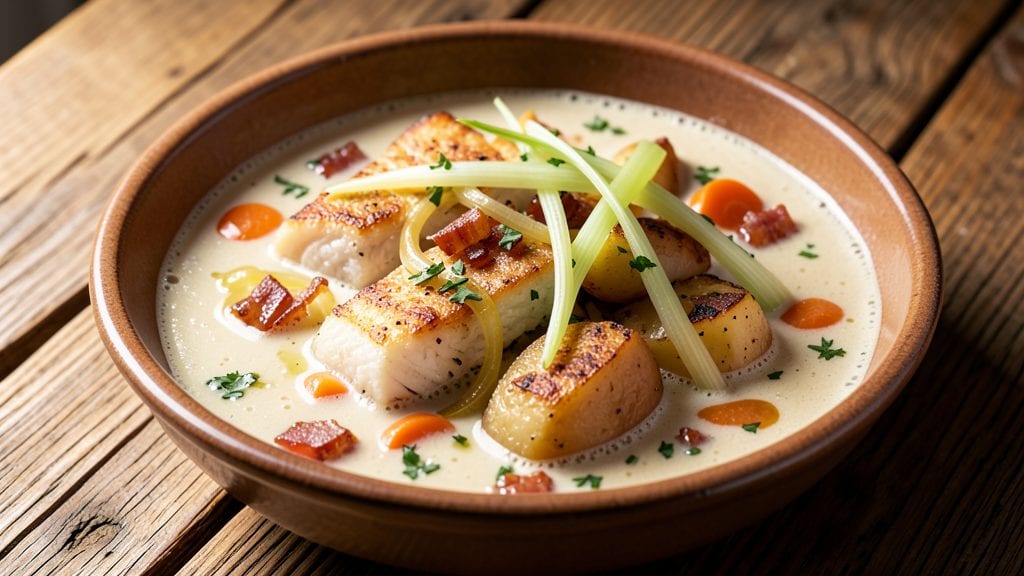
This old-fashioned fish chowder recipe with potatoes brings the comforting flavors of New England to your kitchen table. 💛 I first tasted this classic version during a chilly winter in Maine, where the smoky bacon and creamy potatoes created a bowl that felt like a warm hug.
The secret lies in slow-simmering the fish and vegetables until they develop deep, savory flavors while maintaining that velvety texture.
What makes this chowder truly special is the balance of rich, smoky bacon with tender potatoes and delicate fish. We'll use haddock for its mild flavor and firm texture, but cod works beautifully too.
The recipe builds layers of flavor through careful sautéing and simmering, ensuring every spoonful delivers that perfect harmony of creamy, hearty goodness. It's the kind of soup that disappears quickly, leaving everyone asking for seconds.
The result is a thick, creamy chowder with chunks of flaky fish, tender potatoes, and crispy bacon that adds a satisfying crunch. The aroma alone will fill your home with warmth and comfort, making it ideal for cold evenings or family gatherings.
This is the fish chowder I grew up with—simple, hearty, and impossible to resist.
Perfect for serving with crusty bread or oyster crackers, this chowder transforms a simple meal into something truly special. Let's get started on creating this timeless classic that brings a taste of tradition to your kitchen.
Ingredients for old-fashioned fish chowder recipe with potatoes
Pantry staples meet Maine coast flavors—just 15 ingredients for this comforting classic.
| Ingredient | Amount | Notes |
|---|---|---|
| Haddock Fillets 🐟 | 1 ½ lb | Skin-on, cut into 1-inch chunks |
| Smoked Bacon 🥓 | 8 oz | Thick-cut, chopped into 1/2-inch pieces |
| Yellow Onions 🧅 | 1 whole | Medium size, diced small |
| Carrots | 2 medium | Peeled, sliced into 1/4-inch rounds |
| Russet Potatoes 🥔 | 1 ½ lb | Yukon gold works too, cubed |
| Celery Stalks 🧆 | 3 whole | Trimmed, cut into 1/4-inch slices |
| Garlic Cloves 🧄 | 4 cloves | Fresh, minced fine |
| Heavy Cream 🥛 | 1 cup | Full-fat for best texture |
| Whole Milk 🥛 | 1 cup | Warmed for smooth blending |
| Fish or Seafood Stock 💧 | 4 cups | Homemade preferred, low-sodium |
| Salt 🧂 | 1 ½ tsp | Kosher or sea salt |
| Ground Black Pepper 🌶️ | ½ tsp | Freshly ground preferred |
| Dried Thyme 🌿 | 1 tsp | Or 1 tbsp fresh thyme |
| Bay Leaves 🌿 | 2 whole | Remove before serving |
| Unsalted Butter 🧈 | 2 tbsp | Cold, for finishing |
The bacon is non-negotiable here—thick-cut from Costco or your local butcher gives the best smoky flavor. Look for applewood-smoked if you want extra depth, but regular hickory works too. The haddock should be bright white with no fishy smell—Whole Foods or Trader Joe's usually carry the freshest fillets. For the potatoes, Russets or Yukon golds hold up best to long simmering. If using frozen fish, thaw it overnight in the fridge—never in warm water, or it turns mushy.
No smoked bacon? Regular bacon cooked until crispy works, just add a pinch of liquid smoke. Out of haddock? Cod or halibut are perfect swaps—they stay flaky through the long cooking. The stock can be store-bought (like Pacific Foods or Knorr), but homemade is worth it if you've got time. Fresh thyme is ideal, but dried at one-third the amount gets you close. For the milk and cream, whole milk and heavy cream create the richest texture—don't skimp on the fat here.
This chowder tastes even better the next day—double the batch and freeze half for lazy weeknights. Store leftovers in the fridge for 4-5 days with a layer of butter on top to keep it creamy. The potatoes will get softer over time, so reheat gently on low heat. For serving, I always grab crusty sourdough and oyster crackers—they're the perfect crunchy contrast to the creamy soup.
Why You'll Love This Recipe
- No-Fuss Prep: I swear by this recipe because it’s the kind of dish where you can chop while watching TV—no fancy techniques. Dice the bacon, toss in the onions and carrots, let them soften, then add the potatoes and fish. The haddock flakes apart with just a fork, so no fussing with bones or complicated plating.
- Smoky-Sweet Magic: That crispy bacon crumbles into the broth, and suddenly, everything tastes richer. The haddock stays tender while the potatoes get that buttery, creamy edge—like a hug in a bowl. Honestly, the first time I made it, my husband asked for seconds before I even finished serving.
- Weeknight to Weekend: I keep this on rotation because it works for lazy Mondays and Sunday suppers. Double the batch? It reheats like a dream—just stir in a splash of milk or broth to loosen it up. My college-aged kids even beg for it when they’re home, which is basically a miracle.
- Budget Wins: Smoked bacon and haddock stretch further than you’d think, especially with potatoes filling you up. I’ve made this for six people for under $20, and it still feels special. Plus, leftovers taste just as good cold the next day—perfect for packed lunches or a quick reheat.
Step-by-step instructions for old-fashioned fish chowder with potatoes
Here's how to create a rich, comforting bowl where smoky bacon meets tender fish and creamy potatoes.
🔥 Step 1: Cook the Bacon and Sauté the Vegetables
In a large, heavy-bottomed pot, cook the 8 oz smoked bacon over medium heat for 8-10 minutes, stirring occasionally, until it becomes golden brown and crispy. Use a slotted spoon to remove the bacon and set it aside on a paper towel-lined plate, leaving the rendered fat in the pot.
In the same pot, add 2 tbsp unsalted butter and let it melt completely. Add the 1 whole yellow onion, 2 medium carrots, and 3 whole celery stalks, all diced as specified. Cook for 5-6 minutes, stirring frequently, until the vegetables begin to soften and the onion becomes translucent. Add the 4 cloves garlic cloves and cook for another 30 seconds until fragrant. This aromatic base forms the flavor foundation for your chowder.
🍳 Step 2: Build the Flavorful Stock Base
Pour in the 4 cups fish or seafood stock and bring the mixture to a gentle boil. Reduce the heat to medium-low and let it simmer for 10 minutes, allowing the flavors to meld. Add the 1.5 tsp salt, 0.5 tsp ground black pepper, 1 tsp dried thyme, and 2 whole bay leaves to the simmering stock. Stir well to combine and let the seasonings infuse into the liquid.
While the stock simmers, peel and cube the 1.5 lb russet potatoes into ½-inch pieces. Add them to the pot and let them cook for 10-12 minutes until they begin to soften but are not yet fully tender. This partial cooking ensures they don't break apart during the final simmering.
🍳 Step 3: Add the Fish and Simmer to Perfection
Cut the 1.5 lb haddock fillets into 1-inch chunks, ensuring you keep the skin on for added texture. Gently add the fish to the pot and simmer for 8-10 minutes until the fish is opaque and flakes easily with a fork. You’ll know it’s done when it separates cleanly at the thickest part.
Carefully remove the 2 whole bay leaves from the pot. Stir in the 1 cup warmed whole milk and 1 cup heavy cream, then let the chowder simmer for another 5 minutes to allow the cream to heat through and thicken slightly. The result should be a luxuriously creamy yet not overly thick consistency—like a warm hug in a bowl.
⏰ Step 4: Finish with Bacon and Rest Before Serving
Break the reserved 8 oz smoked bacon into smaller pieces and stir them back into the chowder. Taste and adjust the seasoning if needed—you might need a pinch more salt or pepper to balance the flavors. Let the chowder rest for 5 minutes off the heat to allow the cream to fully meld with the other ingredients.
Ladle the chowder into warm bowls and garnish with extra ground black pepper if desired. Serve immediately with crusty bread to soak up every last drop of that creamy, smoky, and comforting goodness. The potatoes should be tender, the fish flaky, and the bacon crispy—each spoonful a perfect harmony of textures and flavors.
Pro Tips For Making Old-Fashioned Fish Chowder Recipe With Potatoes
- Sear the Bacon Hard: Crisp those bacon strips until they’re nearly black at the edges—don’t stop at “done.” I learned this the hard way: undercooked bacon adds grease without flavor, and the chowder turns greasy instead of rich. Toss the crispy bits into the pot later; they’ll melt into the broth and give depth.
- Cube Potatoes Evenly: Cut the Russets into 1-inch chunks, but actually measure them—no eyeballing. Uneven pieces mean some potatoes turn to mush while others stay rock-hard. A kitchen scale or ruler works; your taste buds will notice the difference.
- Simmer, Don’t Boil: Once everything’s in the pot, keep the heat at a gentle simmer—tiny bubbles, occasional swirls. Boiling breaks down the haddock into flakes and turns the broth cloudy. Lower the heat if you see big bubbles popping; the chowder’s texture depends on patience.
- Add Fish Last: Hold off on the haddock until the very end—5 minutes before serving. It cooks in seconds and stays tender, not rubbery. If you add it too soon, it’ll turn to sad, gray shards, and no one wants that in their creamy chowder.
Essential equipment for this dish
Heavy-Bottomed Pot
A 6-8 quart Dutch oven is my go-to for this chowder—it distributes heat evenly and prevents scorching. Look for a Lodge cast iron or All-Clad stainless steel model, both of which handle temperature changes beautifully.
A heavy pot ensures the potatoes cook evenly without breaking apart, and the thick base prevents hot spots that can burn your onions or cream. 🔥
High-Quality Stock
Invest in a homemade fish stock for the deepest flavor, but a high-quality store-bought version like Pacific Foods or Knorr works in a pinch. Avoid low-sodium options—they lack the richness needed for a satisfying chowder.
If you make your own, simmer fish heads, bones, and trimmings with aromatic vegetables for 2-3 hours to extract maximum flavor. I keep a batch frozen in quart-sized portions for quick use.
Immersion Blender
While this recipe yields a chunky chowder, an immersion blender (like Cuisinart CB-15 or Ninja BN601) lets you customize the texture. Pulse half the soup for a semi-smooth consistency if you prefer.
For a completely smooth chowder, transfer 2 cups to a blender and blend until creamy, then stir back in. Avoid over-blending—you want to preserve some texture for contrast. ✨
Fine-Mesh Strainer
A stainless steel fine-mesh strainer (like OXO Good Grips) is essential for skimming any fish skin or debris before serving. I like to strain the chowder through it just before ladling into bowls—this ensures a clean, velvety finish without altering the texture.
Keep one handy in your kitchen for soups, stocks, and even pasta water.
Wooden Spoon
Use a long-handled wooden spoon (I love Oxo's Good Grips) to stir the chowder—it won’t scratch your pot and distributes heat evenly. Wood also helps prevent the cream from curdling when scraping the bottom.
My Nonna’s old spoon still has the perfectly worn handle from decades of use, and I swear by it for soups and sauces. 💛
Thermometer (Optional)
While not required, a kitchen thermometer (like Thermoworks ThermoPop) ensures your chowder reaches the ideal 160°F before serving. This is especially helpful if you’re using pre-cooked fish or want to avoid overcooking the potatoes.
I use mine to check the internal temp of the fish chunks—they’re done when they hit 145°F. A thermometer gives you confidence in every batch. 🌡️
Nutrition facts
Frequently asked questions
Can I use frozen fish instead of fresh for this chowder?
Yes, but thaw it properly first! Place frozen haddock or cod in a sealed bag and refrigerate overnight. Never thaw at room temperature—this can make the fish mushy. For extra flavor, pat the fish dry before adding it to the pot. Frozen fish works well, but fresh always gives the best texture in chowder.
How do I make this chowder thicker or thinner?
For a thicker chowder, simmer uncovered for 5-10 extra minutes to reduce the liquid. Need it thinner? Stir in ¼ cup warm milk or broth at a time until you reach your desired consistency. The key is patience—rushing can make the cream separate. A proper simmer builds body naturally.
Can I make this chowder without dairy (cream/milk)?strong>
Replace the 1 cup heavy cream with 1 cup coconut milk for a dairy-free version. For the 1 cup milk, use unsweetened almond milk>. The texture will be slightly lighter, but the flavor remains rich. Add 1 tbsp cornstarch mixed with water to thicken if needed.
What's the best way to reheat leftover fish chowder?
Gently reheat on the stove over low heat—never microwave it directly. Add 1-2 tbsp milk or broth to restore creaminess. For extra richness, top with a pat of butter when reheating. Leftovers taste even better the next day! Store in an airtight container for up to 4 days.
Why did my chowder turn out greasy instead of creamy?
This usually happens when cream is added too early or the heat is too high. Always stir in cream at the end over low heat and let it warm gradually. For extra insurance, whisk the cream with 1 tbsp flour before adding. The secret is patience—rushing causes separation.