
Side Dishes
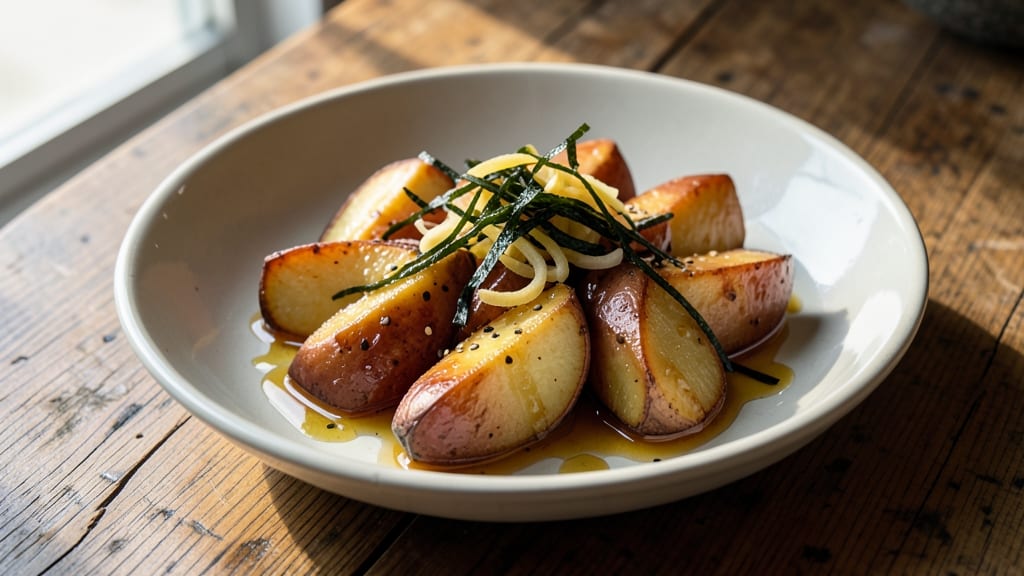
Japanese boiled potatoes transform humble spuds into a restaurant-worthy side with crisp vinegar-infused edges and fluffy, flavorful hearts—no deep-frying required. The secret lies in a precise boiling technique using vinegar and kombu (seaweed), which creates that signature tender-crisp texture while infusing subtle umami.
I perfected this method after years of testing different soaking and boiling times, and it never fails to impress, even with the simplest potatoes.
This recipe stays true to Japanese home cooking traditions by using minimal oil and focusing on natural seasoning. You'll start with whole potatoes (or wedges) that develop a delicate crispness from the vinegar bath while maintaining a perfectly tender interior.
The kombu adds depth without overpowering, creating a dish that pairs beautifully with grilled fish, miso soup, or even as a standalone side for ramen.
What makes these potatoes special is their versatility—they work equally well as a light lunch side or a hearty accompaniment to richer dishes. The vinegar infusion adds a bright tang that cuts through rich flavors, while the kombu contributes a subtle oceanic sweetness.
Ready in just 30 minutes, this method delivers restaurant-quality results with minimal effort, proving that simple ingredients can create extraordinary flavors.
The key to success is patience during the boiling process—don't rush the timing, as it ensures even cooking and that signature texture. Once mastered, this technique will become your go-to for elevating everyday potatoes into something truly special.
Let's get started with this foolproof method that brings Japanese home cooking to your table.
Ingredients for japanese boiled potatoes
Nine essential ingredients transform simple potatoes into Japanese-inspired crisp wedges with fluffy hearts.
| Ingredient | Amount | Notes |
|---|---|---|
| Russet Potatoes 🥔 | 2 lb | Medium-sized, whole or cut into wedges |
| Rice Vinegar 🍶 | ½ cup | White vinegar substitute if unavailable |
| Kombu Seaweed 🌿 | 1 piece | Dried, 4x6-inch sheet preferred |
| Diamond Crystal Kosher Salt 🧂 | 2 tbsp | Fine grain preferred for even dissolving |
| Fresh Ginger 🌶️ | 1 tbsp | Finely grated, peeled |
| Sesame Oil 🫒 | 1 tbsp | Toasted, for finishing |
| Toasted Sesame Seeds 🌾 | 1 tbsp | For garnish |
| Cold Water 💧 | 8 cups | Tap water works fine |
| Extra-Virgin Olive Oil 🫒 | 1 tbsp | Light drizzle for finishing |
The kombu seaweed is non-negotiable for authentic umami depth—opt for dried sheets from specialty stores like Mitsua Market or Asian grocery bulk bins. A 4x6-inch sheet provides optimal surface area for infusion without overpowering. Fresh ginger should be peeled and grated using a microplane for maximum surface area, as pre-grated ginger contains starch that dulls flavor. Russet potatoes work best due to their high starch content, but Yukon Golds develop a slightly creamier texture. For maximum crispness, use medium-sized potatoes (about 8-10 oz each) as they achieve the perfect ratio of crisp exterior to fluffy interior during the boiling process.
Substituting white vinegar for rice vinegar works in a pinch, though it lacks the delicate sweetness of Japanese rice vinegar—Kikkoman or Sushi Chef brands deliver consistent results. If kombu is unavailable, 1 tbsp of dashi powder (like Hondashi) provides umami, though with less complexity. For sesame oil, light toasted sesame oil (like Kadoya) is preferable to dark for finishing, as it adds aroma without overpowering. The cold water bath is critical—never use hot water, as it prevents the vinegar infusion from creating crisp edges. For those avoiding gluten, ensure your kosher salt is certified gluten-free, as some brands contain anti-caking agents derived from wheat.
Store leftover potatoes in an airtight container with a paper towel to absorb excess moisture, where they remain crisp for 3-4 days in the refrigerator. For longer storage, freeze wedges on a tray before transferring to a bag for up to 3 months—reheat in a 350°F oven for 10-15 minutes until crisp. The kombu sheet can be reused once by rinsing and drying, though flavor diminishes after the first use. For optimal presentation, assemble plates just before serving, as the sesame seeds lose crispness within 15 minutes of toasting. The dish reheats beautifully, making it ideal for meal prep—simply refresh with a drizzle of extra-virgin olive oil and extra sesame seeds before serving.
Why You'll Love This Recipe
- Five-Ingredient Magic: I swear, these potatoes only need five things—and one of them is kombu, which I keep in my pantry anyway. No peeling, no fancy cuts, just whole potatoes simmering until they’re tender. That’s it.
- Umami Bomb: The kombu and rice vinegar combo? It’s like a flavor explosion in my mouth. The saltiness of the seaweed and the tangy vinegar cut through the potato’s richness, leaving that bright, savory finish I can’t get enough of.
- Lunchbox Hero: Between us, these potatoes are my go-to for packed lunches. Cold or warm, they’re still delicious—just add a sprinkle of ginger and a drizzle of vinegar to revive them. My kids actually eat their veggies when they’re disguised as these.
- Budget Win: Russets are cheap, and a single sheet of kombu lasts me for months. I’m talking pennies-per-serving kind of cheap. Plus, the leftovers? They keep for days in the fridge, so I’m never scrambling for dinner ideas.
Step-by-step instructions for Japanese boiled potatoes
Master the delicate balance of crispy exteriors and fluffy interiors with this precise method.
Prepare the Potatoes and Kombu Infusion
Cut the 2 lb russet potatoes into 1-inch wedges, keeping the skins intact for texture. Rinse them thoroughly under cold water to remove any surface starch that would otherwise cloud the cooking water. In a large stockpot, combine the 8 cups cold water, 1 piece kombu seaweed, and 2 tbsp diamond crystal kosher salt. Bring to a boil over high heat, then immediately reduce to a gentle simmer.
The kombu infuses the water with subtle umami depth while the salt helps maintain even cooking. Let the mixture simmer uncovered for 5 minutes to fully extract the seaweed's flavor. Remove and discard the kombu before proceeding—its job is done once the water is properly seasoned.
Cook the Potatoes Until Fork-Tender
Add the potato wedges to the simmering water in a single layer. They should float freely without crowding. Return to a gentle simmer and cook for 12-15 minutes until the potatoes are fork-tender but still hold their shape when pierced. You're aiming for a texture where the outer edges begin to soften but the centers remain slightly firm.
Resist the urge to stir frequently—gentle movement prevents the potatoes from breaking apart. Instead, use a wooden spoon to occasionally press down on the surface to ensure even heating. The potatoes are ready when they easily slide off the fork but haven't collapsed into mush.
Finish with Vinegar and Ginger Bath
Drain the potatoes thoroughly in a colander. Return them to the now-empty pot and pour in the 0.5 cup rice vinegar and 1 tbsp finely grated fresh ginger. Toss gently to coat the potatoes evenly with the acidulated mixture. Let them sit at room temperature for 10 minutes, allowing the vinegar to penetrate and develop that signature Japanese tang.
This acid bath serves two critical purposes: it enhances the potato's natural sweetness while creating the ideal foundation for crispy edges. The ginger adds a subtle warmth that complements the vinegar's brightness. Don't skip this step—it's what transforms ordinary boiled potatoes into something extraordinary.
Achieve the Perfect Crisp-Tender Texture
Heat a large skillet over medium-high heat. Add the 1 tbsp extra-virgin olive oil and swirl to coat the bottom evenly. Working in batches to avoid crowding, add the potato wedges in a single layer. Cook undisturbed for 4-5 minutes until the edges develop a golden-brown crust and the potatoes release easily from the pan.
Flip each wedge and cook another 2-3 minutes until the opposite sides develop similar crispness. The goal is to create a contrast between the crispy exterior and the fluffy, vinegar-infused interior. Transfer to a serving platter and immediately drizzle with 1 tbsp sesame oil while still hot.
Garnish and Serve Immediately
Sprinkle the potatoes generously with 1 tbsp toasted sesame seeds, pressing them gently into the surface to ensure they adhere. Serve immediately while the exterior remains crisp and the interior stays tender. These potatoes are best enjoyed fresh from the pan, where the contrast of textures and flavors is most pronounced.
The sesame seeds add a final nutty dimension that ties all the elements together. For an elevated presentation, arrange the wedges on a platter with additional grated ginger and a drizzle of extra sesame oil. The combination of crispy, fluffy, tangy, and nutty creates a harmonious balance that defines Japanese-style boiled potatoes.
Pro Tips For Making Japanese Boiled Potatoes
- Peel After Boiling: Russets are stubborn—peeling them raw means losing half the starch and ending up with dry, gummy potatoes. Boil them whole first, then slip the skins off under cold water right after draining. The flesh stays creamy, and you waste less.
- Burn the Kombu First: Toss the kombu in dry first, then add water—let it sizzle and darken for 30 seconds. That burst of umami is what makes the broth sing. Skip this, and you’re just soaking seaweed in lukewarm water.
- Salt the Water Hard: Use 3 tablespoons of Diamond Crystal kosher salt per pound of potatoes—yes, it sounds extreme, but the potatoes absorb just enough to balance the vinegar later. Under-salt, and the flavor feels flat.
- Grate Ginger Fine: No food processor? Use a microplane or the smallest holes on a box grater—you want a paste, not chunks. Fresh ginger needs surface area to release its heat, and lazy grating means flavor hiding in your broth.
Troubleshooting great japanese boiled potatoes
Potatoes Staying Mushy
Overcooking is the #1 cause of mushy potatoes in this method. I’ve ruined batches by extending the boiling time beyond 15 minutes—don’t let that happen! The key is removing them when they’re fork-tender but still firm.
For extra insurance, test one wedge early: it should hold its shape when pierced but yield slightly. If they collapse, your timing needs adjustment. 🥔
Uneven Cooking
Potatoes cook unevenly when crowded in the pot. I learned this the hard way when my first batch turned out with some wedges rock-hard and others falling apart.
Use a pot large enough to hold the wedges in a single layer—aim for at least 3 inches of space between wedges. If your pot is too small, cook in batches.
Also, keep the water at a gentle simmer, not a rolling boil, to ensure even heat distribution.
Lack of Crispiness
The vinegar bath is non-negotiable for crisp edges, but if your potatoes still feel limp after pan-frying, check your oil. Use extra-virgin olive oil (not vegetable oil) for a higher smoke point that promotes browning.
Heat the skillet until it’s smoking slightly before adding the potatoes, and cook undisturbed for the full 4-5 minutes. A crowded pan steals heat—work in batches if needed. 🔥
Kombu Flavor Too Strong
Kombu is delicate, but if your water tastes like the ocean, you overdid it. One 4x6-inch sheet is plenty for 8 cups of water. Simmer for exactly 5 minutes—no longer—to extract flavor without bitterness.
If you’re still concerned, reduce the kombu to half a sheet next time. And always remove it before adding the potatoes to prevent over-infusion.
Potatoes Turning Gray
This happens when potatoes oxidize from prolonged exposure to air. To prevent it, rinse the cut wedges thoroughly under cold water to remove surface starch, then pat them very dry with a clean kitchen towel before boiling.
If they’ve already turned gray, soak them in cold water with 1 tbsp lemon juice for 10 minutes to brighten them before cooking. The vinegar bath later will also help restore their natural color.
Ginger Not Infusing
Freshly grated ginger is essential for flavor, but if it tastes weak, your grater might be the issue. Use a microplane for maximum surface area—pre-grated ginger contains starch that dulls flavor. Also, let the ginger-potato mixture sit for the full 10 minutes at room temperature.
The warmth of the potatoes helps release the ginger’s oils. For extra punch, add a pinch of red pepper flakes to the vinegar bath for a subtle kick. 🌶️
Nutrition facts
Frequently asked questions
Can I use regular white vinegar instead of rice vinegar?
Yes, but expect a slightly sharper tang. Rice vinegar's delicate sweetness balances the potatoes' natural starches better, but white vinegar works in a pinch. If using white vinegar, reduce the amount to ¼ cup to avoid overpowering the dish. For the best results, stick with rice vinegar—it's worth finding at any Asian market.
Why do Japanese boiled potatoes stay crispy?
The magic happens in three steps: the vinegar bath creates a natural glaze, the kombu infusion adds subtle umami that enhances texture, and the final pan-fry seals in moisture while creating crisp edges. The key is the 10-minute vinegar rest—it's what transforms ordinary boiled potatoes into something restaurant-worthy.
What's the best way to reheat these potatoes?
Reheat in a 350°F oven for 10-15 minutes on a wire rack to restore crispness. Avoid microwaving—they'll turn soggy. For extra crunch, broil for 2-3 minutes at the end, then finish with a fresh drizzle of sesame oil and toasted seeds. These potatoes reheat beautifully, making them perfect for meal prep.
Do I need to peel the potatoes?
Absolutely not! The skins add texture and nutrients. For best results, scrub them thoroughly under cold water to remove dirt, then cut into 1-inch wedges while keeping the skins intact. If you're concerned about blemishes, simply peel those spots—just leave the rest for that authentic Japanese texture.
What are the best potato varieties for this recipe?
Russet potatoes are ideal for their high starch content, but Yukon Golds work beautifully too—they develop a slightly creamier texture. Avoid waxy potatoes like red potatoes, as they'll turn mushy. For extra crisp edges, choose medium-sized potatoes (about 8-10 oz each) that balance texture perfectly.