
Side Dishes
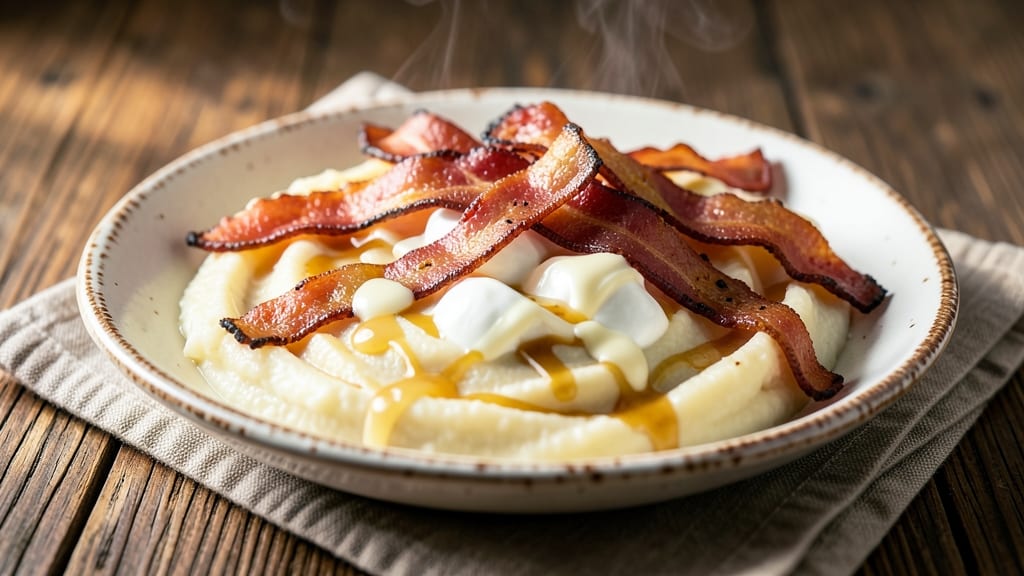
This heart attack mashed potatoes recipe delivers the creamy, buttery indulgence that makes every bite worth it—rich with roasted bacon, velvety texture, and a secret depth of flavor that transforms ordinary potatoes into a decadent centerpiece.
The key lies in slow-roasting the bacon until crispy, then blending it into the potatoes with enough butter and sour cream to create that signature, melt-in-your-mouth consistency. I’ve perfected this version over years of holiday dinners and family gatherings, where it disappears faster than the gravy boat.
The magic happens in the blending—using hot potatoes and cold dairy creates a silky-smooth finish without lumps, while the roasted bacon adds a smoky richness that elevates these mashed potatoes from side dish to star.
This isn’t your average mashed potato; it’s a foolproof method that delivers restaurant-quality results with just a few simple ingredients and 15 minutes of hands-on time. The secret? Don’t skip the bacon—its salty, crispy crunch cuts through the creaminess for a perfect balance.
What you’ll end up with is a velvety, golden pile of mashed potatoes so rich and satisfying, it’s practically a meal on its own.
The texture is impossibly smooth, the flavor is deeply savory with just the right amount of tang from the sour cream, and the aroma alone will have everyone at the table asking for seconds.
This is the kind of dish that pairs perfectly with steak, burgers, or even as a standalone comfort food when you need something truly indulgent.
Serve immediately for the creamiest results, or let it rest for 10 minutes if you’re serving a crowd—just don’t wait too long, or you’ll be tempted to eat it straight from the pot.
Trust me, this recipe is worth every calorie, and once you try it, you’ll never go back to store-bought again.
Ingredients for heart attack mashed potatoes
Six ingredients transform ordinary potatoes into decadent, bacon-infused comfort food everyone craves.
| Ingredient | Amount | Notes |
|---|---|---|
| Russet Potatoes 🥔 | 3 lbs | Yukon gold works too (peeled, cubed) |
| Thick-Cut Bacon 🥓 | 12 oz | Not pre-cooked, crispy-roasted |
| Unsalted Butter 🧈 | 1 cup | Full-fat for richness (cold) |
| Sour Cream 🥛 | 1 cup | Full-fat for creaminess (cold) |
| Heavy Cream 🥛 | ½ cup | 36% fat preferred |
| Whole Milk 🥛 | ¼ cup | For smooth texture |
| Garlic Cloves 🧄 | 2 cloves | Minced for depth (optional) |
| Kosher Salt 🧂 | 1 ½ tsp | Adjust to taste |
| Freshly Ground Black Pepper 🌶️ | ½ tsp | For finishing |
| White Pepper 🌶️ | ¼ tsp | For elegant look (optional) |
| Chives 🌿 | 2 tbsp | Chopped for garnish |
The bacon is non-negotiable—thick-cut from Costco or Trader Joe's roasts best. Look for 100% pork with no additives. I roast mine at 400°F until crispy, then crumble it directly into the potatoes. The potatoes? Russetspre-peeled baby potatoes from the store save time (just cut them in half).
No thick-cut bacon? Regular bacon works, but it’ll be less crispy. Swap the sour cream for Greek yogurt at half the amount—it’s tangier but still creamy. Short on butter? Brown butter adds nuttiness, but regular works fine. The garlic is optional but worth it—roast it with the bacon for deeper flavor. Need a dairy-free version? Coconut cream replaces the heavy cream, but texture will be lighter. The chives? Fresh or dried—just use a quarter the amount if dried.
These reheat beautifully—just add a splash of milk or cream and warm through. Keeps 4 days in the fridge, 3 months frozen. For freezing, let the potatoes cool completely first. I always double the batch—mashed potatoes are the ultimate leftovers. Store in an airtight container with a tight lid to keep them from drying out. The bacon bits stay crispy for days if you press them into the top layer.
Why You'll Love This Recipe
- Five-Ingredient Magic: I swear, this recipe feels like cheating—just potatoes, bacon, butter, and a splash of cream. That’s it. No fancy techniques, no last-minute grocery runs.
- Crispy-Creamy Balance: The bacon’s smoky crunch cuts through the velvety mash, and the sour cream keeps it light. Honestly, it’s the kind of flavor that makes you forget it’s “just” mashed potatoes.
- Game for Any Meal: Slap these on a plate with steak for a fancy dinner or serve them in a bowl for a lazy Sunday. My college kids even ask for seconds when I make them for lunch.
- Leftovers That Don’t Suck: Unlike regular mashed potatoes, these stay rich and buttery for days. I reheat mine in the microwave with a little extra butter—no one can tell it’s not fresh.
Step-by-step instructions for heart attack mashed potatoes
Here's how to make the ultimate creamy, bacon-infused mashed potatoes with that perfect roast flavor.
🍳 Step 1: Cook the Potatoes Until Fork-Tender
Place the 3 lbs russet potatoes in a large pot and cover with cold water by about 2 inches. Add 1.5 tsp kosher salt to the water. Bring to a boil over high heat, then immediately reduce to a simmer. Cook for 15-20 minutes until a knife slides in easily and the potatoes are completely tender.
Here's the thing—don't skip the salt in the water. It seasons the potatoes from the inside out, and it's the first step toward that rich, savory flavor. I've found that russets need about 15 minutes less than other varieties, so keep an eye on them after 15 minutes. Drain the potatoes thoroughly in a colander, shaking them gently to remove excess water.
🔥 Step 2: Roast the Bacon for Maximum Flavor
While the potatoes cook, line a baking sheet with foil and arrange the 12 oz thick-cut bacon in a single layer. Place in a cold oven and turn the heat to 400°F. Roast for 20-25 minutes until the bacon is crispy and the fat has rendered out. Use tongs to transfer the bacon to a paper towel-lined plate, leaving the rendered fat in the baking sheet.
Don't drain the bacon fat—that's where all the flavor is. I like to press the cooked bacon in the center of the sheet to extract every last bit of fat. You should have about ½ cup of bacon fat, which we'll use later. Let the bacon cool slightly before crumbling it into small pieces with your fingers.
👨🍳 Step 3: Create the Creamy Base
In a large mixing bowl, combine the drained potatoes, 1 cup unsalted butter, 1 cup sour cream, 0.5 cup heavy cream, and 0.25 cup whole milk. Add the crumbled bacon and 2 cloves minced garlic. Use a potato masher to break up the potatoes initially, then switch to a hand mixer and beat on medium-high speed for 2-3 minutes until completely smooth.
This is where the magic happens. The cold butter and dairy create that signature velvety texture, while the bacon fat adds depth. I always use a hand mixer for this step—it incorporates air and creates that light, airy quality that separates good mashed potatoes from great ones. If the mixture seems too thick, add a splash of hot water from the potatoes' cooking water, just a tablespoon at a time.
🥘 Step 4: Season and Finish Perfectly
Add 0.5 tsp freshly ground black pepper and 0.25 tsp white pepper to the mashed potatoes. Mix well to distribute evenly. Taste and adjust the seasoning with additional kosher salt if needed. The potatoes should be rich, creamy, and perfectly seasoned—this is your chance to fine-tune the flavor before serving.
For the final touch, transfer the mashed potatoes to a serving bowl and swirl in the reserved bacon fat using a fork. Garnish with 2 tbsp chopped chives for color and freshness. Serve immediately while still hot, with extra bacon on top if you're feeling indulgent. The contrast of crispy bacon with these velvety potatoes is what makes these truly special.
Pro Tips For Making Heart Attack Mashed Potatoes
- Boil Until Fork-Tender: Russets should collapse like butter when pierced with a fork—no gray centers allowed. I used to pull them too soon and got that sad, gluey texture. Cover the pot, boil on medium-high, and check doneness after 15 minutes. Overcooking won’t ruin them, but undercooking will.
- Crisp Bacon First: Cook the thick-cut bacon until it’s deep crispy—no halfway-chewy bits. I used to rush this, and the fat would turn greasy when mixed into the potatoes. Drain on paper towels, then chop. That crispy bacon adds texture and flavor that soft bacon can’t match.
- Don’t Overmix the Potatoes: Once you add butter and cream, mash just until smooth—lumps are fine. I learned this the hard way after turning them into glue. A few lumps keep them light and fluffy. If they’re still thick, add a splash more cream, but don’t overdo it.
- Warm the Cream: Heat the heavy cream in the microwave for 20 seconds before mixing—it blends better and won’t cool down the potatoes. Cold cream makes them grainy, and nobody wants that. Same goes for the sour cream: stir it in at the end when everything’s hot.
Troubleshooting your heart attack mashed potatoes
Potatoes Too Watery?
If your mashed potatoes turn out watery, it’s usually because you didn’t drain them thoroughly or overworked the mixture. After boiling, give the potatoes a good shake in the colander to remove excess water.
For extra insurance, I like to spread them on a baking sheet for 5 minutes after draining to evaporate any lingering moisture. Also, avoid overmixing after adding dairy—just mash until smooth, then stop. 💧
Lumpy Texture?
Lumps happen when potatoes aren’t broken down enough before adding dairy. Start by mashing them with a potato masher until completely smooth, then switch to a hand mixer for the final 2-3 minutes.
If lumps persist, add 1 tbsp cold butter at a time while mixing—it helps emulsify the mixture. Never add hot liquid; it breaks the starch bonds and makes lumps worse.
Bacon Too Soft?
Thick-cut bacon should always be roasted until crispy for the best texture and flavor. If yours turns out soft, increase the oven temperature to 425°F and roast for an extra 5 minutes.
I also recommend using a wire rack over a baking sheet to allow air circulation on all sides. For extra crunch, sprinkle with ½ tsp smoked paprika before roasting—it enhances the flavor and crispiness. 🥓
Not Creamy Enough?
For ultra-creamy mashed potatoes, make sure your dairy is cold before adding it to the hot potatoes. I chill my butter, sour cream, and heavy cream in the fridge for 30 minutes before using. If the mixture still feels thin, add 1 tbsp cold butter at a time while mixing.
For an extra boost, stir in 1 tbsp bacon fat from the roasting pan—it adds richness and depth without altering the texture.
Burnt Bacon?
Bacon burns quickly, especially if it’s crowded on the baking sheet. To prevent this, arrange slices in a single layer with ½ inch between each piece. If your oven runs hot, reduce the temperature to 375°F and roast for 25-30 minutes.
I also recommend using a light-colored baking sheet—it reflects heat better than dark pans. For extra insurance, place a wire rack over the sheet to elevate the bacon slightly.
Dairy Separating?
Separation happens when dairy is added to potatoes that are still too hot. Let the potatoes cool for 5 minutes after draining before mixing with cold butter and dairy. If separation occurs, whisk in 1 tbsp whole milk at a time until smooth.
For a foolproof method, I blend the potatoes with hot milk first, then stir in cold butter and sour cream—this creates a stable emulsion every time. 🥛
Nutrition facts
Frequently asked questions
Why is this called "heart attack" mashed potatoes?
The name comes from the dish's reputation for being so rich and indulgent that it could make someone's heart stop from overeating! These potatoes pack in bacon, butter, and heavy cream, creating a decadent flavor profile that's hard to resist. The playful name highlights how satisfying (and potentially unhealthy) they are.
Can I make this recipe without bacon?
Yes, but you'll lose the signature smoky depth that makes these special. For a substitute, try crispy fried onions or crispy prosciutto for a similar salty crunch. If you're avoiding pork, smoked turkey bacon works well too—just adjust the cooking time to ensure crispiness.
How do I keep these mashed potatoes warm for a large gathering?
Transfer the finished potatoes to a slow cooker on the "warm" setting with a splash of milk or broth. For the oven method, place in a buttered baking dish at 200°F for up to 2 hours. The key is to keep them covered to prevent drying out. For best results, make them fresh and reheat portions as needed.
What's the best way to store leftovers?
Let the potatoes cool completely, then store in an airtight container in the fridge for up to 4 days. For freezing, portion into individual containers with a layer of plastic wrap directly on the surface to prevent freezer burn. They'll keep for 3 months—just reheat with a splash of milk or cream to restore creaminess.
Can I use instant potatoes for this recipe?
I don't recommend it—these potatoes rely on fresh russets or Yukon golds for their natural starches that create the signature velvety texture. Instant potatoes will make your dish gummy and less flavorful. If you're short on time, consider using pre-peeled baby potatoes that cook faster while still delivering great results.