
Side Dishes
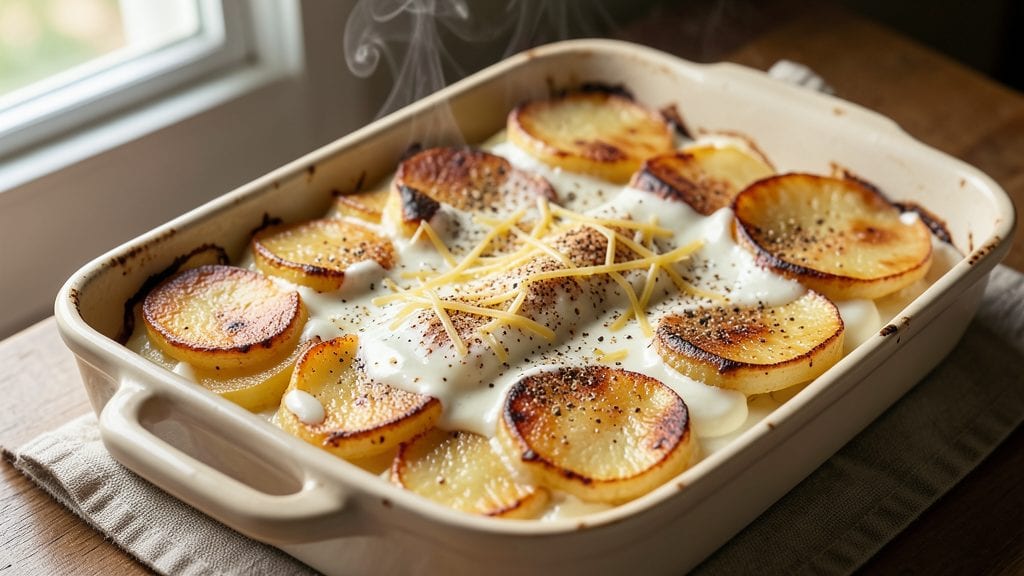
Canned potatoes scalloped recipe transforms humble canned potatoes into a creamy, cheesy masterpiece with a golden, crispy top—no fancy prep required. The secret lies in layering thinly sliced potatoes with a rich cream-cheese sauce, then baking until bubbly and caramelized. I perfected this dish after realizing how versatile canned potatoes can be when given proper texture and flavor love.
This recipe delivers restaurant-quality comfort in just 45 minutes, using simple ingredients like cream of potato soup, sharp cheddar, and a touch of mustard for depth. The key is patience—letting the layers meld during baking creates that signature creamy yet slightly crispy texture.
It’s the kind of side dish that turns ordinary dinners into special occasions without extra effort.
What you’ll end up with is a casserole so creamy it practically melts in your mouth, topped with a golden cheese crust that adds satisfying crunch.
The aroma alone will have everyone at the table asking for seconds. It pairs perfectly with roasted chicken, steak, or even as a hearty vegetarian main.
No need for fancy equipment—just a baking dish and a fork for layering. The instructions are straightforward, and the results are consistently impressive. Let’s get started on this comforting classic that’s easier than it looks!
Ingredients for canned potatoes scalloped
Simple pantry staples transform into a creamy, golden masterpiece with crispy cheese crust.
| Ingredient | Amount | Notes |
|---|---|---|
| Canned Potatoes 🥔 | 2 cans | Drained, sliced thinly |
| Cream of Potato Soup 🥣 | 2 cups | Homemade or quality canned |
| Sharp White Cheddar Cheese 🧀 | 1 ½ cups | Shredded, not pre-shredded |
| Heavy Cream 🥛 | ½ cup | Full-fat for creaminess |
| Dijon Mustard 🍯 | 1 tbsp | For depth of flavor |
| Garlic Powder 🧄 | ½ tsp | Freshly ground preferred |
| Onion Powder 🧅 | ½ tsp | Adds subtle sweetness |
| Ground Black Pepper 🌶️ | ½ tsp | Freshly cracked |
| Salt 🧂 | ½ tsp | Diamond Crystal preferred |
| Unsalted Butter 🧈 | ½ cup | Melted for crispy top |
| Breadcrumbs 🍞 | ¼ cup | Panko for extra crunch |
| Fresh Parsley 🌿 | ¼ cup | Chopped, for garnish |
The canned potatoes are the star here—look for brands like Libby's or Del Monte with minimal additives. Thinly slicing them (about 1/8-inch thick) is key for even cooking. I always grab sharp white cheddar from the deli counter—pre-shredded gets clumpy and lacks flavor. For the soup, homemade or Campbell's Cream of Potato both work, but if you're making it from scratch, use extra-virgin olive oil and a splash of cream to enrich it. The heavy cream adds that signature velvety texture, so don't skimp on the full-fat version.
No sharp cheddar? Gruyère or white cheddar blends work beautifully. Short on breadcrumbs? Crushed cornflakes or cracker crumbs give a similar crunch. The mustard is non-negotiable for that tangy depth—Dijon is ideal, but whole-grain mustard adds texture. For a dairy-free twist, swap the heavy cream for coconut cream and use nutritional yeast instead of cheese. The garlic and onion powders can be replaced with fresh if you're feeling fancy—just sauté them first to mellow the flavors. And if you're in a pinch, instant potato flakes can bulk up the dish in a bind.
This keeps beautifully in the fridge for 4-5 days, though it reheats best when warmed gently in the oven. For make-ahead convenience, assemble the dish a day in advance and refrigerate uncovered for 30 minutes before baking—this helps the cheese crust form faster. Leftovers reheat perfectly in the microwave for 30 seconds, but the oven gives the best texture. Portion into individual dishes for easy lunches, or freeze portions for up to 3 months. The parsley garnish is optional but adds a fresh pop of color—just sprinkle it on right before serving.
Why You'll Love This Recipe
- No Chopping Needed: I swear by this trick—just drain and layer those canned potatoes like you’re building a lazy lasagna. No peeling, no dicing, no stress. The soup and cream do all the heavy lifting while you stir.
- Cheesy-Creamy Magic: That sharp white cheddar melts into gooey perfection, while the Dijon mustard adds just enough tang to cut through the richness. Honestly, the first bite makes me forget this isn’t a homemade casserole.
- Weeknight to Potluck: Make a big batch on Sunday and reheat for lunches all week—it stays creamy without falling apart. (Yes, even on a Tuesday night.) Or bring it to a gathering; it’s fancy enough to impress but easy enough to assemble in 10 minutes.
- Budget-Friendly Luxury: Canned potatoes and soup keep costs low, but the heavy cream and cheese make it feel indulgent. I’ll be real: my grocery bill stays sane, but my family acts like I served gourmet. Win-win.
Step-by-step instructions for canned potatoes scalloped recipe
Here's how to build layers of creamy, cheesy comfort with a golden, crunchy finish.
Prepare the Potato Layers
Drain the 2 cans of canned potatoes thoroughly and pat them completely dry with paper towels. I like to slice each potato into even ¼-inch thick rounds using a sharp mandoline or knife—this ensures consistent baking and even browning. Arrange the first layer of sliced potatoes in a single layer at the bottom of a greased 8x8-inch baking dish, slightly overlapping them like shingles. This creates a stable foundation for the creamy filling.
Don't skip the drying step—moisture in the potatoes will steam instead of crisp, and you'll end up with soggy layers rather than that perfect golden crust. I always work in batches if needed, keeping the sliced potatoes covered with a damp towel to prevent drying out while I prepare the next layer.
Create the Creamy Cheese Filling
In a medium bowl, whisk together the 2 cups cream of potato soup, 0.5 cup heavy cream, 1 tablespoon Dijon mustard, 0.5 teaspoon garlic powder, 0.5 teaspoon onion powder, 0.5 teaspoon ground black pepper, and 0.5 teaspoon salt until completely smooth. This mixture should be silky and well combined—no lumps allowed. Stir in 1 cup of the shredded sharp white cheddar cheese until evenly distributed throughout the sauce.
Here's the thing—this is where the magic happens. The Dijon mustard adds that subtle tang that cuts through the richness of the cream and cheese, while the garlic and onion powders build depth without overpowering. Taste the mixture now and adjust seasoning if needed—you want it to be rich but not overly salty, with just a hint of tang from the mustard.
Layer and Repeat for Maximum Creaminess
Pour half of the creamy cheese mixture evenly over the first layer of potatoes in the baking dish. Then add another layer of sliced potatoes, again arranged in an overlapping pattern. Repeat this process, ending with a final layer of potatoes on top. This layering technique ensures every bite has that perfect balance of creamy filling and tender potato.
I always press down gently on each potato layer as I go—this prevents air pockets from forming and helps the potatoes absorb the creamy mixture more evenly. The final layer should be completely covered with the remaining cheese sauce, with no dry spots showing.
Add the Crispy Topping
Melt the 0.5 cup unsalted butter in a small saucepan over low heat until completely liquid. In a separate bowl, stir together the melted butter with the 0.25 cup breadcrumbs until well coated. Spread this buttery breadcrumb mixture evenly over the top layer of potatoes, pressing down gently to ensure good contact with the creamy filling below.
This topping is what creates that irresistible golden crust we're after. The butter adds richness while the breadcrumbs provide that satisfying crunch. Don't be tempted to skip this step—it's what transforms this dish from good to absolutely delicious. Sprinkle the remaining 0.5 cup shredded sharp white cheddar cheese evenly over the breadcrumb topping.
Bake to Golden Perfection
Preheat your oven to 375°F. Place the baking dish on the middle rack and bake for 35-40 minutes, until the top is golden brown and the edges are bubbling. You'll know it's done when the cheese on top is fully melted and the breadcrumbs have turned a beautiful golden color. If the top browns too quickly, tent it loosely with aluminum foil for the last 10 minutes of baking.
Let the scalloped potatoes rest for 10 minutes before serving—this allows the filling to set slightly and makes it easier to slice. The dish should be hot and bubbly, with a crispy golden top that gives way to creamy, cheesy layers beneath. Garnish with chopped fresh parsley just before serving to add a pop of color and freshness that balances the richness.
Pro Tips For Making Canned Potatoes Scalloped
- DRAIN POTATOES WELL: Canned potatoes hold onto water like a sponge after draining—pat them dry with paper towels before layering. I learned this the hard way when my first batch turned into a soggy mess halfway through baking.
- BAKE AT 375°F: Too hot and the cheese burns before the center sets; too cool and it stays gummy. Preheat your oven to 375°F and bake uncovered for the last 10 minutes to get that golden top.
- GRATE CHEESE FRESH: Pre-shredded cheese has anti-caking agents that make it clump and lose flavor. Grate your own sharp white cheddar—it melts smoother and tastes richer.
- STIR IN MUSTARD LAST: Mix the Dijon mustard into the soup mixture right before layering. Adding it earlier can make the sauce too sharp and overpower the creamy texture.
Troubleshooting perfect results
Soggy Layers Fix
If your scalloped potatoes turn out soggy instead of creamy, the issue is almost always excess moisture. First, make sure you pat the sliced potatoes completely dry with paper towels before layering—this is non-negotiable.
For extra insurance, I recommend salting the sliced potatoes lightly and letting them sit for 10 minutes before assembling to draw out any remaining moisture. If you're using pre-shredded cheese, swap it for freshly shredded—pre-shredded contains anti-caking agents that absorb moisture and create a gummy texture. 🥔
Uneven Baking
Uneven baking—where the edges cook faster than the center—is usually a temperature or positioning problem. Always preheat your oven to 375°F and place the baking dish on the middle rack for even heat distribution.
If your oven runs hot, reduce the temperature to 350°F and add 5-10 extra minutes to the baking time. For stubborn hot spots, tent the dish loosely with aluminum foil during the last 10 minutes of baking to protect the top while the center finishes cooking.
Cheese Not Melting
If your cheese stays clumpy or doesn’t melt smoothly, it’s likely due to one of two issues: cold filling or wrong cheese type. First, ensure your creamy cheese mixture is room temperature before assembling—cold ingredients take longer to melt and can cause separation.
Second, avoid pre-shredded cheese (as mentioned earlier) and use sharp white cheddar or Gruyère, which melt more evenly. For extra insurance, I like to microwave the shredded cheese for 20-30 seconds before adding it to the breadcrumb topping to jumpstart the melting process. 🧀
Breadcrumbs Not Crispy
The breadcrumb topping should be golden and crunchy, but if it turns out soft or pale, the issue is usually undercooked butter or insufficient baking time. Always melt the butter completely—even a hint of solid butter will prevent the breadcrumbs from crisping.
For extra crunch, I recommend toasting the breadcrumbs in a dry pan over medium heat for 2-3 minutes before mixing them with the butter. If the topping still isn’t crispy after baking, broil the dish for 1-2 minutes at the very end (watch closely to avoid burning).
Overly Salty Flavor
If your scalloped potatoes taste too salty, the culprit is usually the cream of potato soup, canned potatoes, or pre-shredded cheese (which often contains added salt).
To fix this, taste your sauce before assembling and adjust with a pinch of sugar or a splash of heavy cream to balance the saltiness. For future batches, use low-sodium cream of potato soup and rinse canned potatoes briefly under cold water to reduce sodium.
If you’re using store-bought cheese, opt for sharp cheddar—it’s saltier by nature, so you’ll need less overall.
Potatoes Too Dry
Dry, rubbery potatoes are a sign of overbaking or insufficient cream in the filling. To prevent this, bake the dish for the full 35-40 minutes but check it at 30 minutes—it should be bubbly but not dry.
If you’re concerned about dryness, increase the heavy cream by 1-2 tablespoons in the filling. For extra moisture, I also recommend adding a splash of milk or cream to the sauce before baking.
If your potatoes are already dry, reheat the dish with a splash of warm milk or broth to restore creaminess. 💡
Nutrition facts
Frequently asked questions
Can I use instant potato flakes instead of canned potatoes?
Yes, but with adjustments! Instant potato flakes will work, but they lack the texture of canned potatoes. For best results, mix 1 cup flakes with ½ cup warm water and let sit for 5 minutes to thicken before layering. You may need 1 extra tablespoon of cream in the filling to compensate for the drier texture.
How do I make this dish ahead of time?
Assemble the dish completely (including the breadcrumb topping) and refrigerate uncovered for 30 minutes before baking. This helps the cheese crust form faster. For make-ahead meals, bake as directed, then refrigerate for up to 4 days. Reheat covered at 350°F for 20 minutes or microwave for 90 seconds with a damp paper towel over it.
What’s the secret to a crispy cheese crust?
The crispy top comes from three key elements: melted butter (never solid), freshly shredded cheese, and proper baking time. Toast breadcrumbs in a dry pan for 2-3 minutes before mixing with butter, and bake at 375°F until the edges bubble and the top turns golden. For extra crunch, broil for 1-2 minutes at the end.
Can I make this dish vegetarian or vegan?
For vegetarian, use vegetarian cream of potato soup and dairy-free cheese. For vegan, swap heavy cream for coconut cream, butter for vegan butter, and cheese for nutritional yeast. The layering technique remains the same—just ensure all ingredients are plant-based.
Why did my scalloped potatoes turn out watery?
Excess moisture is usually the culprit. Always pat sliced potatoes completely dry and avoid pre-shredded cheese (it contains anti-caking agents that absorb moisture). For extra insurance, salt the sliced potatoes lightly and let them sit for 10 minutes before assembling.