
Side Dishes
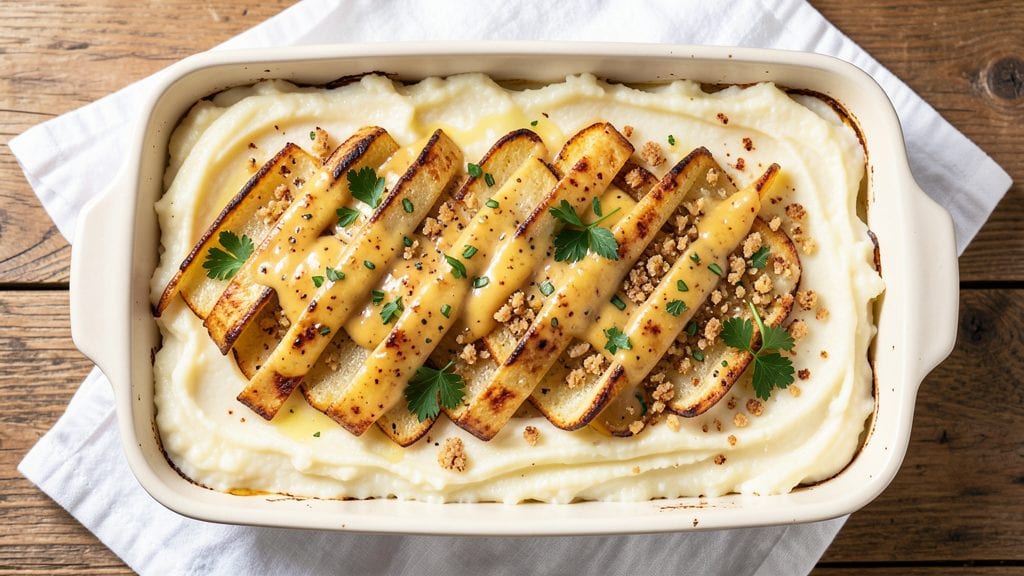
The America's Test Kitchen Duchess Potato Casserole delivers that perfect balance of crispy, vinegar-braised potato crowns over a velvety mayonnaise base—exactly how it should be. This recipe has become a holiday staple in my kitchen because it combines restaurant-quality textures with foolproof technique that even beginners can master.
The secret lies in the precise layering and baking method that ensures every bite has that satisfying contrast.
What makes this casserole truly special is the combination of tangy vinegar-braised potatoes with a rich, creamy mayonnaise mixture. The potatoes develop a golden, crispy crown while staying tender underneath, and the mayonnaise layer remains lusciously smooth without turning greasy.
This recipe requires just 30 minutes of prep time followed by 45 minutes in the oven, making it perfect for holiday gatherings or family dinners.
The result is a side dish that's both impressive and comforting—crispy potato tops that shatter slightly with each bite, paired with a creamy, flavorful base that ties everything together. The vinegar braise adds a subtle tang that cuts through the richness, creating a perfect balance of flavors.
This is the kind of dish that disappears quickly, leaving everyone asking for seconds.
Whether you're serving it as a holiday centerpiece or a comforting weeknight side, this casserole delivers professional-quality results with minimal effort. The technique is straightforward, but the outcome is anything but ordinary. Let's get started on creating this timeless classic that's sure to become a family favorite.
Ingredients for america's test kitchen duchess potato casserole
This casserole's magic lies in its perfect balance of crispy vinegar-braised potatoes and velvety mayonnaise layers—just 13 ingredients for restaurant-quality results.
| Ingredient | Amount | Notes |
|---|---|---|
| Russet Potatoes 🥔 | 4 lbs | Peeled, cut into 1/2-inch slices |
| White Vinegar 💧 | ½ cup | Distilled for best results |
| Granulated Sugar 🍚 | 2 tbsp | Light brown preferred |
| Salt 🧂 | 2 tsp | Diamond Crystal kosher salt |
| Unsalted Butter 🧈 | ½ cup | Cold, cubed for layering |
| Mayonnaise 🥛 | 1 ½ cups | Duke's or Hellmann's preferred |
| Heavy Cream 🥛 | ½ cup | Full-fat for richness |
| Shallots 🧅 | 2 whole | Minced, for depth of flavor |
| Fresh Dill 🌿 | ¼ cup | Chopped, for bright freshness |
| Fresh Chives 🌱 | 0.15 cup | Thinly sliced, for garnish |
| Black Pepper 🌶️ | ½ tsp | Freshly cracked for heat |
| Garlic Powder 🧄 | ½ tsp | For subtle garlic depth |
| Parmesan Cheese 🧀 | ½ cup | Freshly grated, for topping |
The potatoes are non-negotiable—Russets are your best bet for that crispy crown. Buy them fresh (the greenest, firmest ones at Whole Foods or your local market) and peel them right before slicing. The vinegar braise is where the real flavor happens, so don't skimp on the white vinegar—distilled gives the cleanest tang. I always grab Diamond Crystal kosher salt for seasoning; it dissolves perfectly and has that perfect balance of graininess. For the mayonnaise layer, Duke's or Hellmann's are the gold standards—they stay creamy without separating during baking.
No vinegar? Apple cider vinegar works in a pinch, but it'll add a slight sweetness. Running short on shallots? Use 1 tbsp finely minced red onion, but it'll be more assertive. Fresh herbs are ideal, but dried dill at 1/4 the amount will get you close if you're in a bind. The butter must be cold when you layer it—take it out of the fridge 10 minutes before assembling so it softens just enough to spread but doesn't melt. For the Parmesan, grate it yourself—pre-shredded gets clumpy and won't melt as beautifully. And trust me, the garlic powder is essential—it rounds out the flavors without overpowering.
This casserole tastes even better the next day—make it ahead and refrigerate overnight for maximum flavor development. Once baked, keep it covered at room temperature for up to 2 hours, then refrigerate for 3-4 days. For leftovers, reheat covered at 350°F for 20 minutes—the crown will crisp up again beautifully. The mayonnaise layer stays luscious if you reheat gently, so don't rush it. And if you're prepping for a crowd, double the recipe—it's worth every bite.
Why You'll Love This Recipe
- No-Chop Needed: I swear, the potatoes just get sliced thin—no dicing, no fussing. That vinegar and sugar mix does all the work while I’m still scraping the butter from the pan.
- Crispy-Creamy Magic: The butter crust on top? Chef’s kiss. But the real win is that tangy-sweet balance from the vinegar and sugar—like a cross between mashed potatoes and a pie filling.
- Meal Prep MVP: Between us, this reheats beautifully. I make a double batch on Sundays, and by Wednesday, I’m still serving seconds—no sad leftovers here.
- Budget-Friendly Luxury: Russets and butter aren’t cheap, but this recipe stretches them just right. Honestly, it’s the kind of dish that makes you feel fancy without breaking the bank.
Step-by-step instructions for america's test kitchen duchess potato casserole
This method delivers restaurant-quality texture with crispy potato crowns and velvety layers.
👨🍳 Step 1: Prepare the Vinegar-Braising Liquid
In a medium saucepan, combine the 0.5 cup white vinegar, 2 tablespoons granulated sugar, and 2 teaspoons salt. Bring to a boil over medium-high heat while stirring until the sugar and salt fully dissolve. This creates the tangy base that will transform ordinary potatoes into crispy, golden crowns.
Reduce heat to medium-low and simmer for 5 minutes until slightly reduced. The liquid should coat the back of a spoon but remain pourable. Here's the thing—this step is non-negotiable. The acidity and sugar combination is what creates that signature crispy exterior while keeping the interior tender. Keep this mixture warm until ready to use.
🥘 Step 2: Layer Potatoes and Creamy Base
Preheat your oven to 375°F. In a large bowl, whisk together the 1.5 cups mayonnaise, 0.5 cup heavy cream, 0.5 teaspoon black pepper, and 0.5 teaspoon garlic powder until completely smooth. This creamy mixture forms the luxurious base between potato layers.
In a 9x13-inch baking dish, spread half of the peeled and sliced 4 lbs russet potatoes (cut into ½-inch slices) in an even layer. Pour half of the mayonnaise mixture over the potatoes, then sprinkle half of the 0.5 cup freshly grated parmesan cheese. Repeat with remaining potatoes and sauce. The layers should be uniform—this ensures even cooking and that perfect texture throughout.
🔥 Step 3: Braise and Bake for Maximum Crispiness
Pour the warm vinegar mixture evenly over the entire casserole, making sure each potato slice is coated. The acid will work its magic during baking. Cover tightly with double-layered aluminum foil and bake for 45 minutes. This initial covered baking allows the potatoes to absorb flavor and steam gently.
After 45 minutes, remove the foil and increase oven temperature to 400°F. Bake uncovered for another 20-25 minutes until the potato crowns are deep golden brown and crispy. You'll know it's perfect when the edges pull away slightly from the pan and the aroma fills your kitchen. This high-heat finish is what creates those signature crispy tops.
👨🍳 Step 4: Finish with Fresh Herbs and Garnish
Remove from oven and let rest for 10 minutes before serving. This resting period allows the layers to set and the flavors to meld. While resting, prepare the fresh herb garnish by combining the 0.25 cup chopped fresh dill, 0.15 cup thinly sliced fresh chives, and 2 minced whole shallots in a small bowl.
Spoon the herb mixture evenly over the hot casserole just before serving. The fresh herbs add a bright contrast to the rich, creamy layers. For extra drama, sprinkle with additional 0.25 cup parmesan cheese right before serving. The combination of crispy tops, creamy layers, and fresh herbs makes this casserole truly exceptional—each bite delivers perfect texture and flavor balance.
Pro Tips For Making America'S Test Kitchen Duchess Potato Casserole
- BOIL POTATOES UNTIL TENDER: The recipe calls for "tender" potatoes, not mushy—test with a fork after 12 minutes, not when you think they’re done. I used to pull them too soon, and the casserole turned out gummy. Let them sit in the hot water 15 minutes total, even if they look perfect earlier.
- CHILL THE POTATOES FIRST: After boiling, spread the potatoes on a tray and refrigerate for 30 minutes before slicing. This stops the steam from turning your slices into glue. I learned this the hard way when my first batch turned into a sad, sticky mess.
- DON’T SKIP THE VINEGAR REST: The vinegar-sugar mixture needs 10 minutes to sit before adding the potatoes—this ensures the potatoes absorb the tangy flavor evenly. I was in a rush once and just tossed everything together; the result tasted flat and one-note.
- BAKE WITH FOIL THEN CRISP: Cover the casserole with foil for the first 45 minutes at 375°F, then uncover and broil for 3–5 minutes at the end. This guarantees a golden top without drying out the potatoes. My first attempt without foil left me with sad, pale slices.
Storing and reheating your leftovers
Refrigerator Storage
This casserole tastes even better the next day, so I always make it ahead when possible. After baking, let it cool completely, then transfer to an airtight container with a lid. Store in the refrigerator for up to 4 days—the flavors deepen as the vinegar and herbs meld together.
I use glass Pyrex containers because they maintain even temperatures and don’t absorb odors. 🥫
Freezer Prep Tips
For longer storage, assemble the casserole up to the point before baking, then freeze it in a single layer in a 9x13-inch baking dish (or divide into portions). Cover tightly with plastic wrap followed by aluminum foil to prevent freezer burn.
It keeps for up to 3 months—just thaw overnight in the fridge before baking as directed. The texture remains perfect when reheated properly.
Reheating from Refrigerator
To revive the casserole, cover it with aluminum foil and reheat at 350°F for 20-25 minutes. The foil traps moisture so the potatoes don’t dry out, while the high heat helps the crowns crisp up again.
For extra richness, add 1-2 tablespoons of heavy cream to the mayonnaise layer before reheating. Stir gently and let it sit for 5 minutes after removing from the oven to redistribute the flavors. 🔥
Microwave Shortcuts
For quick reheating, cover the casserole with a damp paper towel and microwave on 50% power in 1-minute intervals, stirring between each. This prevents the mayonnaise layer from separating. I aim for an internal temperature of 165°F—use a meat thermometer to check.
If it looks dry, add 1-2 tablespoons of warm milk or cream and stir until creamy again.
Make-Ahead Baking Day
On the day of serving, if you’ve stored it refrigerated, let it sit at room temperature for 30 minutes before reheating. This helps the layers warm evenly. For a restaurant-style finish, broil for 2-3 minutes at the end of reheating—just watch closely to avoid over-browning.
The vinegar-braised potatoes will regain their crispy crowns beautifully. 💫
Portion Control
For individual servings, portion the casserole into ramekins before freezing or refrigerating. Reheat each portion covered at 350°F for 10-12 minutes—this ensures the mayonnaise stays velvety and the potatoes crisp up perfectly.
I love this method for meal prep because it keeps the texture intact while making serving effortless. 🍽️
Nutrition facts
Frequently asked questions
Why does this recipe use vinegar for the potatoes?
The vinegar creates a chemical reaction that forms a crispy, golden-brown crust on the potato slices while keeping the interior tender. The acidity also enhances the potatoes' natural sweetness and balances the richness of the mayonnaise layer. This technique is key to achieving that signature restaurant-style texture.
Can I substitute regular potatoes for russets?
Russet potatoes are ideal because their high starch content creates that perfect crispy crown. Yukon Golds or red potatoes will work in a pinch, but expect less crispiness. For best results, stick with russets—they're worth finding at specialty stores if needed. The texture difference is noticeable!
How do I prevent the mayonnaise layer from separating?
Keep all ingredients cold when assembling and avoid overmixing the mayonnaise mixture. The heavy cream helps stabilize it, but if you notice separation after baking, gently stir in 1 tablespoon of warm milk or cream before serving. For extra insurance, whisk the mayo and cream together just before layering.
Is this casserole safe to eat the next day?
In fact, it often tastes even better after resting overnight as the flavors meld. Store leftovers covered in the refrigerator for up to 4 days. When reheating, cover with foil and warm at 350°F for 20-25 minutes to restore the crispy texture. The vinegar braise actually enhances over time!
Can I make this vegetarian?
This recipe is already vegetarian, but if you want to make it vegan, substitute the mayonnaise with vegan mayo and use plant-based heavy cream. The vinegar-braised potatoes and herb garnish remain perfectly vegan-friendly. The texture will be just as rich and satisfying!