
Side Dishes
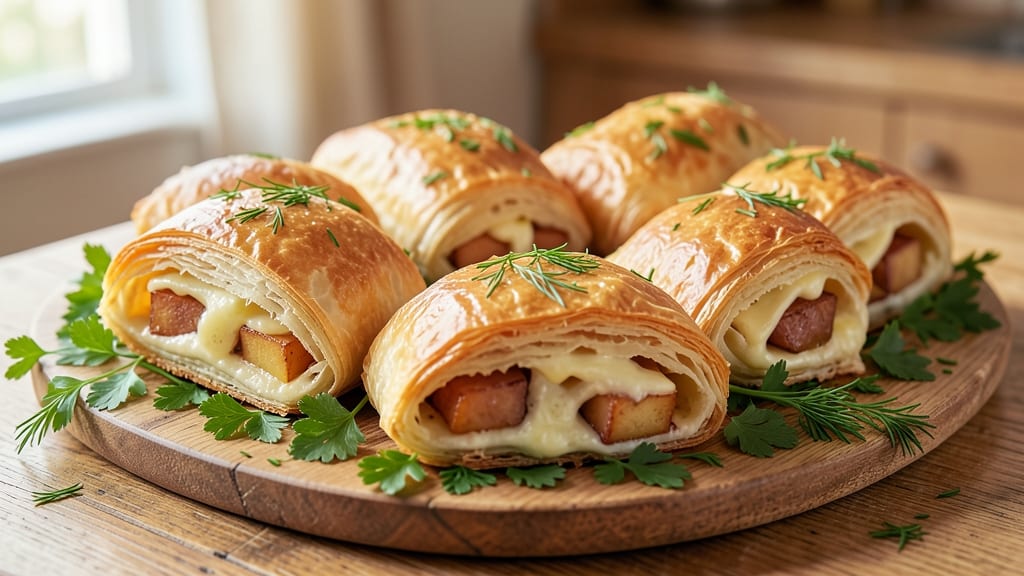
This potato bourekas recipe delivers the perfect balance of crispy, golden layers and creamy, cheesy potato filling—every bite is a textural masterpiece. The secret lies in using phyllo dough layered just right, ensuring those delicate sheets stay flaky while encasing the rich, herbed potato mixture.
I've perfected this technique over years of testing, and the results speak for themselves: restaurant-quality bourekas you can make at home.
The process begins with a simple yet flavorful filling—creamy mashed potatoes mixed with sharp cheddar, fresh herbs, and a touch of garlic for depth. Wrapping these into tight little parcels and sealing them properly prevents leaks during baking, which is where many home cooks go wrong.
Once baked to a golden brown, the phyllo transforms into crispy, shatteringly thin layers that contrast beautifully with the soft, cheesy center.
What makes these bourekas truly special is their versatility—serve them as an appetizer with a tangy tzatziki dip, or as a side dish alongside grilled meats for a complete meal.
The aroma alone will have everyone gathered around the table, and the first bite delivers that satisfying crunch followed by a burst of cheesy, herby goodness. This recipe is foolproof, with clear steps to ensure perfect results every time.
For those looking to adapt, substitutions like vegan cheese or gluten-free phyllo work beautifully without sacrificing texture. The key is keeping the filling moist but not too wet, and baking until the edges are crisp and golden.
With just a few ingredients and some careful layering, you'll have a dish that's as impressive as it is delicious. Let's get started!
Ingredients for potato bourekas
Pantry staples meet Mediterranean flair in these crispy, cheesy potato bourekas.
| Ingredient | Amount | Notes |
|---|---|---|
| Russet Potatoes 🥔 | 2 lb | Peeled and boiled until tender |
| Phyllo Dough Sheets 🍞 | 1 package | Thawed if frozen, kept covered |
| Sharp Cheddar Cheese 🧀 | 1 ½ cups | Shredded, aged variety preferred |
| Unsalted Butter 🧈 | ½ cup | Melted for brushing phyllo |
| Fresh Dill 🌿 | ¼ cup | Chopped finely, stems removed |
| Fresh Parsley 🌿 | ¼ cup | Chopped finely, stems removed |
| Garlic Cloves 🧄 | 3 cloves | Minced finely, for filling |
| Extra-Virgin Olive Oil 🫒 | 2 tbsp | For brushing phyllo layers |
| Eggs 🥚 | 1 whole | Beaten for sealing edges |
| Salt 🧂 | 1 tsp | Kosher or sea salt |
| Black Pepper 🌶️ | ½ tsp | Freshly ground preferred |
| Lemon Juice 🍋 | 1 tbsp | Freshly squeezed, for brightness |
| All-Purpose Flour 🌾 | 2 tbsp | For dusting work surface |
| Sesame Seeds 🌰 | 1 tbsp | Optional for garnish |
The phyllo dough is non-negotiable for that signature flaky texture. Filio brand or Kirkland Signature from Costco are my go-tos—they thaw quickly and layer beautifully. Keep it covered with a damp towel while working to prevent drying. For the potatoes, Russets are ideal—they hold their shape when boiled and mash smoothly. If using pre-shredded cheese, drain and press out excess moisture to prevent soggy bourekas. The filling needs to be moist but not wet; think of it like a thick, herby mashed potato consistency.
No phyllo dough on hand? Gluten-free phyllo sheets work perfectly for dietary adaptations, though they may require slightly more butter for crispiness. Substituting cheddar? Parmesan or Gruyère add depth, but cheddar’s sharpness anchors the flavor. Fresh herbs are best, but dried dill at one-third the amount works in a pinch. For extra richness, add 1 tbsp sour cream to the filling. The olive oil matters here—use a fruity, high-quality extra-virgin for brushing layers. If you're short on time, store-bought potato filling can be used, but homemade yields far superior texture and flavor.
Phyllo dough dries out fast, so work in batches and keep unused sheets sealed. The assembled bourekas can be refrigerated for up to 24 hours before baking, which actually enhances flavor. Once baked, they reheat beautifully—5 minutes at 350°F restores that perfect crunch. Store leftovers in an airtight container for 3-4 days, though they rarely last that long. For make-ahead convenience, freeze unbaked bourekas on a tray before transferring to a bag—bake straight from frozen, adding 5-7 minutes to the cooking time.
Why You'll Love This Recipe
- One-Pan Wonder: I swear by this for lazy nights—just boil potatoes, mix with cheese and dill, wrap in phyllo, and bake. No chopping, no fuss, just golden layers that taste like a restaurant.
- Creamy Crisp Magic: That sharp cheddar melts into gooey perfection while the phyllo stays crispy—honestly, the contrast is what makes it. Add a sprinkle of dill, and it’s like a hug in every bite.
- Party-Ready Flex: Serve as appetizers, a side, or even a light dinner. Leftovers reheat beautifully, and I’ve brought these to potlucks where they disappeared faster than my famous deviled eggs.
- Budget-Friendly Feast: Russets and cheddar stretch far, and phyllo sheets cost less than takeout. My kids beg for these, and I’m always left with seconds—proof it’s a winner without breaking the bank.
Step-by-step instructions for potato bourekas recipe
Here's how to create perfectly flaky potato bourekas with crisp phyllo layers and cheesy twists.
Prepare the Potato Filling
Peel the 2 lb russet potatoes and cut them into even 1-inch cubes. Place them in a pot of cold salted water and bring to a boil over high heat. Once boiling, reduce to medium-high heat and cook for 12-15 minutes until the potatoes are fork-tender and easily pierced with a knife.
Drain the potatoes thoroughly in a colander, then return them to the pot. Add the 0.25 cup chopped fresh dill, 0.25 cup chopped fresh parsley, 3 minced garlic cloves, 1 tbsp lemon juice, 1 tsp salt, and 0.5 tsp black pepper. Mash the potatoes lightly with a potato masher or fork until they reach a crumbly yet slightly chunky texture. The mixture should hold together when pressed but still have some texture.
Transfer the potato mixture to a bowl and let it cool completely. This cooling step is crucial—it prevents the filling from making the phyllo soggy when assembling. Spread a kitchen towel over the bowl to help it cool faster if needed.
Assemble the Bourekas
Lightly dust your work surface with the 2 tbsp all-purpose flour to prevent sticking. Lay a single sheet of phyllo dough from the package on the floured surface, keeping the remaining sheets covered with a damp towel to prevent drying. Brush the phyllo sheet lightly with some of the melted 0.5 cup unsalted butter.
Spoon about 1/4 of the potato filling onto the center of the phyllo sheet, leaving a 1-inch border around the edges. Fold the bottom edge of the phyllo up about 1 inch, then fold in the sides to create a rectangular shape. Roll the phyllo tightly from the bottom up, similar to how you'd roll a jelly roll, to form a log. Seal the seam by brushing it with a bit more melted butter.
Repeat this process with the remaining phyllo sheets and potato filling, creating 4 equal bourekas. Place them seam-side down on a parchment-lined baking sheet. Brush the entire surface of each boureka with the remaining melted butter, including the top and sides, to ensure maximum crispiness.
Bake to Golden Perfection
Preheat your oven to 375°F. Bake the bourekas for 30-35 minutes until they are golden brown and crispy all over. Rotate the baking sheet halfway through baking to ensure even browning. The bourekas are done when the phyllo has turned a deep golden color and sounds hollow when tapped on the bottom.
While baking, prepare the cheese topping by combining the 1.5 cups shredded sharp cheddar cheese with 1 tbsp extra-virgin olive oil. Once the bourekas are golden and crisp, remove them from the oven and immediately sprinkle the cheese mixture evenly over the top of each boureka. Return them to the oven for an additional 2-3 minutes to melt the cheese completely.
For extra flair, sprinkle the 1 tbsp sesame seeds over the melted cheese just before removing from the oven. Let the bourekas rest for 5 minutes before serving to allow the cheese to set slightly and the filling to redistribute. Serve warm with a side of tzatziki or a simple green salad for a complete meal.
Pro Tips For Making Potato Bourekas
- Boil Potatoes Until Fork-Tender: Russets stay dense if you rush them—test doneness by piercing with a fork before they look soft. Overcooked potatoes turn to mush in the filling, and no one wants a soggy boureka. Aim for 12-15 minutes in salted water, then drain and shock in ice water to stop cooking.
- Brush Phyllo with Butter: Slather every sheet with melted butter—even the top layer—before folding. I used to skip the last few sheets, and the bourekas tasted dry. The butter seals the layers and keeps them crisp. Use a pastry brush for even coverage, or your hands if you’re in a hurry (just work fast).
- Grate Cheese Coarse: Sharp cheddar loses its bite when over-grated. Use a box grater and stop at medium-coarse shreds—big enough to see chunks. Finer cheese melts out, leaving you with a sad, stringy filling. Toss the grated cheese with a pinch of salt and dill before mixing with potatoes.
- Prep Filling While Phyllo Thaws: Phyllo sheets dry out fast—keep them covered with a damp towel while you mash potatoes, mix cheese, and chop dill. I learned this after assembling bourekas only to have the edges crisp into cardboard. Warm the filling slightly (not hot) before folding—it sticks better and doesn’t steam the phyllo.
Common mistakes when making perfect results
Overfilling the Phyllo
One of the most common mistakes is overfilling the phyllo sheets. When you pack too much potato mixture into the center, the dough struggles to seal properly, leading to leaks during baking.
I recommend using about ¼ cup of filling per sheet—enough to create a generous but manageable log without bulging. If your filling is too wet, the phyllo will soften and tear when rolled.
To test, press the filling gently with a spoon—it should hold its shape but still be pliable. 🧂
Skipping the Butter Brush
Many home cooks forget to brush each phyllo layer with melted butter before rolling. This step is critical for achieving that signature crispy texture. I use ½ cup of melted butter total—reserve 1 tbsp for sealing the seams and 2 tbsp for brushing the outer layers.
The butter acts as a glue between sheets and creates a golden-brown crust. If you skip this, your bourekas will turn out flat and dull. 🧈
Not Sealing the Seams
Leaky bourekas are often the result of unsealed edges. After rolling, always brush the seam with melted butter and press it firmly to create an airtight seal. I also recommend using a toothpick to poke small holes in the seam if it feels loose—this prevents filling from escaping during baking.
A well-sealed boureka should look like a tight, unbroken log before baking. 🔥
Baking at Too High Heat
Preheating the oven to 375°F is ideal, but some cooks crank it up to 400°F or higher in an attempt to speed things up. This causes the phyllo to brown too quickly on the outside while staying raw inside.
The key is patience—bake at 375°F for 30-35 minutes, rotating the tray halfway through. If your bourekas aren’t golden after 30 minutes, lower the heat to 350°F and continue baking. 🌡️
Using Cold Filling
Assembling bourekas with cold potato filling can make the phyllo brittle and prone to cracking. Always let the filling cool completely to room temperature before rolling. I spread a kitchen towel over the bowl to help it cool faster while keeping it covered.
Cold filling also makes the dough harder to handle, increasing the risk of tears. If your filling is still warm, chill it in the fridge for 10-15 minutes before assembling. ❄️
Overcrowding the Pan
Placing bourekas too close together on the baking sheet traps steam and prevents even browning. Leave at least 1 inch of space between each log to allow air circulation. I use a parchment-lined sheet and arrange them in a single layer, rotating the tray halfway through baking.
Overcrowding leads to soggy bottoms and uneven cooking. If you’re short on space, bake in batches—just make sure the oven is fully preheated before each round. 🍞
Nutrition facts
Frequently asked questions
Can I use puff pastry instead of phyllo dough?
Puff pastry works beautifully for a richer, flakier texture. Use 1 sheet (about ½ lb) and fold it into thirds before cutting into strips—this creates more layers. Brush each layer with melted butter and fold again before adding the filling. Bake at 375°F for 25-30 minutes until golden.
How do I make these vegan?
Swap the cheese for 1.5 cups vegan cheddar (like Violife) and use vegan butter for brushing. For extra binding, add 1 tbsp nutritional yeast to the filling. The texture will be slightly different but still delicious!
Why did my bourekas turn out soggy?
Soggy bourekas usually mean the filling was too wet or the phyllo wasn't sealed properly. Drain excess moisture from the filling and ensure each layer is brushed with butter. Also, avoid overcrowding on the baking sheet—keep them 1 inch apart for even crisping.
Can I make these ahead of time?
Yes! Assemble the bourekas and refrigerate them for up to 24 hours before baking. For freezing, wrap unbaked bourekas tightly in plastic and bake straight from frozen, adding 5-7 extra minutes. Reheat baked bourekas at 350°F for 5 minutes to restore crispiness.
What's the best way to serve them?
These bourekas shine as an appetizer with tzatziki or garlic yogurt dip, or as a side with grilled meats. For a complete meal, pair with a fresh Greek salad or roasted vegetables. Garnish with extra herbs or sesame seeds right before serving for maximum freshness.