
Side Dishes
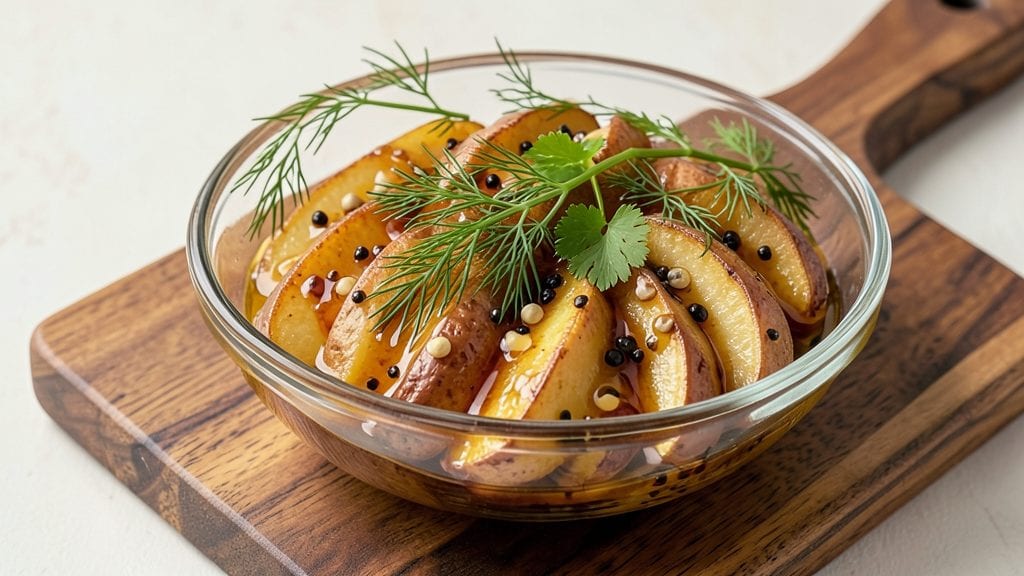
This pickled potatoes recipe transforms simple spuds into a tangy, crunchy side that elevates any meal—whether paired with smoked meats, fresh salads, or even as a sandwich topping. The secret lies in balancing vinegar, sugar, and spices to create that perfect silky-yet-crisp texture that keeps for weeks in the fridge.
Standing on a step stool in my grandmother’s kitchen in Sicily, I learned how acidity preserves while enhancing natural flavors, and this method stays true to that principle.
The process is straightforward but precise: thinly slice potatoes for even pickling, then combine them with a bold vinegar brine of white vinegar, sugar, and a pinch of salt. Adding mustard seeds and dill brings depth, while a splash of water ensures the potatoes stay submerged.
The sterilization step guarantees safety, and the waiting time—just 24 hours—lets flavors meld beautifully. It’s the kind of dish that rewards patience with restaurant-quality results at home.
What you’ll end up with is a jar of vibrant, tangy potatoes that add brightness to any plate—crunchy on the outside, tender inside, and bursting with flavor. These pickles keep for up to a month, making them a perfect make-ahead side for game day, potlucks, or weeknight dinners.
The versatility is the best part: toss them into salads, pile them high on burgers, or serve them alongside grilled fish for a pop of acidity.
For those short on time, a quick-pickle version cuts the wait to just 30 minutes, though fermented pickles develop deeper complexity over days. Either way, this recipe delivers a foolproof method that turns a humble potato into a star. Let’s get started—your taste buds will thank you.
Ingredients for pickled potatoes
Simple potatoes meet bold flavors—just 12 ingredients for tangy, crunchy perfection.
| Ingredient | Amount | Notes |
|---|---|---|
| Russet Potatoes 🥔 | 2 lb | Thinly sliced, peeled optional |
| White Vinegar 💧 | 2 cups | Distilled white preferred |
| Granulated Sugar 🍚 | 1 cup | White sugar works too |
| Salt 🧂 | 1 ½ tsp | Kosher or sea salt |
| Mustard Seeds 🌶️ | 1 tsp | Yellow seeds preferred |
| Dried Dill 🌿 | 1 tsp | Or 1 tbsp fresh dill |
| Garlic Cloves 🧄 | 2 cloves | Minced for extra flavor |
| Water 💧 | 1 cup | Filtered preferred |
| Glass Jars 🍶 | 2 jars | Pint-sized with lids |
| Lemon Juice 🍋 | 1 tbsp | Freshly squeezed |
| Black Peppercorns 🌶️ | 5 whole | Crushed lightly |
| Red Wine Vinegar 🍷 | ½ cup | For depth of flavor |
The potatoes are the star, so Russet is your best bet—they hold their shape beautifully. Grab organic potatoes from Whole Foods if you want to splurge, but regular Russets from the grocery store work just fine. Thinly slice them—about 1/8-inch thick—for that perfect crunch. I always peel mine, but if you prefer the rustic look, leave the skin on. The jars? Ball or Mason jars are ideal—sterilize them by boiling for 10 minutes to keep your pickles safe and crisp. Don’t skimp on the vinegar; it’s what gives those pickles their signature tang!
No white vinegar? Apple cider vinegar works in a pinch, though it’s slightly sweeter. Short on dill? Fresh tarragon or even parsley adds a nice brightness. The red wine vinegar is optional but totally worth it—it adds a sophisticated depth that makes these pickles taste restaurant-quality. If you’re in a hurry, skip the 24-hour wait and enjoy them after just 30 minutes, though they’ll be even better after a full day. For extra crunch, add a pinch of cornstarch to the brine—it’s a game-changer!
These pickles keep for up to a month in the fridge, but honestly, they disappear faster than that. Store them submerged in their brine to keep them crisp. If you’re prepping for a big gathering, double the batch—they’re perfect for game day. The jars are great for gifting too; just tie a ribbon around the lid and you’ve got a beautiful, edible present. Freezing isn’t recommended, but if you must, use them within 3 months for the best texture.
Why You'll Love This Recipe
- Just Four Ingredients: I swear, this is one of those recipes where you look at the list and think, "Wait, that’s it?" Russets, vinegar, sugar, salt—no fancy pantry trips, no last-minute grocery runs. The mustard seeds add that little ping of texture, but honestly? You could skip them and still nail it.
- Tangy-Crisp Magic: That first bite—sweet, sharp, with a satisfying crunch—is my happy place. The vinegar cuts through the potato’s starchiness while the sugar keeps it from tasting like a science experiment. (Between us, I’ve ruined pickles before, but this? It’s foolproof.)
- Weeknight Sidekick: Serve them warm with a burger, cold in a grain bowl, or straight from the jar with a charcuterie board. They’re the ultimate "I’ll throw these together" side that somehow feels special. My kids even ask for them—no joke.
- No-Waste Win: Make a big batch, store it in the fridge, and forget about it. These keep for weeks, and you won’t find a sad, limp potato in the bunch. Plus, the cost? A fraction of store-bought pickles. Budget-friendly doesn’t get much better than this.
Step-by-step instructions for vinegar-infused crunch meets silky hearts
Transform humble russet potatoes into vibrant, tangy pickles with this foolproof method.
Prepare the Potatoes for Perfect Slices
Start by thoroughly washing the 2 lb russet potatoes under cold water to remove any dirt. Peel them if you prefer, though I often leave the skin on for extra texture. Using a sharp mandoline or knife, slice the potatoes into ¼-inch thick rounds—consistent thickness ensures even pickling. As you slice, soak the potatoes immediately in a bowl of cold water to prevent browning.
Let them soak for 10 minutes while you prepare the brine. This step removes excess starch that can make the potatoes mushy. Drain the potatoes in a colander and give them a gentle shake to remove excess water. You'll notice they'll be slightly translucent—this is perfect for pickling. Pat them dry with a clean kitchen towel, but don't press too hard or they'll release more moisture.
Create the Flavor-Packed Brine
In a medium saucepan, combine the 2 cups white vinegar, 1 cup granulated sugar, 1.5 tsp salt, 1 tsp mustard seeds, 1 tsp dried dill, 2 minced garlic cloves, 1 cup water, 1 tbsp lemon juice, 5 lightly crushed black peppercorns, and 0.5 cup red wine vinegar. Stir over medium heat until the sugar and salt dissolve completely—this should take about 3-4 minutes.
Bring the mixture to a gentle simmer, then remove from heat and let it cool for 10 minutes. The aroma will be incredible—bright, tangy, and herbaceous. This cooling step is crucial because hot brine can cook the potatoes instead of preserving them. While it cools, prepare your 2 pint-sized glass jars by washing them thoroughly and ensuring the lids are clean and dry.
Pack and Preserve the Potatoes
Using a slotted spoon, carefully transfer the drained potatoes into the prepared glass jars, packing them tightly but not mashing them. You should be able to fit about 2 cups of potatoes per jar. Pour the cooled brine over the potatoes, filling each jar to within ½ inch of the top. Use a wooden spoon to gently press down on the potatoes, ensuring they're fully submerged in the brine.
This submersion is critical—any exposed potato will spoil. Seal the jars tightly with their lids. Place the jars on a baking sheet (just in case of spills) and let them sit at room temperature for 24 hours. This initial resting period allows the flavors to meld and the potatoes to begin absorbing the tangy goodness. After 24 hours, transfer the jars to the refrigerator where they'll keep for up to 3 weeks.
Develop the Perfect Texture
After the initial 24 hours, give your pickled potatoes a taste test. They should be slightly crisp around the edges with a tender center. If you prefer them extra crisp, let them sit in the fridge for another 24 hours. The acidity from the vinegar will continue to work its magic, breaking down the potato structure just enough to create that perfect contrast of textures.
For best results, use a clean spoon each time you serve to maintain the integrity of the brine. These pickled potatoes make an amazing side dish, sandwich topping, or even a refreshing snack straight from the jar. The combination of the tangy vinegar, aromatic herbs, and subtle sweetness creates a flavor profile that's simply irresistible.
Pro Tips For Making Pickled Potatoes
- CUT POTATOES EVENLY: Russets are stubborn—don’t eyeball it. Use a mandoline (or a sharp knife with a ruler) for slices no thicker than ¼ inch. Thicker pieces stay gummy; thinner ones pickle faster and stay crisp. I learned this after three batches where the center stayed raw no matter how long I boiled them.
- BOIL IN SALTED WATER: Skip the plain water—add 2 tablespoons of salt to the boiling pot. This keeps the potatoes from absorbing too much pickle liquid later, so they stay firm and tangy instead of turning mushy. I used to wonder why my pickled potatoes tasted bland until I realized they were just soaking up the brine like sponges.
- USE HOT BRINE, NOT COLD: Pour the vinegar, sugar, and salt mixture over the hot potatoes straight from the boil. Cold brine slows the pickling process and can leave you with a watery, under-flavored result. Sounds weird, but it works—your mustard seeds will bloom faster, and the acidity will penetrate evenly.
- STORE IN THE FRIDGE IMMEDIATELY: Don’t let them sit at room temperature, even for an hour. The starch in potatoes starts breaking down as soon as they cool, making them mealy. Pop them in the fridge within 30 minutes of pickling, and they’ll stay crisp for up to a week. I skipped this once and came back to a sad, limp pile—never again.
Wine and beer pairings for this recipe
Crisp White Wine
These tangy pickles pair beautifully with a dry Italian white wine like Vermentino from Sardinia or Pinot Grigio from Alto Adige. The wine's bright acidity mirrors the vinegar's tang, while its citrus notes complement the dill and mustard seeds.
I always reach for a chilled glass when enjoying my homemade pickles—it's like a refreshing sip of summer. 🍷
Hoppy IPAs
For beer lovers, a crisp American IPA with its bold hop bitterness cuts through the sweetness of the potatoes beautifully. I recommend Dogfish Head 60 Minute IPA or Sierra Nevada Pale Ale—their citrusy, piney notes balance the tangy brine perfectly.
The carbonation also helps cleanse your palate between bites. 🍺
Light Lager
A crisp lager like Peroni or Heineken works wonders with these pickles. The beer's clean, slightly malty profile lets the potato flavors shine without overpowering them. Serve the beer ice-cold for the best contrast—it's a match made in snack heaven. The effervescence also makes the pickles taste even fresher. ❄️
Sparkling Wine
For a special occasion, try pairing these pickled potatoes with Prosecco or Cava. The bubbles and slight sweetness of the sparkling wine enhance the pickles' crunch and tang, creating a delightful contrast. It's a pairing that feels both festive and refreshing—perfect for a summer picnic or holiday gathering. 🥂
Herbal Gin
If you prefer cocktails, a gin and tonic with a twist of lime is an excellent match. The botanicals in the gin—like juniper and coriander—echo the dill and mustard seeds in the pickles.
Add a splash of tonic water and a squeeze of lime for a crisp, refreshing drink that complements the tangy potatoes perfectly. 🍸
Nutrition facts
Frequently asked questions
Can I use sweet potatoes instead of russets?
Yes, but expect a different texture and flavor. Sweet potatoes have a creamier, slightly sweet profile that works beautifully in pickles too! Use the same vinegar brine but reduce sugar to ½ cup to balance their natural sweetness. The pickles will be softer than russets but still delicious—perfect for adding sweetness to savory dishes.
How do I get extra crispy pickled potatoes?
For maximum crunch, add 1 tablespoon cornstarch to the cooled brine before pouring it over the potatoes. This creates a light coating that holds moisture while keeping them firm. Also, let them pickle for 48 hours instead of 24—longer soaking enhances the crispy texture while keeping the centers tender.
Can I make these pickles without red wine vinegar?
Skip the red wine vinegar and use 2½ cups white vinegar instead. For extra depth, add 1 teaspoon smoked paprika or a pinch of cayenne to mimic the complexity. The flavor will be brighter and more straightforward, but still delicious—especially if you're serving them with spicy dishes.
Why did my pickled potatoes turn mushy?
Mushy potatoes usually mean too much moisture or improper storage. First, ensure you drained them well after soaking and packed them tightly in jars. If they weren’t fully submerged in brine, they absorbed too much air and softened. For future batches, try thinly slicing potatoes with a mandoline and patting them very dry before packing.
How can I use these pickles in a meal?
These versatile pickles shine in so many ways! Toss them into grain salads, pile them high on burgers or sandwiches, or serve them alongside grilled meats. For a Sicilian touch, add them to pasta dishes like pasta alla Norma or use them as a topping for bruschetta. They also make a fantastic snack straight from the jar—just grab a handful with crackers!