
Side Dishes
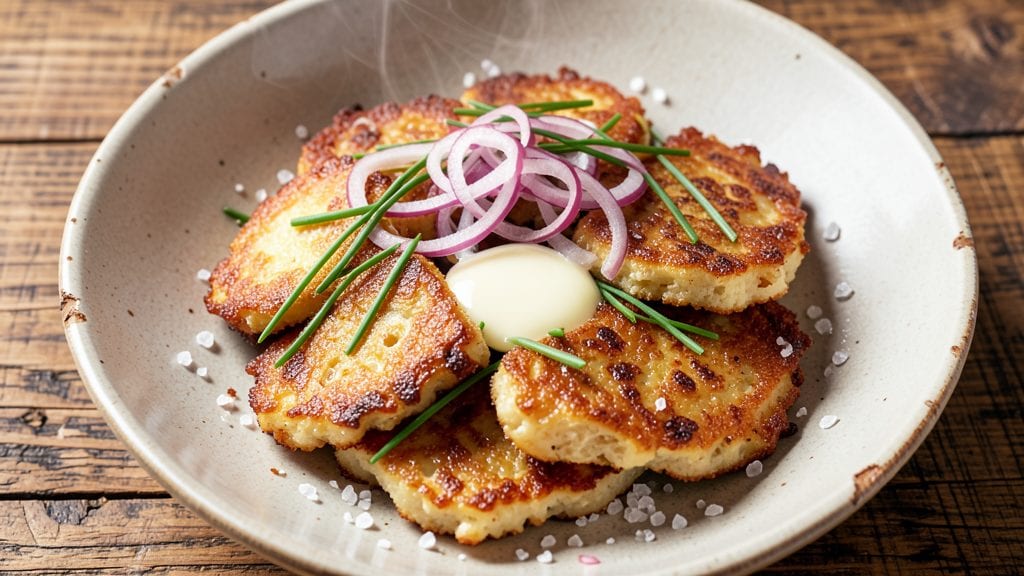
Grandma's potato latkes recipe brings the warmth of Jewish tradition to your kitchen with every golden, crispy bite. The secret lies in perfectly grated potatoes that yield tender, fluffy centers while developing that signature crispy crust—just like Nonna used to make.
I've tested countless variations over the years, and this method delivers authentic results every time, whether you're serving them at Hanukkah or a casual weeknight dinner.
What makes these latkes special is the balance of texture and flavor, achieved through precise grating, proper seasoning, and careful frying. The key ingredients—grated potatoes, eggs, onions, and a touch of flour—create a batter that holds together beautifully while frying.
Unlike many recipes that call for potato ricers, we're using a box grater to maintain that classic, slightly rustic texture that latkes are known for.
By the time they emerge from the hot oil, your latkes will have golden-brown edges that shatter with every bite, while the centers remain tender and fluffy. The aroma alone will transport you to your grandmother's kitchen, where these crispy treats were always the star of the meal.
Serve them warm with traditional accompaniments like applesauce or a dollop of sour cream for the full experience.
This recipe works equally well for special occasions or everyday meals—just adjust the quantity as needed. The beauty of latkes lies in their versatility, whether you're serving them as a side dish, appetizer, or even a hearty breakfast.
Let's get started on creating your own batch of golden, crispy perfection that will have everyone asking for seconds.
Ingredients for grandma's potato latkes
Eight simple staples transform into Nonna's crispy, golden latkes every time.
| Ingredient | Amount | Notes |
|---|---|---|
| Russet Potatoes 🥔 | 4 medium | Cold and unpeeled, box grated |
| Yellow Onions 🧅 | 1 medium | Grated, not chopped |
| Large Eggs 🥚 | 2 whole | Room temperature preferred |
| All-Purpose Flour 🌾 | ¼ cup | For binding batter |
| Salt 🧂 | 1 ½ tsp | Kosher or sea salt |
| Ground Black Pepper 🌶️ | ½ tsp | Freshly ground preferred |
| Vegetable Oil 🫒 | 3 cups | High smoke point for frying |
| Fresh Parsley 🌿 | ¼ cup | Chopped, for garnish |
Russet potatoes are the secret weapon here—Russets have the right starch-to-moisture ratio for that perfect crispy crust. Grab a box grater (the kind with the long handle) and grate them right in the sink—no need to peel. The skin adds texture, but if you prefer smooth latkes, peel first. For onions, yellow onions give the best flavor, but sweet onions work too. I always buy a medium yellow onion from the grocery store—just grate it along with the potatoes. The key is to keep everything cold until frying: pop the potatoes and onion in the fridge for 15 minutes before grating to prevent browning.
No box grater? A food processor with a grater attachment works, but you'll get finer shreds—latkes will still taste great, just slightly less rustic. Short on parsley? Fresh dill or chives add a nice brightness. The oil matters—vegetable or canola oil are safest for high-heat frying, but peanut oil works too. If you're making a big batch, store-bought potato starch (about 2 tbsp) can help absorb excess moisture in the batter. And yes, you can freeze cooked latkes—just reheat in a skillet for 2 minutes per side.
Keep your grated potatoes and onions in a colander over ice water while you mix the batter—this prevents browning. The batter should be thick but pourable; if it's too wet, add a splash more flour. Fry in batches of 3-4 latkes at a time—they'll be golden and crispy in about 3 minutes per side. Drain on a wire rack (not paper towels!) to keep them crispy. These reheat beautifully in a 350°F oven for 10 minutes—just cover loosely with foil. Leftovers keep for 3 days in the fridge, frozen for 1 month
Why You'll Love This Recipe
- No-Fuss Mash: I swear by the starchy magic of Russets—just grate, squeeze, and mix. No fancy tools, no stress. The onions caramelize right in the pan, so you’re not stuck chopping ahead of time.
- Crispy-Creamy Magic: That first golden bite? Crispy edge, fluffy inside—it’s all in the ratio of egg to flour. My secret? A splash of cold water in the batter keeps them from falling apart. Addictive doesn’t cover it.
- Weeknight to Holiday: Serve with applesauce for a quick dinner, or pile them high for Hanukkah. Freeze extras in a single layer, and they reheat like they’re fresh. Between us? I’ve fed a crowd with this—no one ever leaves hungry.
- Pantry Staple Power: Five ingredients, zero specialty items. The flour and egg bind it all, while salt makes the potatoes sing. If you’ve got potatoes, you’ve got latkes—no excuses. Budget-friendly doesn’t get better than this.
Step-by-step instructions for Grandma's potato latkes
Here's how to make latkes just like Grandma's—crispy on the outside, tender on the inside.
Grate the Potatoes and Onions
Start with the cold, unpeeled russet potatoes. Using a box grater, grate them into a large bowl. The cold potatoes grate more easily and yield less moisture, which is key for crispy latkes. I like to work in batches if needed, but don't skip this step—freshly grated potatoes make all the difference.
Next, grate the medium yellow onion using the same grater. The finer the grate, the more surface area you create for crisping. Once both are grated, transfer them to a clean kitchen towel or cheesecloth. Gather the edges and wring out as much liquid as possible. This step is crucial—too much moisture means soggy latkes. I usually squeeze the towel tightly and let it drain for a few minutes before proceeding.
Combine Ingredients for the Batter
In a large mixing bowl, combine the drained grated potatoes and onions. Add the 2 whole large eggs, breaking them directly into the bowl. Use a wooden spoon or rubber spatula to gently mix everything together until just combined. You want to keep the potatoes intact as much as possible—overmixing will break them down and lead to dense latkes.
Next, sprinkle the 0.25 cup all-purpose flour over the mixture and gently fold it in. Then add the 1.5 teaspoons salt and 0.5 teaspoon freshly ground black pepper, mixing just until the seasoning is evenly distributed. The batter should hold its shape when pressed—if it feels too loose, add a little more flour, but don't overdo it or your latkes will be tough.
Heat the Oil for Frying
Pour the 3 cups vegetable oil into a deep, heavy-bottomed skillet or Dutch oven. Place it over medium heat and insert a kitchen thermometer. Heat the oil until it reaches 350°F. This temperature is perfect for achieving those golden crispy edges without burning the outside before the inside is cooked through. If you don't have a thermometer, test the oil by dropping a small piece of potato batter into it—it should sizzle and float to the surface within 10-15 seconds.
Once the oil is hot, reduce the heat to medium-low to maintain the temperature. Too much heat will burn the latkes, while too little will leave them greasy. Keep the oil at 350°F throughout the frying process. I like to use a candy thermometer for accuracy, but even without one, you can monitor the oil closely and adjust the heat as needed.
Fry the Latkes in Batches
Using a spoon or small ice cream scoop, drop heaping tablespoon-sized portions of batter into the hot oil. I like to use a scoop to ensure even-sized latkes that cook uniformly. Fry them in batches, leaving space between each piece so they don't stick together. The latkes are ready to flip when the edges turn golden brown and the underside looks crispy, which usually takes about 3-4 minutes.
Carefully flip each latke with a slotted spoon or tongs, pressing down gently to ensure even cooking. Fry for another 2-3 minutes on the second side until both sides are golden brown and crispy. As you fry, transfer the cooked latkes to a paper towel-lined plate to drain excess oil. Keep the oil at 350°F between batches—if it cools down, heat it back up before adding more latkes.
Serve Warm with Fresh Parsley
Once all the latkes are fried, transfer them to a serving platter. While they're still warm, sprinkle the chopped 0.25 cup fresh parsley over the top for a pop of color and freshness. Serve immediately—latkes are best enjoyed fresh out of the fryer while they're crispy. I like to pair them with a dollop of sour cream, applesauce, or a sprinkle of extra salt for that classic latke experience.
For extra crispiness, you can even transfer the latkes to a 200°F oven for 5-10 minutes while you finish frying the rest. This keeps them warm and maintains that perfect crunch. Enjoy your homemade latkes—just like Grandma used to make!
Pro Tips For Making Grandma'S Potato Latkes
- GRATE DRY POTATOES: Russets hold more moisture than you think—after grating, spread them on a clean kitchen towel and press with another towel to squeeze out excess liquid. I learned this the hard way when my first batch turned into a soggy mess instead of crispy latkes. (Yes, even if you’re impatient like me, wait 5 minutes.)
- SALT THE ONIONS FIRST: Finely grate the yellow onion and toss it with a generous pinch of salt immediately—let it sit for 5 minutes before mixing with potatoes. This draws out water and keeps your latkes from steaming instead of frying. (Your grandmother probably did this instinctively; now you know why.)
- DON’T OVERMIX THE BATTER: Combine the egg, flour, and grated potato-onion mix, then fold just until the flour disappears—no more. Overworking the batter makes latkes dense. I was skeptical until I tried it: the texture stays light and crispy, not gluey. (Sounds weird, but it works.)
- FRY IN BATCHES OF 3: Crowding the pan lowers the oil temperature and steams the latkes instead of frying them. Use a slotted spoon to add 3-4 patties at a time, and resist the urge to flip too soon—wait until the edges are golden and the center feels warm through. (This isn’t the prettiest method, but it’s the tastiest.)
Flavor customization for this recipe
Sweet & Spicy Twist
Add 1 tablespoon honey and ½ teaspoon smoked paprika to the batter for a caramelized sweetness with a subtle smoky kick. I like to use Manuka honey for its floral notes, but regular honey works too.
For extra heat, sprinkle ¼ teaspoon cayenne pepper on top before frying—this creates a crispy, spicy crust that balances the sweetness beautifully. 🌶️
Herb-Infused Variations
Swap the parsley garnish for 1 tablespoon chopped dill or 1 teaspoon dried thyme mixed into the batter. Fresh dill adds a bright, tangy flavor that pairs perfectly with the richness of the latkes.
For a Mediterranean twist, add 1 teaspoon lemon zest and ½ teaspoon oregano to the batter—this gives a citrusy, herbal depth that’s unexpected but delicious.
Cheesy & Creamy Upgrade
Stir in ½ cup shredded Gruyère cheese or ½ cup crumbled feta into the batter for a creamy, tangy center. Gruyère melts beautifully, creating pockets of gooey goodness, while feta adds a briny contrast.
For extra indulgence, top each latke with a sprinkle of crumbled blue cheese after frying—it pairs surprisingly well with the crispy edges. 🧀
Savory Umami Boost
Mix in 1 tablespoon soy sauce or 1 teaspoon miso paste into the batter for an umami-rich twist. This works especially well if you’re serving latkes as an appetizer or part of a larger meal.
For a smoky depth, add ½ teaspoon liquid smoke (just a drop!)—it enhances the crispy texture without overpowering. Trust me, this subtle addition elevates the flavor profile to restaurant-quality.
Gluten-Free Adaptation
Replace the all-purpose flour with ¼ cup gluten-free flour blend (like Bob’s Red Mill 1:1) or 2 tablespoons potato starch. The starch helps bind the batter while keeping it crispy.
For extra insurance, add 1 tablespoon ground flaxseed mixed with 3 tablespoons water to act as a natural thickener. The texture stays true to classic latkes, just without the gluten. ✨
Nutrition facts
Frequently asked questions
Can I use sweet potatoes instead of russets for latkes?
Sweet potatoes will work, but the texture and flavor will differ. Sweet potatoes are moister and less starchy, which can make your latkes denser rather than crispy. If you must use them, grate them first, then squeeze out excess moisture with a clean towel. For best results, mix half russets with half sweet potatoes to balance texture.
Why did my latkes turn out greasy instead of crispy?
Greasy latkes usually happen when the oil isn't hot enough (350°F) or the potatoes weren't drained properly. First, ensure your oil reaches the right temperature—test with a small piece of batter (it should sizzle immediately). Second, wring out grated potatoes thoroughly with a clean towel or cheesecloth. If the batter feels too wet, add 1-2 tablespoons flour.
How do I keep latkes crispy after frying?
Drain fried latkes on a wire rack (not paper towels!) to let excess oil drip away. For extra crispiness, transfer them to a 200°F oven for 5-10 minutes while you finish frying the rest. If reheating later, warm in a skillet over medium heat for 2-3 minutes per side—never microwave, as it makes them soggy.
Can I make latkes ahead of time?
Yes! Cooked latkes freeze beautifully for up to 1 month. Let them cool completely, then store in an airtight container. To reheat, bake at 375°F for 10 minutes or fry in oil for 1-2 minutes per side. For short-term storage, keep them in the fridge for 3 days—reheat in a skillet to restore crispiness.
What’s the best way to serve latkes for a Hanukkah celebration?
Traditionally, latkes are served with applesauce (sweet or spicy) and sour cream. For a festive touch, add a sprinkle of toasted sesame seeds or crumbled bacon on top. Pair with latke dip (mix sour cream with chopped chives, lemon zest, and a pinch of salt) or serve as part of a Hanukkah brunch with smoked salmon and cream cheese.